Snow is not what damages leather boots. Road salt is. Salt stays behind after the slush melts, wicks into the grain as the boot dries, and leaves crystals that stiffen the leather and crack it over a single winter. Learning how to care for leather boots in snow and salt takes about twenty minutes of work after a bad storm, and most of it is waiting. Here is the order that works, plus the household remedies worth skipping.
Updated for 2026.
What You Need
Gather these before the boots come inside, because the job is easier when you are not looking for a brush with wet hands.
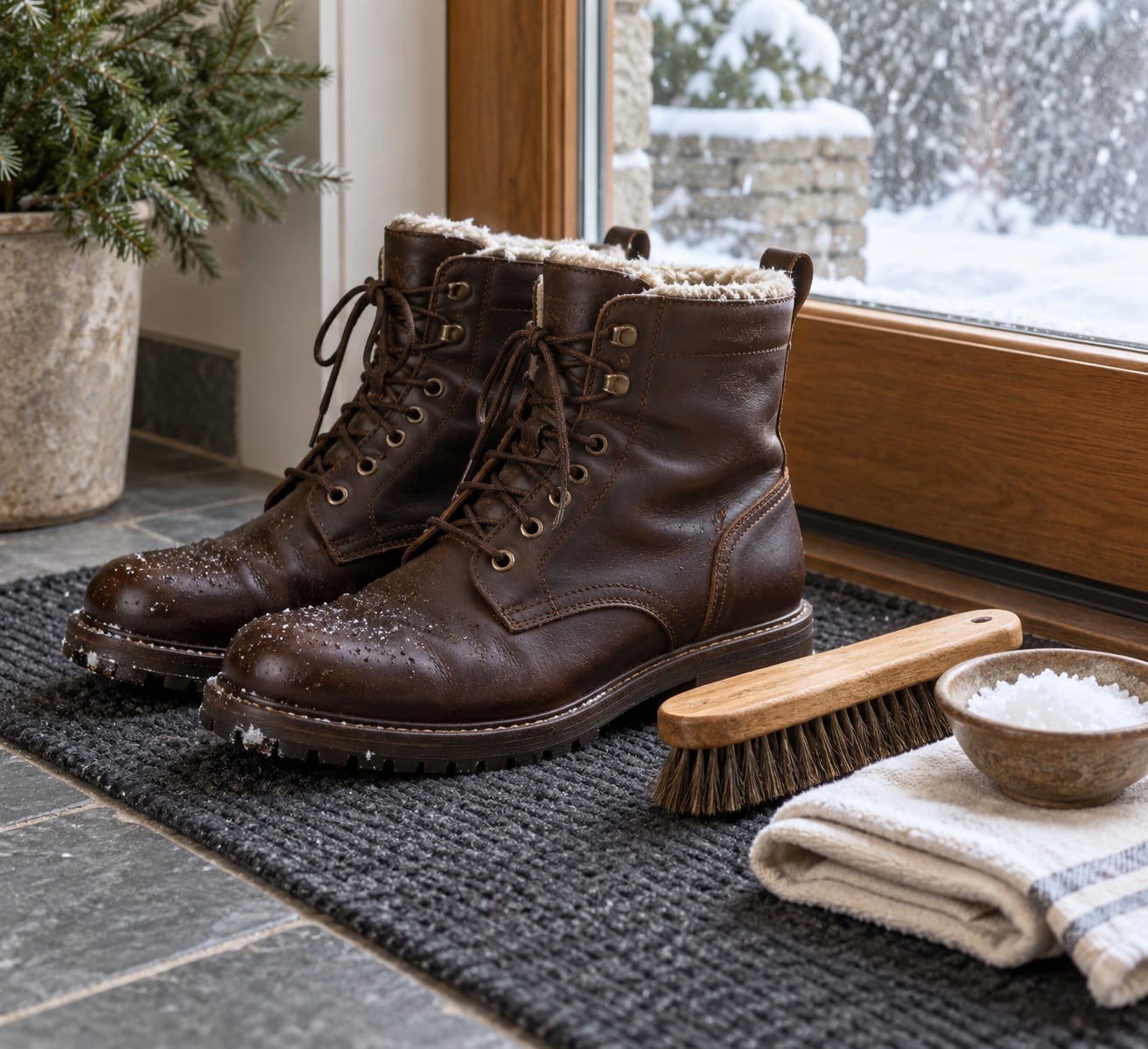
- Soft-bristled brush. A horsehair brush or soft nylon bristle brush for dust, dried slush and loose salt crystals.
- White vinegar and distilled water. Mixed 50/50 in a small bowl or spray bottle. Distilled water matters, since hard tap water leaves its own mineral film on top of the salt.
- Soft cloths. Clean cotton or microfiber. You need at least two, so you are not lifting dirt back off the leather.
- Leather cleaner. A cleaner made for smooth leather, used for grime beyond what vinegar lifts.
- Leather conditioner or cream. Only for smooth leather. Never on suede or nubuck.
- Waterproofing treatment. A spray or paste wax for smooth leather, or a suede-specific protector if that is your finish.
- Boot trees or loosely rolled acid-free paper. Optional but worth having; they hold the shape while the leather dries.
- Old toothbrush. Optional, for the welt stitching and the seam where salt hides.
Two habits matter more than any product on this list. Wiping salt off the same evening, and never letting a wet boot sit near heat.
Step-by-Step
Work through this in order. Skipping ahead to the conditioner while salt is still in the grain seals the damage in place.
1. Remove Loose Snow, Dirt, and Salt
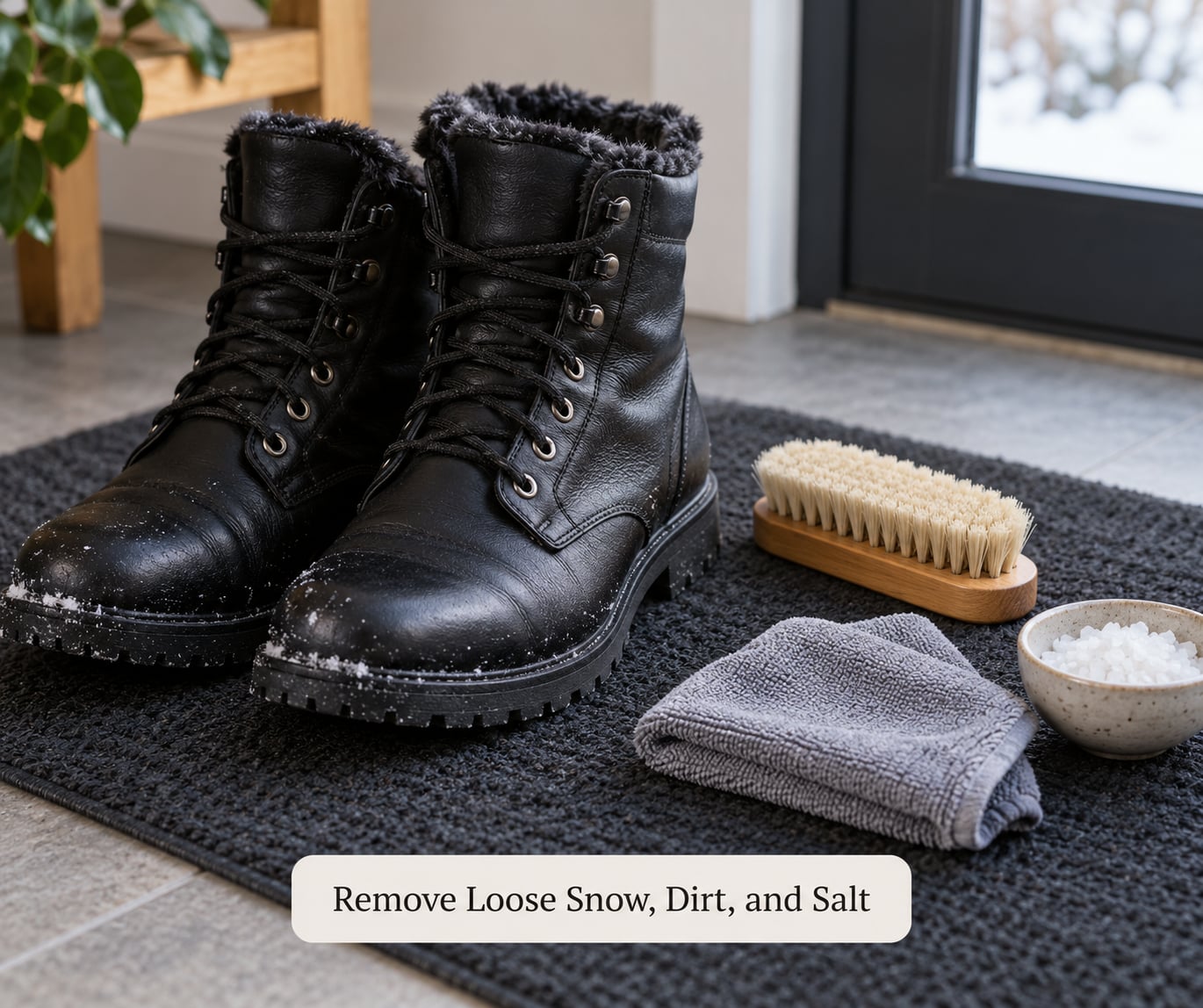
Let the boots lose the surface water first, then brush them dry. Dry brushing is the whole point of this step: the less you have to moisten the leather, the better it comes out.
Tap out packed snow from the seams and shake the soles. Work the brush along the grain, around the welt stitching, and along the edge where the upper meets the sole. Salt that has crystallized in those lines will keep drawing moisture out of the leather long after the boot is dry, so it has to come off before anything wet goes near it.
Never scrub a dry salt stain with pressure. You grind the crystals deeper into the grain and scratch the finish while you do it. Dissolve first, lift second.
2. Check the Leather and Choose a Cleaner
Find out what finish you are dealing with before you use anything. Smooth full-grain and top-grain leather has a visible grain and a slight sheen, and it can take water, cleaner and conditioner. Suede has a fuzzy, nap-like surface, and nubuck is brushed fine with a soft nap that lightens when you rub it. If you are not sure, look at the tag or the box.
Suede and nubuck follow different rules. No conditioner, no cream, no mink oil, no heavy water. More on that in a moment.
Test whatever cleaner or conditioner you picked on an inconspicuous spot, inside the tongue or behind the heel, and let it dry fully. Darkening is common on light and unfinished leathers and often cannot be reversed. Household dish detergent, bleach and heavy salt removers are not leather cleaners, whatever the label on the front says.
3. Clean the Salt Marks and Winter Grime
Mix 50/50 white vinegar and distilled water. Dampen a soft cloth with the mix rather than pouring it on the boot, then work gently over the salt marks in small circles.
Give it a minute or two to do the work, then wipe with a clean damp cloth. Follow that with a second pass using distilled water on a fresh cloth. That rinse is the step most people skip, and it is the reason salt stains come back a day later: salt already inside the leather keeps wicking toward the surface as the boot dries, and reappears as a fresh white bloom.
For heavy grime on smooth leather, use a leather cleaner after the vinegar pass, following the directions on the tin. Keep the leather damp, not saturated, and work one panel at a time so you are not scrubbing a half-wet boot.
Suede and nubuck get a dry version of the same job. Brush with a suede brush first, then use barely damp water and a suede-specific conditioner, dabbing rather than rubbing. A soaking stain on suede usually needs a professional.
4. Dry the Boots Without Damaging the Leather
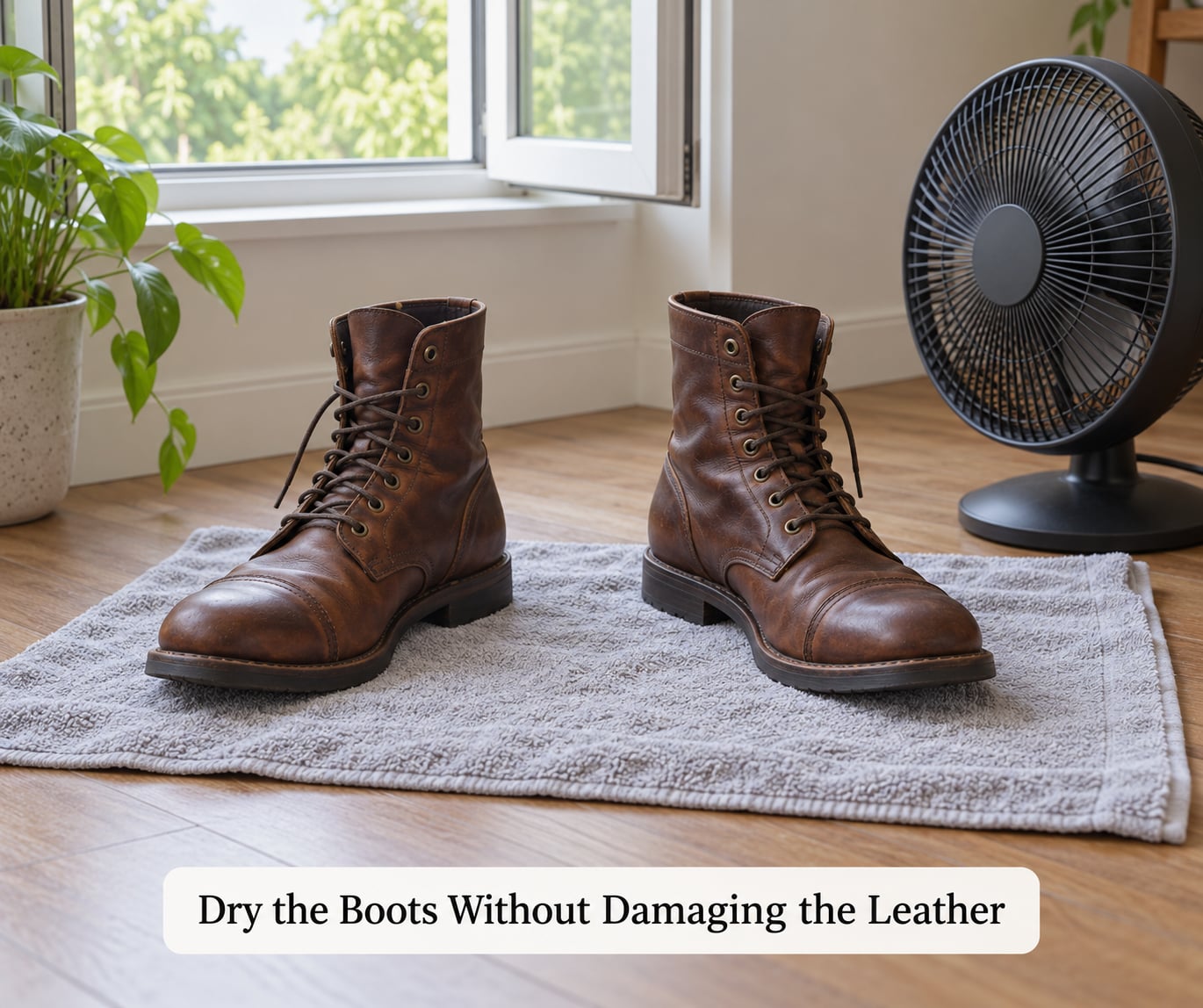
Air drying at room temperature takes 12 to 24 hours for a soaked pair, and rushing it is the fastest way to ruin good leather. Pull the laces loose and take the insoles out so air can move through the inside. Stuff the boots with loosely rolled paper or insert boot trees.
Set them on a towel near an open window with a fan on low. That airflow is what actually moves the moisture.
Keep them away from radiators, space heaters, fireplaces, hair dryers, tumble dryers and direct sun. Heat drives water out of the leather from the inside faster than the leather can follow, so the surface dries, tightens and cracks while the inside stays wet. It also degrades the glue and stitching that hold a welted boot together. This is the mistake people make with the best intentions.
Put newspaper in the boot if you want to speed drying slightly, and swap it out when it saturates.
5. Condition and Protect the Leather
Once the boots are nearly dry all the way through, not just on the surface, apply leather conditioner or cream. Work a thin layer in with a clean cloth, following the product directions, and let it absorb. Wipe off the excess. Conditioner puts back the oils that water and salt stripped out, which is what keeps the leather supple instead of stiff.
Skip it on suede and nubuck, and use a suede or nubuck conditioner instead. A little goes a long way.
Then seal the leather. Condition first, waterproof second, always in that order, because a sealer applied over dry leather just traps whatever is underneath.
A wax or paste waterproofing gives a harder barrier, which suits heavy snow and salted pavement. An oil such as mink oil conditions as it soaks in and suits moderately wet climates. A spray is the fastest of the three to apply and the first to wear off. Reapply waterproofing at the start of each season and again after every deep clean.
6. Maintain the Boots Between Snowstorms
The highest-value habit takes about a minute. When the boots come in, brush off the dry crust and wipe the salt bloom with a damp cloth before it sets. Salt left overnight has a much better chance of being removed tomorrow.
Let them air out away from the heat, and check the soles for compacted ice that is scratching the welt edge from the inside. Once a month through the season, work through steps one to five properly. Once the snow stops, do a full deep clean, condition, waterproof, and store them shaped and dry.
Common Mistakes
Each of these feels reasonable and each causes real damage.
Hot water for the salt. Warm water helps, hot water strips the natural oils and shrinks the leather. Use lukewarm, or none at all, and let the vinegar do the dissolving.
Rubbing a dry salt stain. You are grinding crystal into the grain. Dampen first with the vinegar mix, let it sit, then lift gently.
Soaking the boots. A quick soak swells the leather unevenly and can cause it to crack when it dries, plus it wets the interior where mildew starts. Never leave leather boots submerged.
Drying by a radiator or hair dryer. The fastest route to cracked leather and dead glue. Air and a fan only.
Over-conditioning. More is not better. Leather absorbs a thin layer; heavy application leaves the surface greasy and attracts dirt.
Wearing the same damp pair again. Leather needs to dry fully between wears, which means a second pair on a wet week. Constant damp wear is what causes cracking at the flex points.
The washing machine. It destroys welt stitching and the shape of the boot, and the agitation damages the grain.
WD-40. It is a water-displacing lubricant, not a leather waterproofing product. The oily film it leaves traps moisture against the leather and speeds up cracking. Wipe it off if it is already on.
Vaseline. Petroleum jelly blocks the leather from breathing and holds dirt in the grain. It does not preserve anything.
Dish soap as a leather cleaner. A tiny drop in a bucket of lukewarm water is fine for a wipe-down on smooth leather. Straight Dawn on the boot strips oils and dries the finish, and on suede or nubuck it flattens the nap.
Frequently Asked Questions
Are salt stains on leather boots permanent?
Usually not, if you treat them early. Blot the area rather than rubbing it, dissolve the salt with a 50/50 mix of white vinegar and distilled water, wipe with a clean damp cloth, then rinse with distilled water so no salt is left in the grain. Old stains that have set for weeks, especially on suede and nubuck, often need professional restoration.
Does saltwater ruin leather?
Not instantly, and not permanently. Salt draws moisture out of the leather and leaves crystals lodged in the grain, which is what causes the white bloom and the long-term stiffening and cracking. Act the same day and the damage is fully reversible. Leave it for a few weeks and you may be looking at permanent stiffness in the grain.
Does vinegar actually take salt stains out of leather boots?
Yes, and it is the most reliably recommended home method. White vinegar dissolves the crystals so you can lift them out instead of grinding them deeper. Use distilled water rather than tap, keep the cloth damp rather than soaking the boot, and always finish with a distilled-water rinse. Without the rinse, salt wicks back out of the leather as it dries and the stain returns.
Can you put leather winter boots in the washing machine?
No. Machine washing soaks the leather unevenly, damages the grain, and puts the welt stitching and glue under strain that can permanently change the boot’s shape. For the lining and insoles you can often wash those separately on their own care label, but the leather upper gets the vinegar-and-cloth treatment instead.
Can I use leather conditioner on suede or nubuck boots?
No. Smooth leather conditioners, creams, mink oil and beeswax will darken and stiffen suede and nubuck, and the change is usually permanent. Use a conditioner formulated for suede or nubuck, applied sparingly, and treat water-based salt removal carefully with barely damp work. Deep stains on those finishes are best left to a specialist.
Conclusion
The first thing to do when boots come inside is brush off the loose salt while it is still dry and lifts easily. Then dampen a cloth with 50/50 white vinegar and distilled water, work it over the marks gently, and rinse with distilled water so nothing is left to crystallize. Let the boots dry fully at room temperature with airflow, away from any heat source. Once they are no longer damp, condition the smooth leather, seal it with wax or a spray, and do it again at the start of next season.