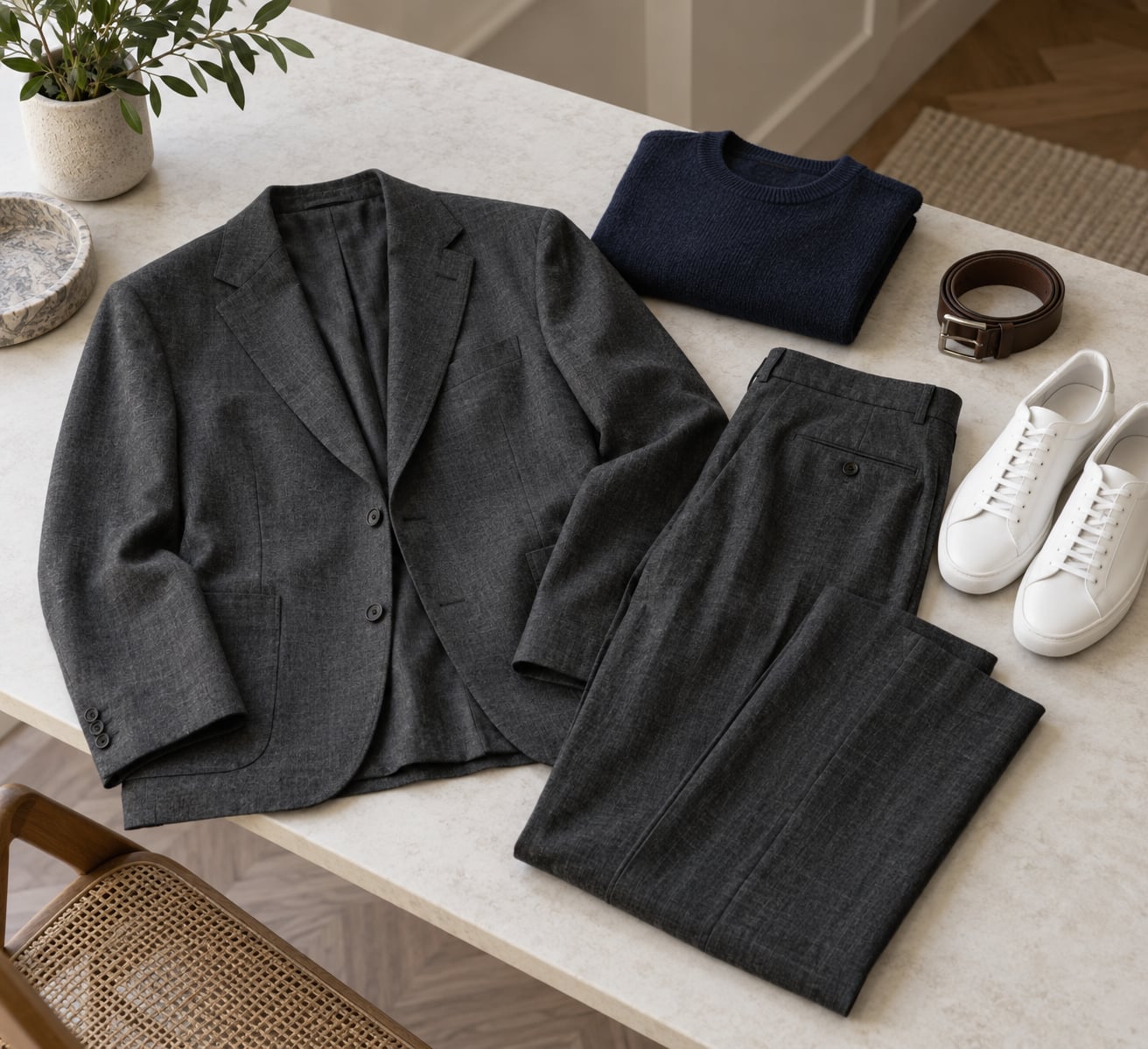
How to wear sneakers with a suit is mostly a matter of proportion and restraint: pair a relaxed, textured suit with clean, low-profile, minimalist leather sneakers, drop the tie and the dress shirt, and let the trousers fall with little or no break. Get those four things right and the result reads as deliberate smart casual. Get them wrong and it reads like you ran out the door.
I want to be straight with you before we start: not everyone thinks this combination works. Regulars on StyleForum and Disboards still push a suede loafer as the smarter option, and the top thread on r/mensfashion is still titled “JUST SAY NO”. That reaction is worth taking seriously. It usually means someone got a detail wrong, not that the whole idea is silly.
What You Need
Before you pair anything, gather the pieces that decide whether this works. Most people own all of these already and simply keep them separated in the closet.
- A relaxed or unstructured suit. Linen, cotton, seersucker, textured wool or flannel with a soft shoulder. A hard-shouldered, high-twist worsted suit is the hardest base to work with.
- Clean, low-profile leather or suede sneakers. Minimal branding, thin to moderate sole, tidy laces. Nothing sporty, no mesh, no chunky platform.
- A non-dress top. A fine-gauge knit, a polo, a soft Oxford or an unlined camp collar shirt. The dress shirt and tie have to go somewhere else that day.
- Invisible or no-show socks. One pair, in a colour that matches your skin tone or your trousers, if you are not going sockless.
- A matching belt. Leather with leather uppers, canvas or fabric with canvas. A black leather belt under a white leather sneaker is the mismatch nobody plans.
- A full-length mirror and a brush. A lint roller counts. So does the two-second sniff test on a white sneaker you have been wearing all week.
How to Wear Sneakers with a Suit, Step by Step
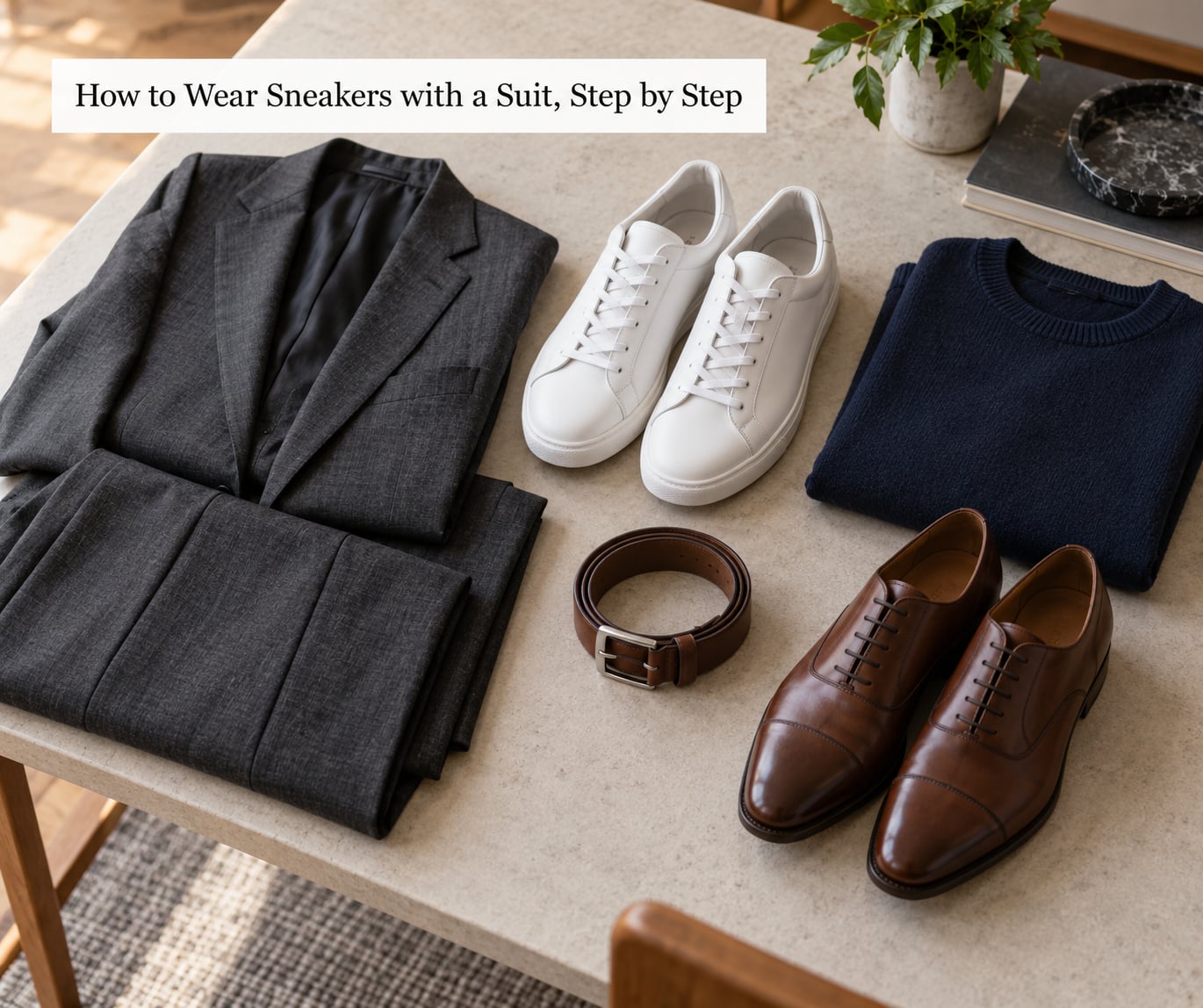
The order matters more than the individual choices. Set the formality first, because every later decision follows from it. A five-minute version is honest enough; the rule holds whenever one piece of the outfit is clearly more formal than the rest.
Start With the Suit’s Formality
Match the suit to the occasion before you match anything to the suit. The question is not “do sneakers work with a suit” but “how much formality has this room already demanded of me”.
For a creative office, a casual Friday, a gallery opening or a dinner in town, an unstructured jacket over matching trousers works. For a conservative office, a daytime wedding or any room with a dress code on the invite, the suit has to be lighter and the sneakers have to be quieter. On StyleForum, the recurring advice for a suit-based office look was to drop the suit entirely and wear khakis with a button-down instead, and that is still sound advice in a formal workplace.
Fabric sets the ceiling. Linen, cotton and seersucker read relaxed enough for sneakers almost on their own. Flannel and textured wool in autumn sit in the middle. Worsteds and sharkskin suits belong with derby shoes, full stop.
Keep the Color Palette Tight
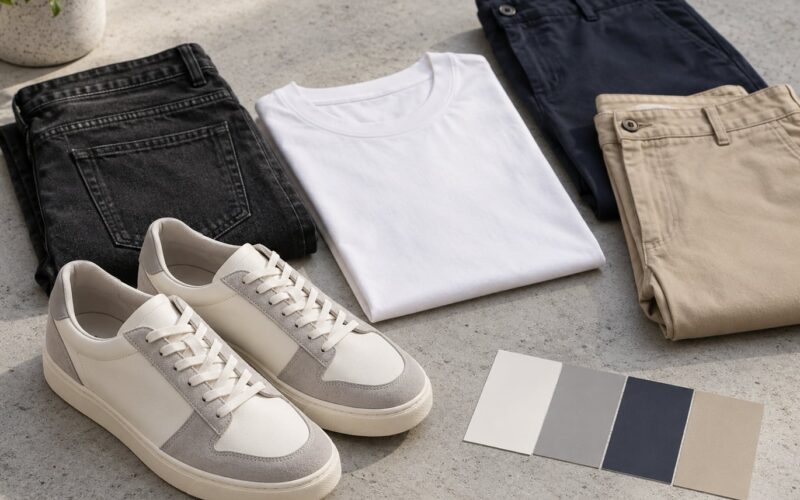
A tight palette is what separates modern tailoring from a costume. You have two working methods: repeat one colour, or run everything on neutrals.
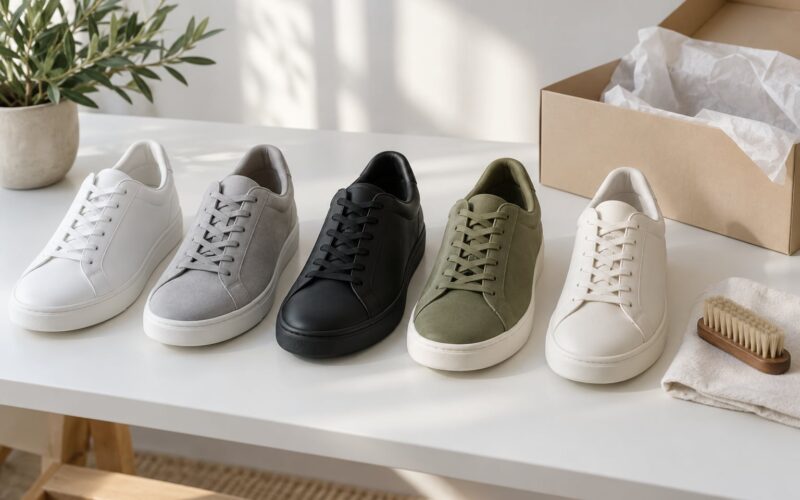
Navy suit, white sneakers, no-show socks, brown belt. Charcoal suit, black sneakers, charcoal belt. Beige suit, white leather sneakers, no-show socks, brown belt. Olive or brown suit, white or cream sneakers with a leather upper.
Repeat one colour and the eye reads it as a single decision. Run it on neutrals and the eye reads texture instead, which is usually the more interesting result. What breaks the effect is a third accent colour appearing for no reason: navy trousers, grey jacket, white sneakers and, say, burgundy laces is one accent too many.
One exception is worth knowing: black sneakers with a navy suit look deliberate, because both are dark and neither fights the other. Black sneakers with a stone or beige suit look like an error unless they are meant to be.
Balance the Sneakers With Trousers and Hem
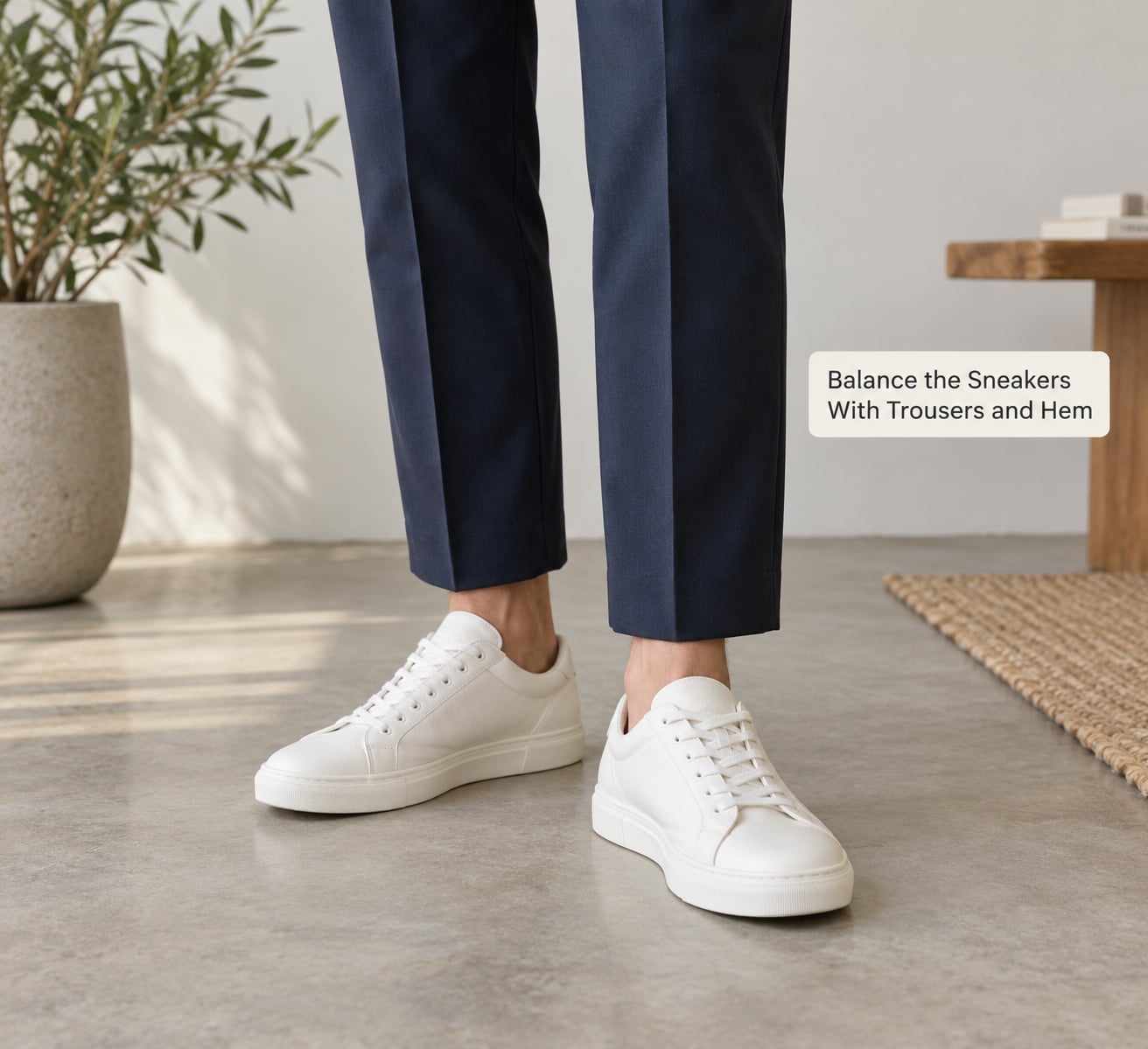
Almost nobody gets this right on the first try. The trouser should end right at the top of the sneaker, with the ankle bone showing and the fabric resting on the shoe without bunching. That is what people mean by a no-break hem, and it is the single most repeated question in every style forum on this combination.
When a trouser breaks across the top of a sneaker it creases, makes the shoe look smaller and drags the whole leg down. When it stops an inch too high, the gap reads as an error rather than a decision. Either way, take the shoes you will actually wear to the tailor and have the trousers pinned on your foot.
Shoe height and sole thickness follow the trouser width. A slim tapered trouser wants a low-top with a thin sole, because a chunky midsole under a narrow leg looks like two separate ideas. A wider pleated trouser can carry a heavier trainer. Match the sole stack to the drape: more fabric, more sole; less fabric, less sole.
On cuffed trousers, uncuff the hem and let the trousers fall clean over the sneaker instead. It removes one more decision from an outfit that already has several.
Add the Right Socks, Belt, and Accessories
Socks are where the look most often gets called out. Visible athletic socks are consistently the thing people say ruins it, and they are right. You have three acceptable options and no fourth.
- Sockless if the occasion is genuinely relaxed. Watch the temperature and your footwear choice before committing.
- No-show or invisible socks as the default. They disappear under the trouser and take the question off the table.
- A thin dress sock in a matching tone when the trousers are cropped enough to show a sliver. Never a bright colour, never a thick rib.
The belt follows the upper. Leather uppers take a leather belt, ideally in a tone close to the shoe. Canvas or fabric sneakers take a canvas or woven belt, or none at all. Slim dress belts beat wide ones here, because a wide belt adds visual mass exactly where the outfit is trying to stay light.
Keep jewellery restrained: a watch, maybe a thin chain, nothing that catches light at the same time as the shoes. If your sneakers have a visible logo, make sure nothing else in the outfit is branded. One loud thing is a choice. Two loud things are a coincidence.
Check the Full Outfit in a Mirror
Stand in front of a full-length mirror and run this checklist in about thirty seconds. It catches nearly everything.
- Fit. The jacket closes without a gap at the waist and the trousers drape instead of clinging.
- Hem. The trouser sits on the sneaker with the ankle bone visible and no bunching.
- Cleanliness. White midsoles get scrubbed with a magic eraser or a stiff brush; gum soles get one pass with a damp cloth.
- Contrast. If the shoes and the suit are both dark, check the contrast is intentional and not accidental shadow.
- Comfort. If you will be on your feet for hours, thin leather uppers over a cushioned insole matter more than the silhouette.
- Dress code. If the invite said formal, black tie or cocktail, the shoes should be leather dress shoes.
Then walk around the room for a minute. A quick photo at eye level is more honest than a mirror, because the mirror shows you what you expect to see.
Common Mistakes When Styling Sneakers With a Suit
Most of these have a two-second fix.
- Chunky performance sneakers with delicate formal tailoring. A mesh runner under a slim worsted suit looks borrowed from two different wardrobes. Fix: swap to a smooth leather low-top with a thin sole.
- Dirty white midsoles. Nothing else on this list gets flagged as fast. Fix: sponge and brush before the outfit leaves the house, not after.
- A visible break across the shoe. Fix: no-break hem, pinned while wearing the sneakers.
- Bright white socks or long visible socks. Fix: no-show socks, or go sockless.
- Dress shirt and tie left on. The most formal pieces in the outfit are the ones pulling against sneakers. Fix: knit, polo or camp collar.
- Sneakers at a funeral, a job interview or a black-tie evening. Fix: leather derbies, no debate.
- A fully buttoned, tailored stance. Leave the jacket open and the top button undone. Fix: one garment, instantly looser.
Frequently Asked Questions
Is it okay to wear sneakers with a suit?
Yes, as long as the suit is relaxed, the sneakers are clean and minimal, and the trousers have little or no break. Skip the tie and the dress shirt, and drop the outfit toward smart casual rather than business formal. Where a dress code is explicit, such as black tie or a traditional office, wear leather shoes instead.
What sneakers look best with a suit?
A clean, low-profile leather or suede sneaker with a thin to moderate sole and no loud branding. White leather is the most versatile and works with navy, grey, beige and olive. Suede in a tone close to the suit suits autumn and winter. Running shoes, mesh uppers and chunky platform soles are the ones that fight tailoring.
Can I wear sneakers to a formal wedding?
Read the dress code first. A daytime wedding with no stated code, or one that says garden, casual or cocktail, is usually fine with clean low-profile leather sneakers. Black tie, formal or black optional means leather dress shoes. If the invitation is unclear and the venue is traditional, match the other guests rather than the trend.
Can I wear sneakers for office attire?
In a creative or relaxed workplace, yes, provided the suit is unstructured and the sneakers are minimal. In a conservative office, most people get better results wearing tailored trousers, a button-down and a casual loafer instead of a full suit. Read how people around you dress to the office rather than assuming the whole floor agrees.
Should trouser break touch my sneakers?
No. The trouser should rest on top of the sneaker with the ankle bone just visible, which is called a no-break hem. A visible break creases the fabric, shortens the leg visually and shrinks the shoe. Take the sneakers you plan to wear to the tailor and have the trousers pinned while you are standing in them.
Do you wear socks with sneakers and a suit?
Invisible no-show socks are the safest default, and going sockless works when the room is genuinely relaxed. If the trousers are cropped enough to show a sliver of sock, choose a thin dress sock in a matching tone. Visible athletic socks are the one choice that consistently gets read as a mistake.
Conclusion
Start with the suit’s formality, because it sets the ceiling for everything after it. Then pick clean, low-profile sneakers in a colour that repeats something already in the outfit, take the trousers up to a no-break hem, sort the socks and belt, and check the whole thing in a mirror before you leave the house. If the room is formal, keep the leather shoes. If it is not, do not overthink the second decision.