Hand-wash mesh running shoes with a soft brush, mild soap and cool water, then let them air-dry away from heat and sunlight. Skip the washing machine and the dryer, because both can shrink the knit, soften the glue holding the midsole on, and leave the shoe warped. The whole job takes about 20 minutes of scrubbing plus overnight drying, and it’s not hard.
The catch with mesh is that it behaves nothing like leather or suede. An engineered mesh upper, the same open-knit material used in Flyknit and similar uppers, lets air through while trapping grit, sweat and skin oil down inside the weave. That trapped dirt is what abrades the fibers from the inside and shortens the shoe’s life, so a wipe with a damp cloth never really clears it.
Brands like Nike and Under Armour all publish the same hand-wash guidance for good reason. Here’s the setup and the full method.
What You Need
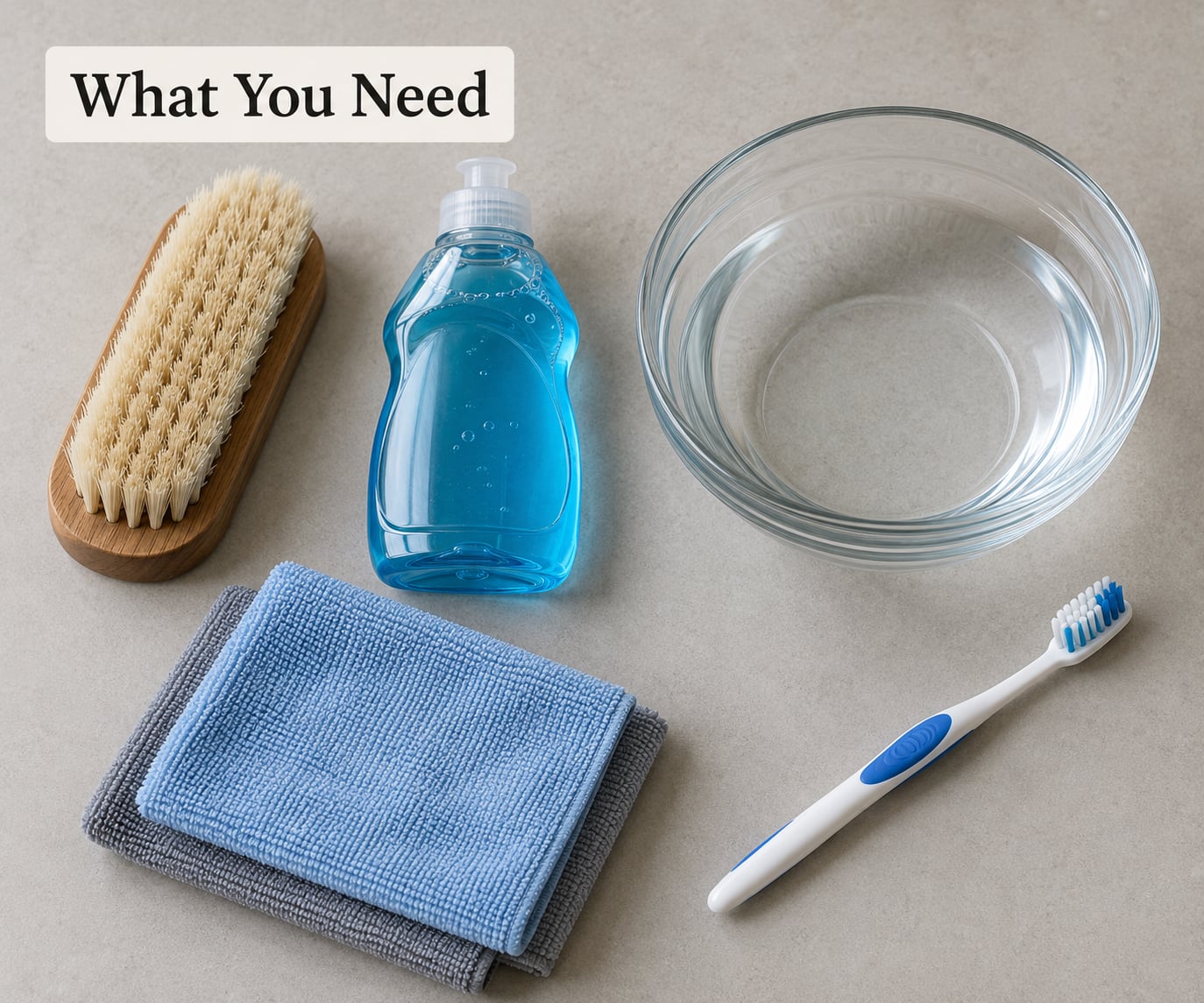
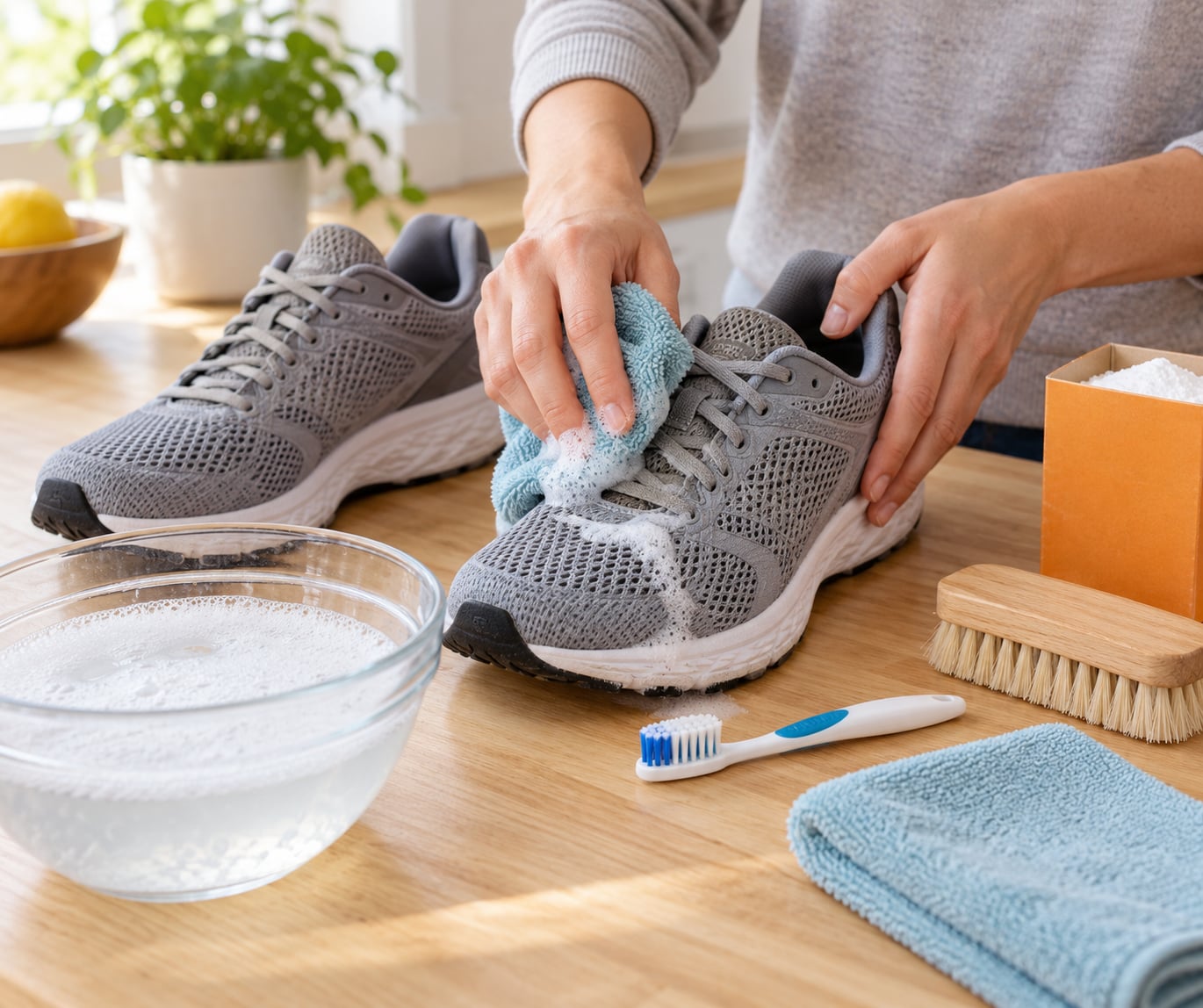
Gather everything before you start. Water and a rag are enough for a routine clean, but the rest cuts the time in half.
- A soft-bristled brush. An old toothbrush works well for seams and tight spots. Avoid anything with stiff wire or metal bristles.
- Mild dish soap or a small amount of liquid laundry detergent. Both are fine; dish soap cuts grease, detergent handles sweat and ground-in dirt.
- A bowl of lukewarm water. Cool water protects dye and glue better than hot water.
- Clean microfiber cloths or soft rags. You need at least one damp and one dry.
- Baking soda. Useful for stubborn marks and for deodorising.
- Old socks or a shoe tree. To stuff the shoes while they dry so they hold their shape.
Leave out bleach, magic eraser, acetone, nail polish remover and oven cleaner. Magic eraser abrades knit fibers, acetone eats glue and dye, and bleach yellows engineered mesh permanently. A wire brush is worse than no brush at all.
Step-by-Step: How to Clean Mesh Running Shoes
Check the Care Label and Test the Materials
Look inside the tongue or on the heel for the care label before anything else. If it says hand wash only or shows a crossed-out wash tub symbol, skip straight to the hand method.
Next, test your cleaner on a patch of mesh hidden inside the tongue. Wait a minute and check whether the color faded or the fabric feels slick. If either happened, use a weaker mix. This step matters most on colored or dark shoes, where dye bleed is common in knit uppers.
Remove Laces, Insoles, and Loose Dirt
Pull the laces out and drop them in warm soapy water to soak while you work on the shoes. Take the insoles out too; they’re usually the dirtiest part of the shoe and clean up far better on their own.
Now take the shoes outside or over the sink and knock the soles together, then hit the uppers with a dry, soft brush to knock off caked mud and loose grit. Every speck you remove now is one you don’t have to wash out of the weave later. You’ll see how much comes off.
Mix a Mild Cleaning Solution
Fill your bowl with lukewarm water and add a small squirt of mild detergent, then stir until it’s barely foamy. The instinct is to add more. Less is correct here, because concentrated soap is harder to rinse out of an open weave and residue left behind attracts dirt straight back.
Dip your brush in the solution, then dab or brush it onto the shoe. Keep a damp cloth in the other hand and work in sections rather than flooding the whole shoe at once. A soaked knit upper takes days to dry and can shrink or delaminate as it goes.
Clean the Mesh Upper Without Scrubbing Hard
Work the foam into the mesh with light pressure, moving toe to heel in small circles. You want the brush to skim the surface of the weave so the suds pull dirt out of it, not to grind the fibers down. If you can see the brush bristles bending, you’re pressing too hard.
Pay attention to where grime hides: the seam where the mesh meets the midsole, the tongue, the collar, and behind the laces. Use the toothbrush on those lines. Avoid the printed or glued overlays, the TPU cage, and any waterproof membrane, since stiff brushing breaks down the coating that keeps water out.
For marks that survive the soap, mix baking soda with a little water into a paste and dab it on. Leave it five minutes, then brush gently and wipe. It’s mild enough for most dyed mesh but always worth spot-testing first.
Rinse and Remove Suds Carefully
Squeeze the shoe out gently over the sink and wipe the surface down with a clean damp cloth, repeating until the cloth comes up without a trace of foam. Follow with a light rinse under cool running water or a utility sink if the shoe is genuinely muddy.
The checkpoint is simple: no visible suds and no slippery film. Soap left in the weave is the reason shoes can smell worse a week after being cleaned, and it also stiffens the knit once it dries.
Dry the Shoes Properly
Press a dry cloth into the shoe to pull out as much water as possible, then stuff the toe box with old socks, a shoe tree or crumpled newspaper. Change the stuffing once it’s damp. Reshape the heel and collar, set the shoes somewhere with airflow, and leave them alone.
Allow 12 to 24 hours before wearing them. A fan helps a lot; a boot dryer on cool air is fine too. Avoid radiators, tumble dryers and direct sunlight. Heat softens the foam midsole and the glue, and UV fades color and weakens the knit, which is why runners say never dry shoes in the sun.
Common Mistakes When Cleaning Mesh Running Shoes
- Machine washing the whole pair. The agitation and spin pull midsole from upper, and a wet shoe is heavy enough to unbalance the drum. Only wash in a mesh bag on a cold delicate cycle if the care label explicitly allows it.
- Soaking the shoe. Long soaks shrink knit uppers and can lift adhesive. Keep contact time short and work with a brush instead.
- Scrubbing aggressively. A stiff brush or a magic eraser frays engineered mesh and dulls the finish permanently.
- Bleach or harsh solvents. Bleach yellows and weakens the fibers; acetone dissolves dye and glue.
- Heat drying. A dryer is the fastest way to warp a shoe and split the midsole bond.
- Cleaning colored shoes without testing. Always spot-test, and keep water lukewarm so dye doesn’t wick out.
Tips for Keeping Mesh Shoes Fresh
Most odor problems come from shoes staying wet, not from the shoe itself. Remove the insoles after every run and let them air separately, and loosen the laces so air moves through the weave overnight. A quick dry brush after each muddy run keeps grit from ever settling into the weave in the first place.
For a deeper deodorize, sprinkle baking soda inside the shoe overnight and tip it out in the morning. Some runners fill old socks with cat litter and stuff the shoes, which draws out moisture and smell nicely. Store shoes away from a damp garage or a wet shoe rack, and give them a full clean every four to six weeks if you run in them often. The foam in a midsole breaks down with age anyway, and most pairs are worn out somewhere between 300 and 500 miles.
Frequently Asked Questions
Can you put mesh running shoes in the washing machine?
Only if the care label says so. Many brands allow a cold, delicate cycle with the shoes in a mesh laundry bag and no bleach or dryer, but plenty specify hand wash only. When in doubt, hand washing protects the knit and the glue holding the midsole on. A soaked shoe is also heavy enough to unbalance the drum, which is the part people forget when asking whether the washer takes damage.
How do you remove bad odors from mesh running shoes?
Remove the insoles and laces first, then wash them separately. Clean the mesh with a soft brush and cool soapy water, rinse out every trace of suds, and stuff the shoes with newspaper or old socks to draw out moisture. Baking soda left inside overnight helps with stubborn smell. The key is drying fully, since trapped moisture is what lets odor return within days.
Is baking soda safe for cleaning mesh shoes?
Yes. Mixed with a little water into a paste, it is mild enough for most dyed mesh and lifts ground-in marks without the abrasion a magic eraser causes. Leave it on for about five minutes, then brush gently with a soft-bristled brush and wipe with a damp cloth. Patch test first on colored shoes, since baking soda can dull very dark dye over repeated use.
How long should mesh running shoes take to dry?
Budget 12 to 24 hours at room temperature with airflow. Open knit holds a surprising amount of water, so a fully soaked pair can take longer. Pulling moisture out with a dry cloth and stuffing the shoes with newspaper or old socks speeds things up considerably. Change the stuffing when it turns damp, and never use a tumble dryer or a radiator to hurry it along.
How should I clean colored mesh shoes without fading them?
Use cool rather than hot water, choose a mild detergent, and test the cleaner on the inside of the tongue first. Scrub lightly instead of saturating, because soaked knit lets dye wick outward. Skip bleach and any acetone-based cleaner, and air-dry away from direct sunlight, which fades color fastest. For bright or dark shoes, a diluted vinegar and water rinse helps lift detergent without stripping dye.
Conclusion
Start by brushing the dirt off dry, then work lukewarm water with a small amount of mild detergent into the mesh using a soft brush. Rinse out every trace of soap, reshape the shoe, and let it air-dry for a full day before you wear it again. Skip the machine, skip heat, and skip bleach, and cleaning mesh running shoes becomes a twenty-minute job your shoes will thank you for.