If you are searching for how to stretch tight leather shoes, the honest answer is that it takes two parts: soften the leather first, then hold it under steady pressure long enough for the fibres to give. The most reliable method is a shoe stretcher loaded with conditioner and left for a day. The fastest same-day trick is thick socks plus a hairdryer on the low setting.
Leather is more forgiving than most people expect, but not endlessly so. A well-made pair can usually gain about half a size of width. Gaining a full size is not realistic, and if the shoe is more than one size too small, no amount of stretching will change that.
Before you start, work out what is actually tight. Pinching across the ball of the foot or at the little toe is a width problem and stretches well. A toe hitting the end of the shoe is a length problem and barely moves. Deep pressure at the top of the toe box is a depth problem, and it responds to stretching and stuffing. Heel slippage is a separate issue that gets worse as the front of the shoe gives, so it needs a heel counter or insole rather than more stretching.
| Method | Time to result | Effort | Damage risk | Best for |
|---|---|---|---|---|
| Shoe stretcher with conditioner | 24 to 48 hours | Low | Low | Overall expansion, width and toe box |
| Thick socks and hairdryer | Same day | Low | Medium | A quick fix before an event |
| Damp paper or paper towel stuffing | 4 to 8 hours | Low | Low | Toe box depth and a shallow instep |
| Boiling water or kettle steam | 20 to 30 minutes | Medium | Medium | Boots, dress shoes and stiff leather |
| Frozen water bag overnight | 8 to 12 hours | Low | Medium | Vigorous overnight expansion |
| Stretch spray or DIY softener | 6 to 12 hours | Low | Medium | Adding reach to the other methods |
Table of Contents
- What You Need
- Step-by-Step: How to Stretch Tight Leather Shoes
- Common Mistakes
- How Long Should You Stretch Leather Shoes?
- Frequently Asked Questions
- Can I stretch tight leather shoes at home without damaging them?
- How long does it take to stretch leather shoes?
- What is the safest way to stretch the toe box of leather shoes?
- Can I stretch leather shoes with a hair dryer?
- Will stretching leather shoes make them larger permanently?
- How do I stretch tight leather shoes when they have a delicate lining?
- Conclusion
What You Need
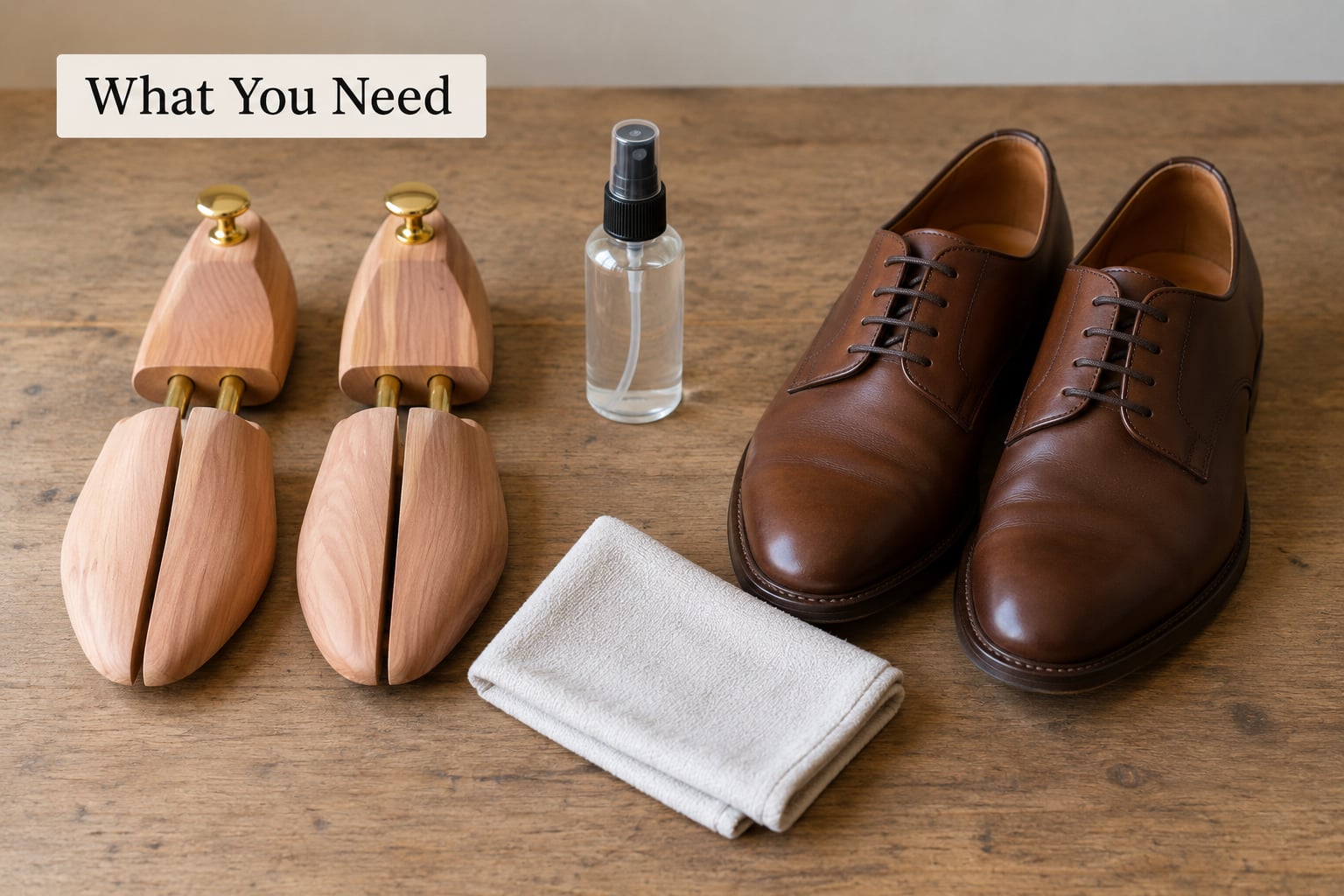
Gather everything before you start. Rushing the preparation is how people end up with cracked leather, because the stretching force goes into a dry, stiff surface instead of a softened one.
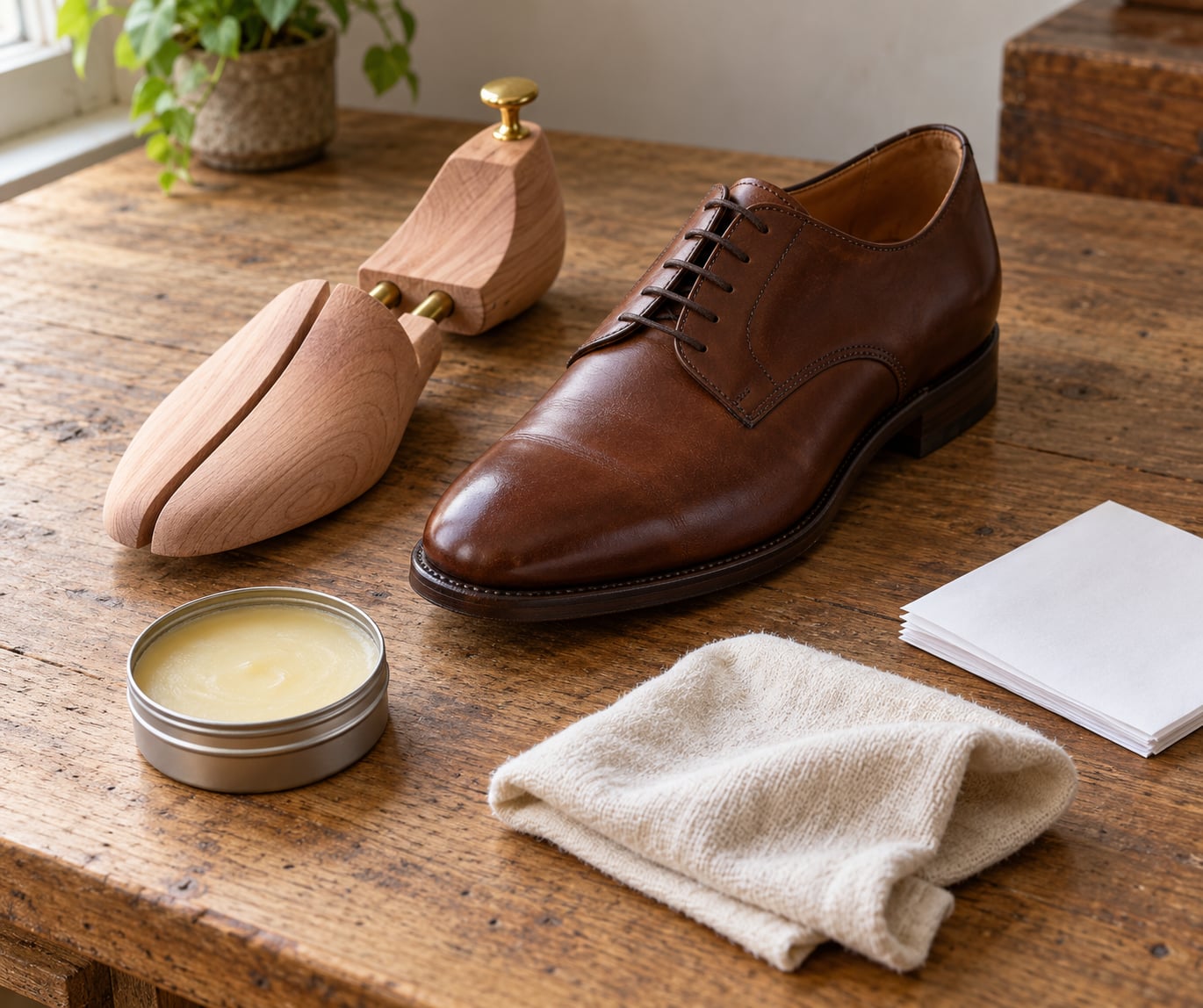
- Shoe trees or a shoe stretcher. Wooden trees hold a gentle shape between wears. A two-part stretcher with adjustable knobs and a toe piece is the tool that actually adds width.
- Leather conditioner. A cream or spray that hydrates the hide so it moves without tearing. Any water-based conditioner for smooth leather works.
- Stretch spray. Optional, but it softens faster than conditioner alone and is useful on the inside of a stubborn toe box.
- Thick wool socks and a hairdryer. For the same-day method. Two pairs of thick socks plus fifteen minutes of movement does more than people expect.
- Newspaper or plain white paper towels. For shaping the toe box. Skip coloured newsprint, since the ink transfers to light leather.
- A heat-safe container with a lid and a kettle. Needed for the steam method. A metal container you can close over the shoe is safer than holding a shoe over open vapour.
- A soft cloth and a shoe last or heat-safe form. The cloth keeps conditioner off the floor. The last keeps the toe box from slumping while the leather dries.
- A small bottle of plain rubbing alcohol. Useful for a DIY softener on smooth leather. Skip it on suede.
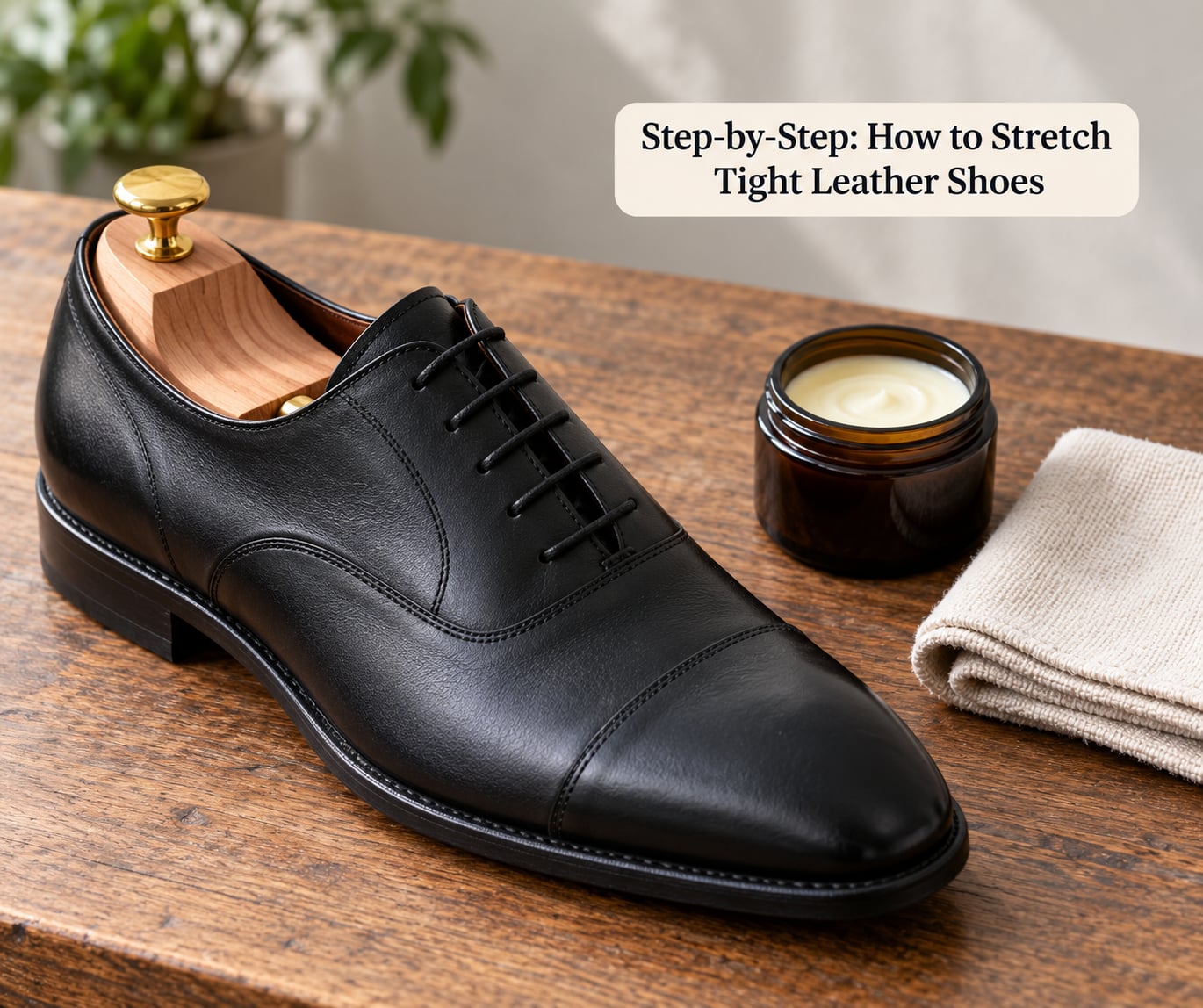
Step-by-Step: How to Stretch Tight Leather Shoes
1. Check the Lining and Prepare the Shoes
Put the shoes on and press down where it hurts. If the pain lands across the ball of the foot or the little toe, you need width. If the toe touches the front seam, you need length, and stretching will not fix it. If the pressure sits on top of the toes, you need depth.
Remove the insoles and set them aside. Most of the space people think they are losing is inside the shoe, and pulling a removable insole out is the cheapest adjustment available. Wipe the interior with a barely damp cloth, take the laces out if the shoes have them, and check the uppers in good light for dry cracks or stitching that has already started to pull apart.
If you see cracks, stop there. The fibre is already broken and stretching will split the panel. If the stitching is loose, take the shoes to a cobbler before you try anything.
2. Use Shoe Trees for a Controlled Stretch
Insert the stretcher and turn the knob until you feel steady pressure, not pain. Leather gives over hours, not minutes, so this is a job for several sessions rather than one evening of forcing it.
Leave the shoes on the trees overnight, take them out for a few hours, then put them back. Most pairs move visibly within a day or two and continue creeping for a week. You have done enough when the leather resists the knob evenly instead of loosening more each time.
For a tight spot, a broom handle works well. Press the end of a smooth wooden dowel into the area that pinches, take the leather over it, and hold the tension there for a few minutes at a time. That creates a small pocket of stretch exactly where you need it without changing the rest of the fit.
An overnight variation that stretches harder comes from water. Fill a sealed zip-lock bag a quarter to half full of water, put it inside the shoe, and leave it overnight. As the water freezes it expands from the inside and pushes the leather outward. Wipe the shoe the next morning, because the moisture needs to be allowed out slowly.
3. Apply Leather Conditioner After Stretching
Work conditioner into the stretched areas with a soft cloth while the leather is still slightly damp from steaming or from the water bag. Let it soak for twenty minutes, then buff off whatever did not absorb.
Conditioning does two jobs. It keeps the fibres supple so the new shape holds instead of springing back, and it stops the tiny surface cracks that appear where leather is flexed repeatedly. Condition the toe box and the ball-of-the-foot area again a few days later.
If you want a faster softener, mix your own. Put a small amount of rubbing alcohol in a spray bottle, add a few drops of leather conditioner, and shake it lightly. Spray the inside of the shoe only, let it sit for ten minutes, then stretch. Test the mixture on an inside seam first, because alcohol can darken some finishes and it must never touch suede.
Stop when the conditioner stops being absorbed in twenty minutes. Leather that will not take any more is leather that has reached the end of its useful stretch.
4. Use Warmth Carefully for Stubborn Tight Spots
Warm leather moves. Hold a hairdryer six to eight inches from the shoe on the low setting, keep it moving, and warm the tight area for thirty to sixty seconds at a time. Put your thick socks on first, slide the foot in immediately after warming, and walk around for fifteen minutes. Repeat two or three times if you need to.
Steam does the same job more evenly for boots and stiff dress shoes. Bring water to a boil, hold the shoe over the steam for about thirty seconds, then work the leather by hand while it is warm and put the shoe on straight away.
Two rules. Never use an open flame, and never hold a hairdryer still against the leather, because dry heat is what causes the permanent creasing and flaking people blame on the stretching. A shoe last warmed in the oven is a similar idea, and the same caution applies: warm, never hot.
5. Reshape the Shoes and Let Them Dry Completely
Once the leather has moved, hold the new shape. Pack the toe box with damp but not soaking newspaper, or with paper towels, and leave it for four to eight hours. Insert a last or a tree if the shoes will not hold their own form.
Try them on while they are still slightly damp. If the fit is right, the shape will set as they dry. If the toe box has gone flat and creased in the wrong place, take the stuffing out, re-warm the area gently and reshape it before it sets.
Air-dry at room temperature, away from radiators, dryers, vents and direct sunlight. Fast drying is what turns a good stretch into a cracked one. Thin shoes dry in a day, boots can take two or three days, and putting them on before they are fully dry is how people end up with permanent wrinkles.
Common Mistakes
Forcing the fit on the first night. Leather has a memory, and every forceful push teaches it to return to the shape it was in. Light pressure held for a night beats one hard shove.
Soaking the shoes. Water sitting in the leather for hours raises the grain and leaves a dried, blotchy surface. Damp is the goal, never wet.
Using a hairdryer on high or holding it in one spot. Heat damage does not come from the temperature setting so much as from staying in one place. Keep it moving and six to eight inches away.
Stretching one side only. The unstretched half keeps its original curve, and the shoe ends up lopsided. Work both sides to the same tension.
Skipping the conditioner. Dry leather that is forced open cracks along the flex lines, usually across the toe box. Conditioning after stretching is what makes the new shape last.
Drying with direct heat or leaving them in newspaper for a full day. Radiators and hair dryers shrink and stiffen the hide. Saturated paper also transfers ink, so swap it for white paper towels and check every few hours.
Two popular remedies deserve a mention. Vaseline softens the surface temporarily and leaves an oily mark, so it is not a stretching method. Damp socks worn for thirty minutes do help mould the leather to your foot, which is a useful extra step but not a replacement for the stretcher.
How Long Should You Stretch Leather Shoes?
Leather stretches on a schedule you cannot rush, and the honest answer is that the shoe trees work overnight while everything else works in minutes but achieves less.
- Thick socks plus warmth: fifteen to thirty minutes. You will feel a difference the same day, and it fades unless you repeat it.
- Paper stuffing: four to eight hours for a shaped toe box.
- Stretch spray or a DIY softener: six to twelve hours of combined softening and pressure.
- Shoe stretcher: 24 to 48 hours for a clear result, and up to a week of steady creep at each session.
- Steam: 20 to 30 minutes of active work for stiff leather, which then needs the same drying time.
- Frozen water bag: eight to twelve hours, mostly unattended.
Full-grain and top-grain leather stretch best because the grain is still natural. Corrected-grain and genuine leather stretch a little. Suede stretches but stains easily with moisture. Patent leather has a surface coating that cracks rather than moves, so it tolerates only light pressure and no alcohol. Synthetic and faux uppers do not stretch at all; the only thing that changes them is the shape of the frame around them, which is why they are a job for a cobbler or a return.
If after a week of careful sessions the shoe has not moved, stop. Repeated stretching on a badly fitting shoe damages the leather without giving you the room you wanted. Cobblers carry stretch liquids and lasting machinery that can do in an hour what a week of home attempts cannot, and on an expensive pair that is money well spent.
Frequently Asked Questions
Can I stretch tight leather shoes at home without damaging them?
Yes, on smooth leather, as long as you soften first and stretch slowly. Condition or steam the area, then apply light pressure with shoe trees for 24 to 48 hours rather than forcing the fit. Skip heat above a hairdryer on low, never soak the shoes, and stop at the first sign of cracking or loose stitching. Suede, patent leather and synthetic uppers each need a gentler approach.
How long does it take to stretch leather shoes?
A shoe stretcher gives a visible result in 24 to 48 hours, with the leather continuing to give a little each session for about a week. Thick socks plus gentle heat soften the fit within fifteen to thirty minutes but fade without repeating. Paper stuffing shapes a toe box in four to eight hours. No home method gives a full size, and leather rarely gains more than half a size of width.
What is the safest way to stretch the toe box of leather shoes?
Damp paper or white paper towels packed into the toe box, held for four to eight hours and refreshed as they dry. The moisture lets the fibres move and the paper keeps the new shape. A shoe last or a tree helps the box hold its form. Keep the paper damp rather than soaked, and use white stock instead of coloured newsprint so the ink stays off the leather.
Can I stretch leather shoes with a hair dryer?
You can, and it is the fastest same-day method, but only with low heat held six to eight inches away and kept moving for thirty to sixty seconds at a time. Warm the leather, put thick socks on straight away and walk around. Dry heat left on one spot is what causes permanent creasing and flaking, so never hold the dryer still or use it on suede.
Will stretching leather shoes make them larger permanently?
Partly. The fibres move and mostly hold, but leather relaxes again with humidity and heat, so expect to repeat maintenance. Shoe trees kept in the shoes between wears, conditioning every few weeks, and enough space between pairs on the shelf all help the shape hold. Once the leather has been opened up once it is easier to open again, which is why gradual repeated stretching works better than one big effort.
How do I stretch tight leather shoes when they have a delicate lining?
Work from the outside where you can. Apply heat and conditioner to the leather upper rather than the lining, protect any lining with a layer of white paper or cloth, and skip alcohol-based softeners, which can bleed through thin linings. Keep steam sessions short and let the shoe dry fully before wearing, since trapped moisture is what damages lining more than the stretching does.
Conclusion
Start with the diagnosis and the shoe trees. Soften first, stretch lightly, condition afterwards, and let the shoe dry at room temperature before you wear it again. Add warmth or steam only when the trees alone are not enough, and stop the moment the leather cracks, discolours or takes an odd shape. That is the whole process, and it buys roughly half a size.