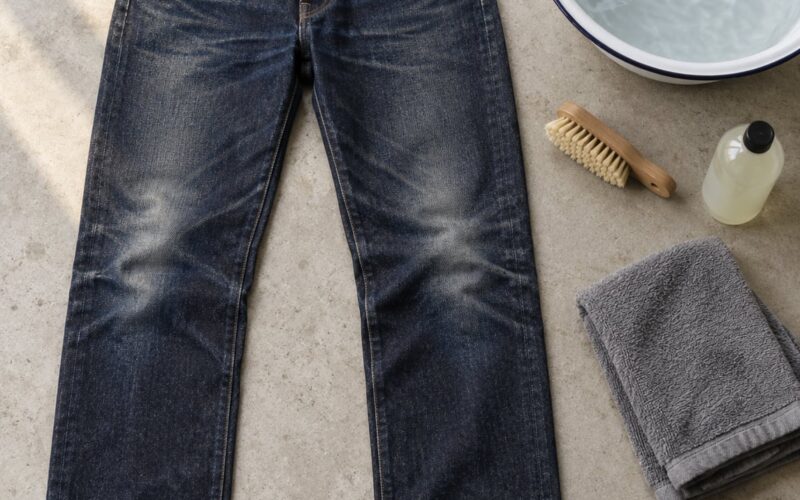
To wash raw denim for the first time, turn the jeans inside out, soak them alone in cold water with a small amount of mild detergent for 30 to 60 minutes, rinse until the water runs mostly clear, press the water out with clean hands, and air dry them flat or hanging in the shade. Skip the tumble dryer, bleach and fabric softener entirely.
That whole process takes about 30 minutes of actual attention. The soak does the work while you get on with your day.
The nervousness around a first wash is understandable, because the first wash is the one that permanently sets both the size and the base color of the jeans. What comes out of the machine that day is the pair you own for years, so a few careful decisions up front are worth the twenty minutes.
Two things happen on the first wash. The cotton relaxes, which takes out some of the mill’s loom tension and shrinks the jeans, mostly along the inseam. And a layer of loose surface indigo lifts off into the water, which is why the tub turns startlingly blue. Neither is damage. Both are the moment raw denim stops being raw.
Everything below assumes you own a pair that is dry and unwashed, whether it came off the shelf today or has been hanging in a closet for two years. If the pair is unsanforized or shrink-to-fit, the same gentle method still applies, but expect more shrinkage and read the label before you start.
What You Need
The supplies list is short, and most households already have everything on it. Nothing here is a specialty product.
- Your raw denim jeans
- Cold water, or cool water no warmer than 30C (86F)
- A small amount of mild liquid detergent, with no enzymes and no bleach
- A clean tub, basin or sink, plus a washing machine if you prefer one
- A soft-bristled brush, such as the kind used for shoes or dishes
- A clean towel
- Cold rinse water and somewhere shaded to dry
Detergent is the item worth thinking about most. You want a mild liquid detergent without optical brighteners, which are the additives that make whites look white and leave a chalky film on indigo. Enzymes break down protein fibers, and bleach strips dye outright, so both are out. Less is more here, roughly a tablespoon in a full basin, because residue detergent leaves behind keeps attracting dye long after the rinse.
Fabric softener is the other one to leave in the cabinet. It coats the fiber to make it feel smooth, and that coating does the opposite of what you want on denim you plan to wear for years.
Two machine settings matter more than the detergent if you use one. Temperature has to be cold, and the spin cycle has to be low. A hot wash loosens far more of what it should, and a hard spin twists and abrades the fabric while it is still full of loose dye. The care label on your jeans wins over anything written here, including this guide, which is current for 2026.
How to Wash Raw Denim for the First Time: Step by Step
Follow these six steps in order and the jeans come out clean, softened, sized close to where you bought them, and still holding most of their indigo for the fades ahead. The method works in a basin, a bathtub or a washing machine, and the differences between them are small.
How to Wash Raw Denim for the First Time: Check the Label
Start by reading the care label inside the waistband before the jeans touch water. Most raw denim labels tell you not to tumble dry, not to bleach and not to iron the finish, and some warn specifically against washing until the break-in is done.
Look for three things: the wash temperature, whether tumble drying is permitted, and whether the label says anything about unsanforized or shrink-to-fit denim. Where the label conflicts with general denim advice, follow the label. It describes the specific cloth in your hands, and a washing machine that runs a 40C cotton cycle will not obey your intentions.
If the label says the jeans must be dry cleaned, that is rare for raw denim and usually reflects the mill’s caution. It is worth following, though, particularly on a dark pair where a professional clean avoids the risk of an uneven result.
Empty the Pockets and Remove Belts
Empty every pocket and remove the belt, any wallet or keys, and anything loose in the back pockets. Coins and keys leave hard marks and pinholes that no amount of careful washing will undo.
Turn the jeans inside out. This single step does more for the denim than anything else in the process, because the outer face carries nearly all the loose indigo and takes the most abrasion. Washing them inside out keeps that dye in the fabric longer instead of letting it go down the drain.
Fasten the button and zip the fly so the hardware cannot work its way into the fabric, and leave the pockets empty so they lie flat while the jeans soak. If you are soaking in a tub rather than a machine, folding the jeans neatly along the inseam keeps them submerged and easy to lift out.
Choose Cold Water and a Mild Detergent
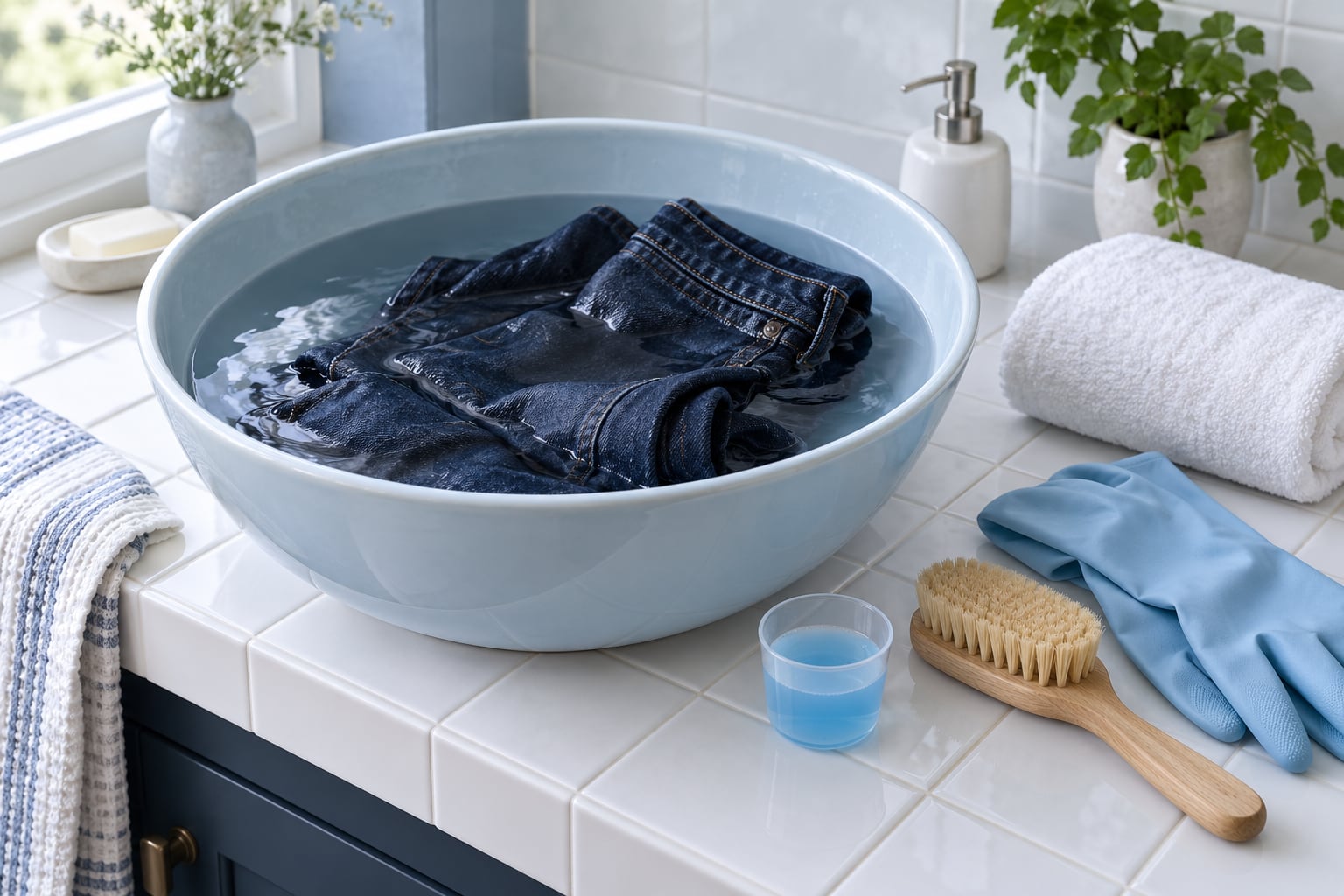
Fill the tub or basin with cold water, no warmer than 30C (86F), and add roughly a tablespoon of mild liquid detergent. Stir it through until it is fully dissolved before the jeans go anywhere near it.
Dissolving first matters. Detergent poured straight onto dry denim sits in one spot, and that spot gets bleached out or tinted by concentrated dye.
What to avoid is straightforward: hot water, bleach, enzyme cleaners, harsh powders, oxygen brighteners, and more detergent than the water can carry away. Detergent should be used sparingly, not skipped entirely, because clean cotton releases indigo better than dirty cotton does.
Soak the Denim Gently
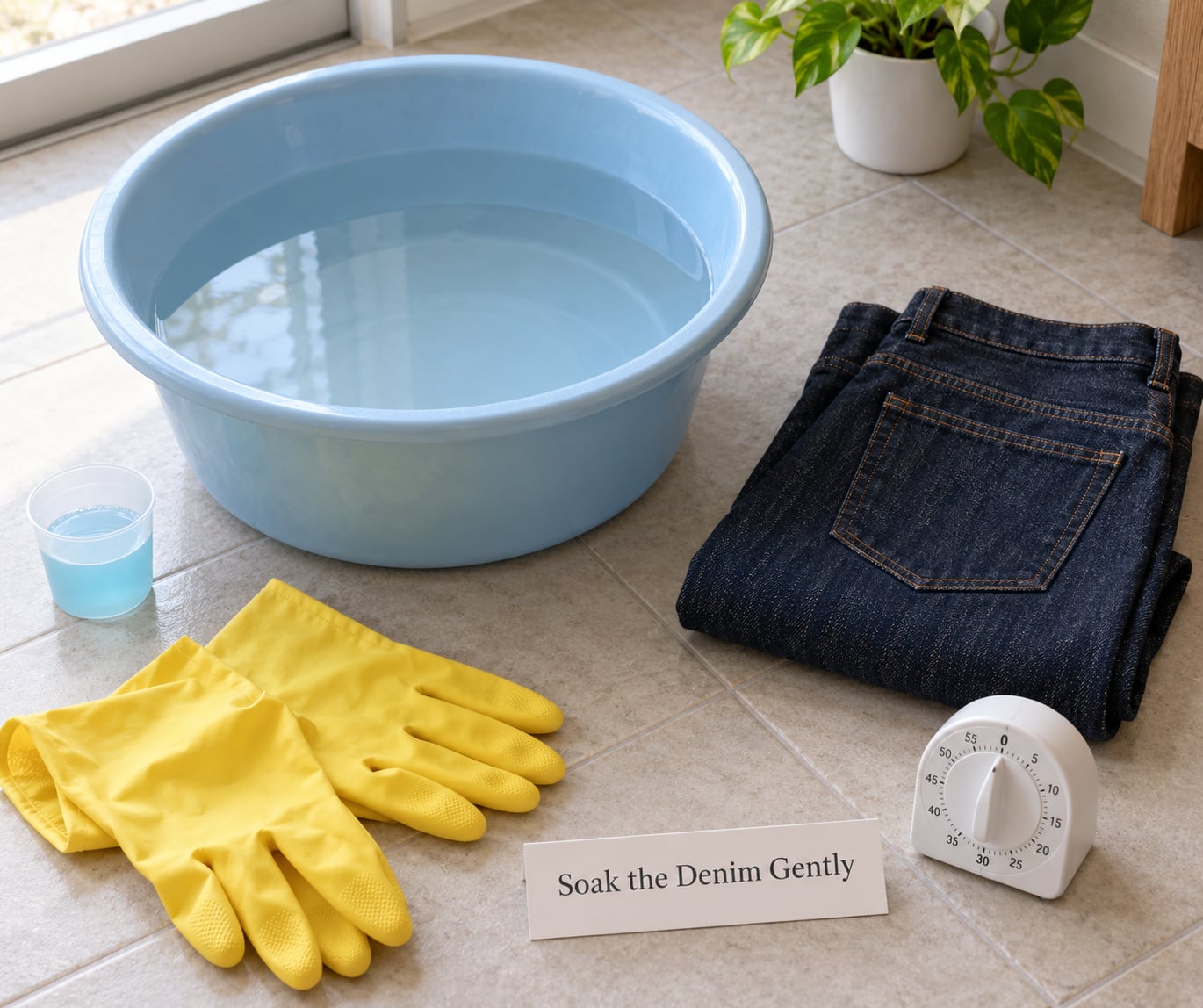
Submerge the jeans fully, then work them through the water once with your hands so every layer soaks. Let them sit for 30 to 60 minutes with no agitation at all. That window is enough to relax the cotton and lift loose dye.
Longer is not better. Overnight soaks and multi-day soaks come up constantly in denim forums, and they do drive more fade failure than a one-hour soak. The same is true of scrubbing, brushing hard, or working the fabric against itself to get a darker water color. A soft brush is fine for a stubborn spot, and the rest of the surface should be left alone.
A bathtub is the easiest place to give the jeans room to move, but it is a poor spot for a multi-hour unattended dye-setting ritual. Those turn jeans a shade flatter, not deeper. Ten minutes of movement in cold water once is enough to start.
If you use a washing machine instead, put the jeans in alone, set it to cold and a gentle or delicate cycle, and choose the lowest spin setting. Run an extra rinse afterward. A single jeans in an empty drum is fine. Washing raw denim for the first time in a mixed load is not, because other garments rub the dye loose and pick up a blue tint in the process.
Rinse, Press, and Remove Excess Water
Drain the water, which will be a strong blue, then refill with cold water and work the jeans through it. Repeat until the water runs mostly clear, which usually takes two or three rinses. Judge it in good light, because a basin in a dim bathroom can fool you.
The first rinse should be startlingly blue and the second noticeably paler. If the water is still heavily tinted after several rinses, keep going rather than stopping at a fixed number.
Do not wring the jeans and do not spin them hard to save time. Both twist the wet fabric and can distort the knee and the taper, which is hard to undo. Press the water out with clean hands, then lay the jeans on a clean towel, roll the towel up and press again. Most of the water comes out that way without any force.
Some people add a cup of white vinegar to the first rinse to help set the remaining dye, and the community treats it as a useful extra rather than a magic fix. Skip it if you have hard water or a sensitive skin, and never pour it straight onto the denim.
Hang the Jeans to Dry in Shade
Reshape the jeans while they are still damp. Smooth the legs, flatten the waistband, and fold them lengthwise so the inseam sits neatly along itself. Hang them over a towel rack or a sturdy hanger, or lay them flat if the weight is heavy enough to stretch the shoulders out of shape on a hanger.
Keep them out of direct sun and away from radiators and tumble dryers. Heat is the one thing that can make a denim mistake permanent. A pair that comes out of a hot dryer can shrink several sizes, lose its fade potential, and come out misshapen at the knee and the pocket corners.
Turn the jeans over halfway through if you are drying flat, and check them before you put them on. Denim stays damp at the cuffs and the waistband long after the rest feels dry, and wearing them half-wet against a sofa or a car seat transfers indigo to light fabric. That’s crocking, and it marks upholstery rather than the jeans.
Finally, don’t judge the fit on the morning they dry. Cotton relaxes again with wear and a little sweat, so a pair that seems a touch tight straight off the line often settles within a week or two. Judge fit after a full day in them.
Common Mistakes
Almost every ruined first wash traces back to one of a handful of habits. Each has a straightforward fix.
Soaking for days instead of an hour
Long soaks drive fade failure: the jeans leave flatter, with less contrast left for the whiskers and honeycombs to develop in. Fix: cap the soak at 60 minutes and rinse immediately.
Using hot water
Heat strips more surface indigo and releases more shrinkage than cold water ever will. Fix: cold or cool only, and check that the machine is actually running cold before you press start.
Adding bleach or an oxygen brightener
Bleach removes the dye you spent a year building fades around. Fix: mild detergent, nothing else. If a stain will not lift, treat the spot and accept a small mark rather than bleaching the whole panel.
Overloading the machine or washing with other clothes
A crowded drum rubs the jeans against everything else, and every other garment picks up blue. Fix: wash the jeans alone, or with only a few dark items that are already fully faded.
Rubbing or scrubbing at a dye stain
Indigo transfer is a symptom, not a stain to scrub. Work the denim under still water and let the rinse carry the color away. Fix: patience, not friction.
Machine drying
This is the mistake that actually ruins pairs. Fix: air dry, always. If you need jeans dry fast, press out the water first and hang them where the air moves.
Ironing dark marks or sitting on light upholstery while damp
Heat and pressure set loose indigo into the wrong surface. Fix: never press raw denim with a hot iron, and never sit on pale upholstery in dry denim during the first months of wear.
Skipping detergent entirely
Soaking with no detergent sets some loose dye in the fabric and can leave a permanent cast. Fix: a small measured amount of mild liquid detergent, rinsed out thoroughly.
Some blue on a light-colored towel, a white tee or a pillowcase is normal for the first wash or two, even when the rinse water looks fairly clear. Wash those items separately and give them a second pass. It is not a sign that something went wrong, and it is not a reason to keep re-washing the jeans.
Frequently Asked Questions
Should I soak raw denim before wearing it?
Most owners wear a new pair for several months before the first soak, which lets the jeans start shaping to you and gives the fades something to develop into. Wearing first also means the first wash is happening on denim you already understand. If the jeans have been in storage, smell stale, or are starting to break down at the crotch, wash them sooner instead of following a rule.
Can I wash raw denim in a washing machine?
Yes, as long as you wash the jeans alone, set the cycle to cold and gentle, and pick the lowest spin setting. Run an extra rinse to carry away the loosened indigo, then air dry. A machine is slightly harsher than a hand soak, mainly from agitation and spin, so basins are preferred for the very first wash if you have the space and the patience.
Why do my raw denim jeans feel stiff after washing?
A first wash relaxes the cotton and removes mill finishing, but it does not fully soften raw denim, because softening comes from months of wearing. Expect them to be noticeably less rigid after one soak and still stiff for a while. Fabric softener would coat the fibers and speed up the feel, but it also dulls the surface and hurts fade potential, so most denim owners skip it.
Should I add vinegar or salt when washing raw denim?
Vinegar is the common addition, usually a cup in the rinse water to help settle the last of the loose dye. It helps a little and it is harmless on normal denim. Salt is mostly folklore for washing, though soaking raw denim in seawater is a deliberate fade method that trades contrast for speed. Neither one rescues a hot wash or a tumble-dried pair.
Is some color bleeding normal when washing raw denim?
Yes, and on a first wash it is expected. The rinse water usually turns a strong blue the first time and is noticeably paler by the second. If the color is still heavy after several cold rinses, keep rinsing until it is mostly clear. Indigo that transfers to a light towel or sofa is crocking rather than bleeding, and it fades as the jeans wear.
Read the label, empty the pockets, turn the jeans inside out, and soak them alone in cold water with a small amount of mild detergent for 30 to 60 minutes. Rinse until the water is mostly clear, press the water out with a towel instead of wringing, and air dry them in the shade. That is how to wash raw denim for the first time without losing more fade potential than the job requires.