A new denim jacket breaks in by wearing it often, which loosens the starches and sizing agents that hold the twill weave stiff, and by adding a cold soak or steam when you want the softness sooner. Budget 30 to 50 wears for a mid-weight jacket and closer to a full season for a 22oz one, and check the care tag first, because plenty of denim jackets are already preshrunk and need almost nothing.
Table of Contents
- What You Need
- Step-by-Step
- Common Mistakes
- Frequently Asked Questions
- How long does it take to break in a denim jacket?
- Can I use baby oil to break in denim?
- How do I soften a stiff denim jacket without washing it?
- Is it safe to boil or soak raw denim to make it soft?
- Should I wash a raw denim jacket before wearing it?
- How often should I wear a denim jacket while breaking it in?
What You Need
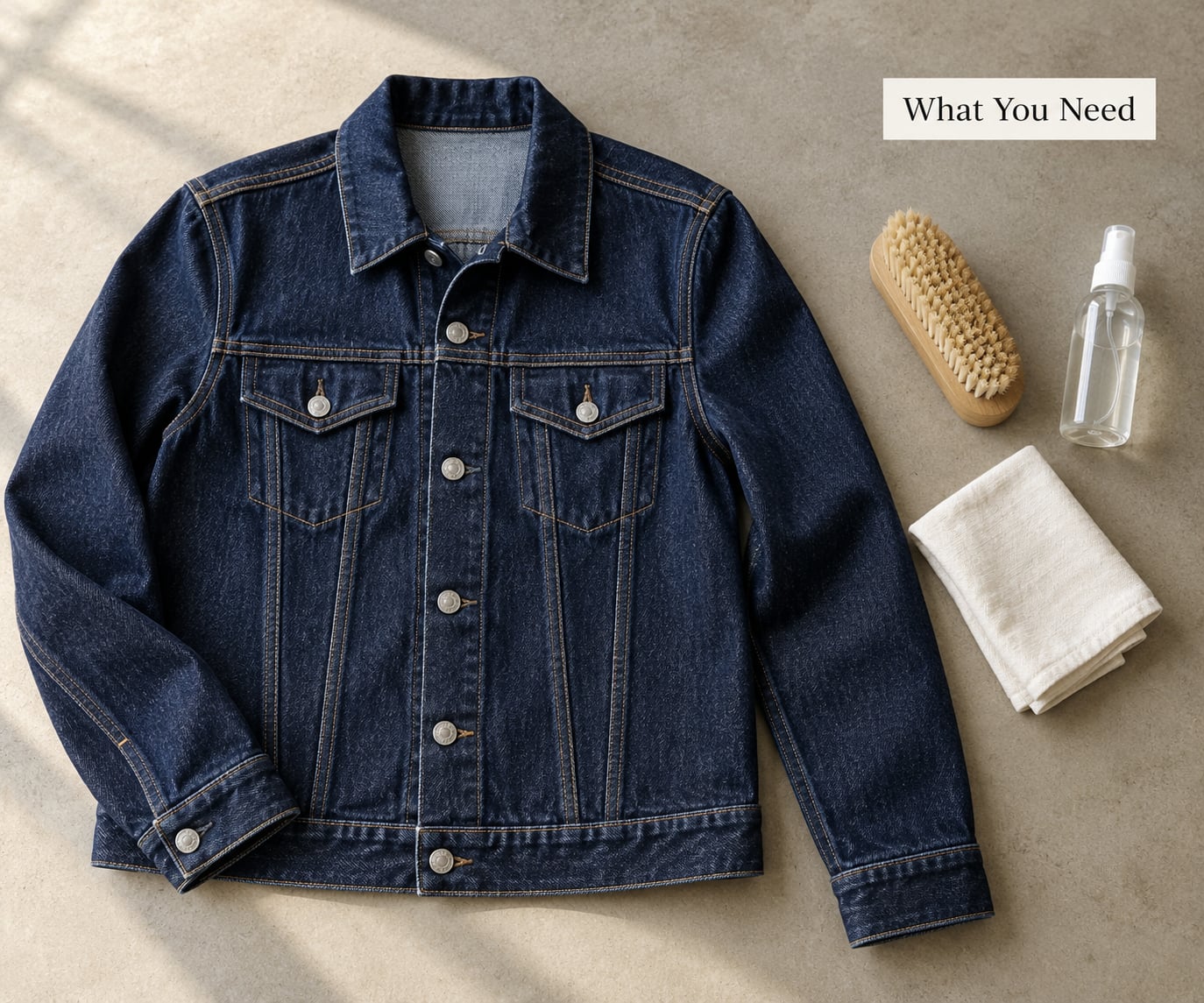
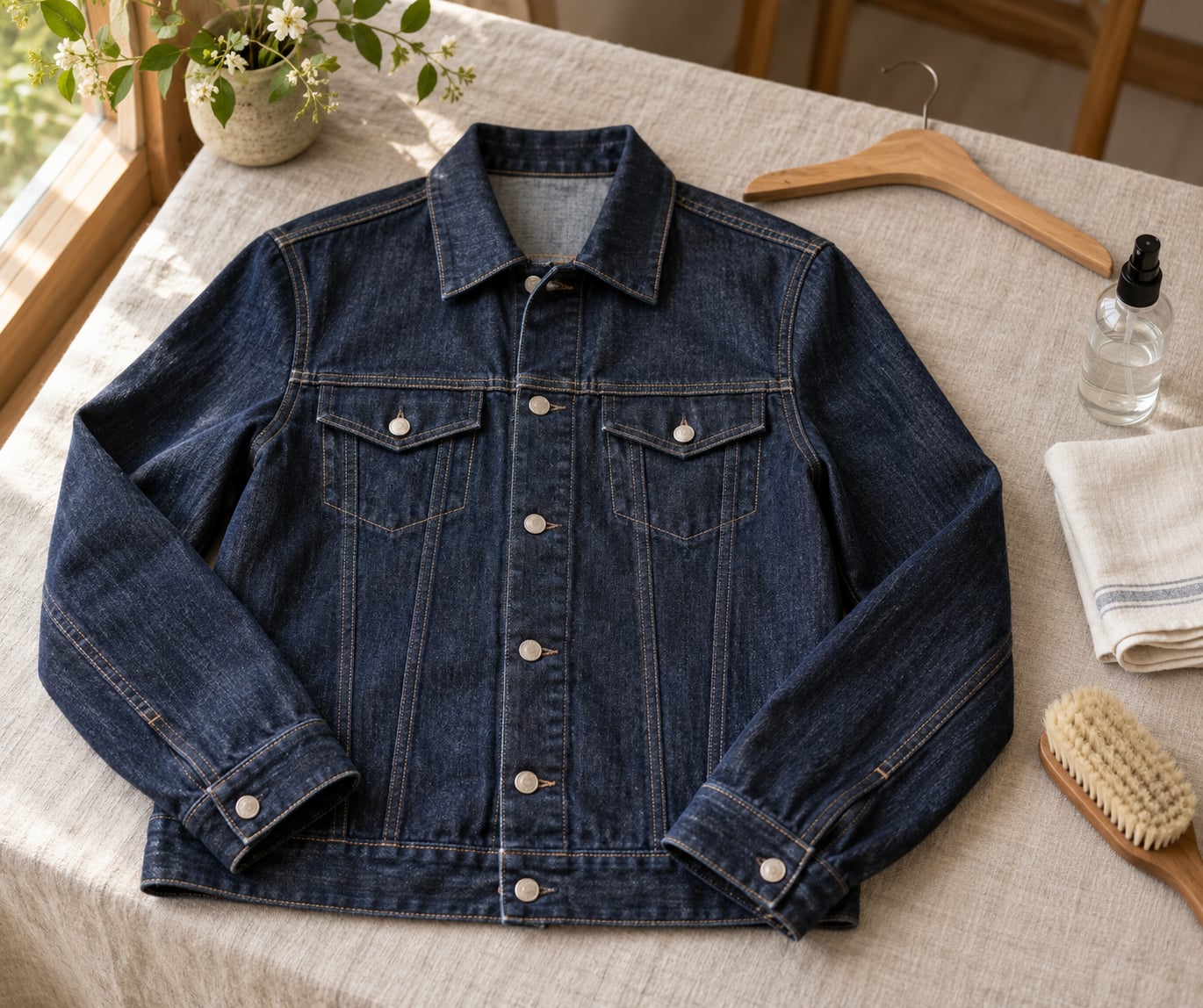
Keep the setup small. You need the jacket itself, a flat surface with room to lay it out, a cotton-based moisturizing product safe for denim, a soft brush or sponge, a steamer or an iron, a clean pressing cloth, and a hanger or cushion for shaping.
The workspace matters more than the tools. Denim dye transfers when it is wet, so use a towel or sheet under everything and keep the jacket away from light upholstery. Hang it on a sturdy wooden hanger rather than a wire one, which will crease the shoulders while the fabric is soft.
On the product front, a plain cotton-denim conditioner is enough. Skip anything with enzymes, bleach, or heavy fragrance, and skip fabric softener entirely, because it leaves a film that traps indigo against the fibre and dulls fades later.
Step-by-Step
Step 1: Check the Care Label and Test the Denim
Read the label before you add water, steam, or pressure to anything. It tells you the fibre content, whether the jacket is preshrunk, and the maximum washing temperature the maker allows.
Raw denim is unwashed, unsanforized fabric that still carries loom starch and is expected to shrink when it gets wet. Selvedge just means the fabric was woven on narrower shuttle looms with a finished edge, and it barely changes how fast a jacket softens. Treated or pre-washed denim has already been through that, so it arrives much softer.
Then test it. Rub a damp fingertip along a hidden seam allowance or inside the hem. If dye comes off, the jacket will bleed in a soak, and you should work inside out. If nothing transfers and the label says 100 percent cotton with no preshrink note, expect real shrinkage if you soak it.
Step 2: Soften the Fabric with Gentle Wear
Wear is the only method that shapes the jacket to your body, so make it the foundation rather than the fallback. Put the jacket on daily and move in it, reach, carry, climb stairs, and drive with the sleeves pushed up.
That friction is the mechanism. Cotton fibres relax and break down at the flex points, and abrasion wears the surface slightly, so the jacket begins to drape instead of standing away from you. Stiff sleeves that block your shoulders are the first thing to loosen, usually within the first 10 to 15 wears.
People on r/rawdenim describe this as the honest method, because it costs nothing and ruins nothing. The same forum repeatedly frames weight as the deciding variable, since results depend far more on the fabric than on the technique you use.
Step 3: Use a Safe Conditioning Method
Dampen a soft cloth with a denim-safe conditioner or a small amount of plain moisturizing lotion, and work it into the body panels, sleeves, and seams. Use light circular strokes rather than scrubbing hard.
Leave the jacket to dry naturally, flat or on the hanger, away from direct sun. Check the cloth as you go, because colour transfer on the cloth means transfer is happening and you should stop before it builds up.
This method softens the surface of the fabric without moving the garment dimensions, which makes it the safest option for a lined jacket, a sherpa-collar trucker, or anything with contrast stitching you would rather not bleed.
Step 4: Steam or Press for a Faster Softening
Steam is the fastest route that will not shrink the jacket. Hang it in the bathroom and run a hot shower for 10 minutes, or hold a garment steamer 6 inches from the fabric and pass it slowly over the body panels and sleeves.
Steam loosens starch by relaxing the fibre without wetting it enough to trigger shrinkage. Expect noticeable softening after one session and a second session to finish it.
If you use an iron, turn the jacket inside out, set it to low with no steam, and work through a clean pressing cloth. Never iron the face of the denim directly, because heat and pressure glaze the twill and leave a permanent shine.
Step 5: Shape the Jacket to Your Body
Put the jacket on over what you normally layer underneath, because a Type III trucker worn over a hoodie sits differently than the same jacket over a t-shirt. Move around in it, then gently pull the collar, elbows, shoulders, and waist into the position you want.
The elbows and the shoulders are where permanent shape sets. Do the shaping while the fabric is still slightly damp from wear or steam, and hold each area for 30 seconds at a time rather than tugging hard.
A light touch-up with steam or a warm cloth handles stubborn spots afterwards. If a shoulder feels tight, it usually means the size is wrong rather than un-broken-in, and no amount of moulding fixes a pattern that was cut for a different body.
Step 6: Wash and Maintain the Broken-In Shape
Wash raw or pre-washed denim the way its label allows. For a raw jacket that the maker says is machine washable, turn it inside out, use cold water, a mild detergent, and a short low-agitation cycle.
Skip the dryer. Heat drying shrinks cotton, sets sharp creases through the body panels, and is the single most common way people ruin a jacket during its first year. Hang or lay the jacket flat to dry, then reshape the hem and cuffs while it is still damp.
For unsanforized jackets, a warm soak can take off more than an inch across the chest and shoulders, so treat the first soak as a permanent fit decision. Once broken in, wash rarely, air the jacket between wears, and spot-clean the collar and cuffs instead.
Common Mistakes
Soaking rigid denim in hot water. Hot water strips dye and drives shrinkage fast. Use cold or lukewarm water, and soak for one to two hours rather than the six to eight hours often quoted online, which is jeans advice and is long enough to shrink a jacket noticeably.
Machine-drying a raw jacket. Even on air-fluff, the tumbling sets creases at the elbows and waist and shrinks the body. Air dry, always.
Using excessive heat. A hot iron straight onto denim face leaves a shiny glaze that never fades out. Press through a cloth, low setting, inside out.
Scrubbing with a stiff brush. A stiff brush abrades the twill surface and creates pale, permanent wear patches that look like mistakes. A soft brush lifts dust, and grit left in the fabric acts like sandpaper against the fibres, which is a good reason to wash more often than the old never-wash rule suggests.
Wearing the jacket while it is damp. Damp denim under load sets folds and creases in your shoulders. Let it dry fully before putting it on again.
Treating stiffness with harsh chemicals. Borax in a warm bath is a genuine community method and works because it dissolves starch: a cup dissolved in a sink of warm water, two hours of soaking, then a thorough rinse. Anything harsher, including bleach and fabric softener, costs you more fade than it buys in softness.
One more myth worth clearing up. You will see sources telling you to dry raw denim in direct sun and others insisting on shade, and both are arguing from different priorities. Sun bleaches the indigo and speeds up fading; shade preserves contrast. For a jacket you want to break in and keep for years, dry in shade and accept a slower fade.
Finally, reinforce before you fail. The failure points on a denim jacket are the elbow seams, the pocket corners, and the chain-stitched hem, and a small hand-stitched repair done early keeps the wear looking deliberate instead of ending it.
Frequently Asked Questions
How long does it take to break in a denim jacket?
Most people land on 30 to 50 wears, and active wear shortens that. By weight: under 14oz softens in days to two weeks, 14 to 18oz takes four to eight weeks, 18 to 21oz takes three to six months, and 22oz and up needs six to twelve months. A cold soak or steam session can compress the first week, but only wear permanently molds the fit to your body.
Can I use baby oil to break in denim?
It will soften the surface, and that is the problem. Baby oil and similar conditioners coat the fibre, cut future abrasion, attract dust, and mute the fade, so the jacket ends up flat instead of developing high-contrast whiskers and honeycombs. If you use any oil, use a small amount of plain denim conditioner on a cloth, and expect to rinse the jacket afterwards.
How do I soften a stiff denim jacket without washing it?
Steam it. Hang the jacket in the bathroom, run a hot shower for 10 minutes, or pass a garment steamer 6 inches from the fabric over the body panels and sleeves. One session gives noticeable softening and a second usually finishes it. You can also work a little denim-safe conditioner into the panels with a damp cloth and let it air dry. Neither method shrinks the jacket.
Is it safe to boil or soak raw denim to make it soft?
Boiling is the fastest way to strip indigo and shrink an unsanforized jacket, and it can leave the dye water brown enough to ruin other laundry in the same load. A warm soak of one to two hours in cold-to-lukewarm water with mild detergent removes most of the loom starch and is far safer. Any soak above that on a raw jacket is a permanent fit decision.
Should I wash a raw denim jacket before wearing it?
Not always. If the jacket is unsanforized, its maker may expect a soak first so it shrinks to you, and washing it cold and inside out first removes starch and mill dirt without taking much colour. If the label says preshrunk or the jacket is cotton with elastane, skip the first wash and just wear it. Check the care tag, because it settles the question.
How often should I wear a denim jacket while breaking it in?
As often as you can stand to, ideally daily in cool weather, and always while doing something active. Driving, walking, chores, and carrying things create the friction that relaxes the fibres at the elbows and shoulders. Rest days are wasted days early on, since the first 10 to 15 wears are where most of the visible softening happens.
Start tonight with a 10-minute steam and then put the jacket on tomorrow and keep it on. Check the tag before anything wet touches it, work in a conditioner only if the surface still feels board-like after a couple of weeks, and save the soak for a raw jacket whose maker says it expects one.