You can tell if jeans are good quality by examining three things in order: the weight and feel of the denim, the density of the stitching, and the sturdiness of the hardware. Ignore the price tag and the label on the waistband until you have done those three. Most of the inspection takes about five minutes and needs nothing more than the pair itself, a bit of light, and your own hands.
The reason this matters is simple. Brands often run several factories with very different output, so the name on the label tells you less than people assume. A pair can look expensive, feel soft on the rack and still be built to fail at the pocket corners in a few months. Conversely, plenty of mid-priced jeans outlast pairs three times the cost.
Here is the process I use, in the order I use it.
What You Need
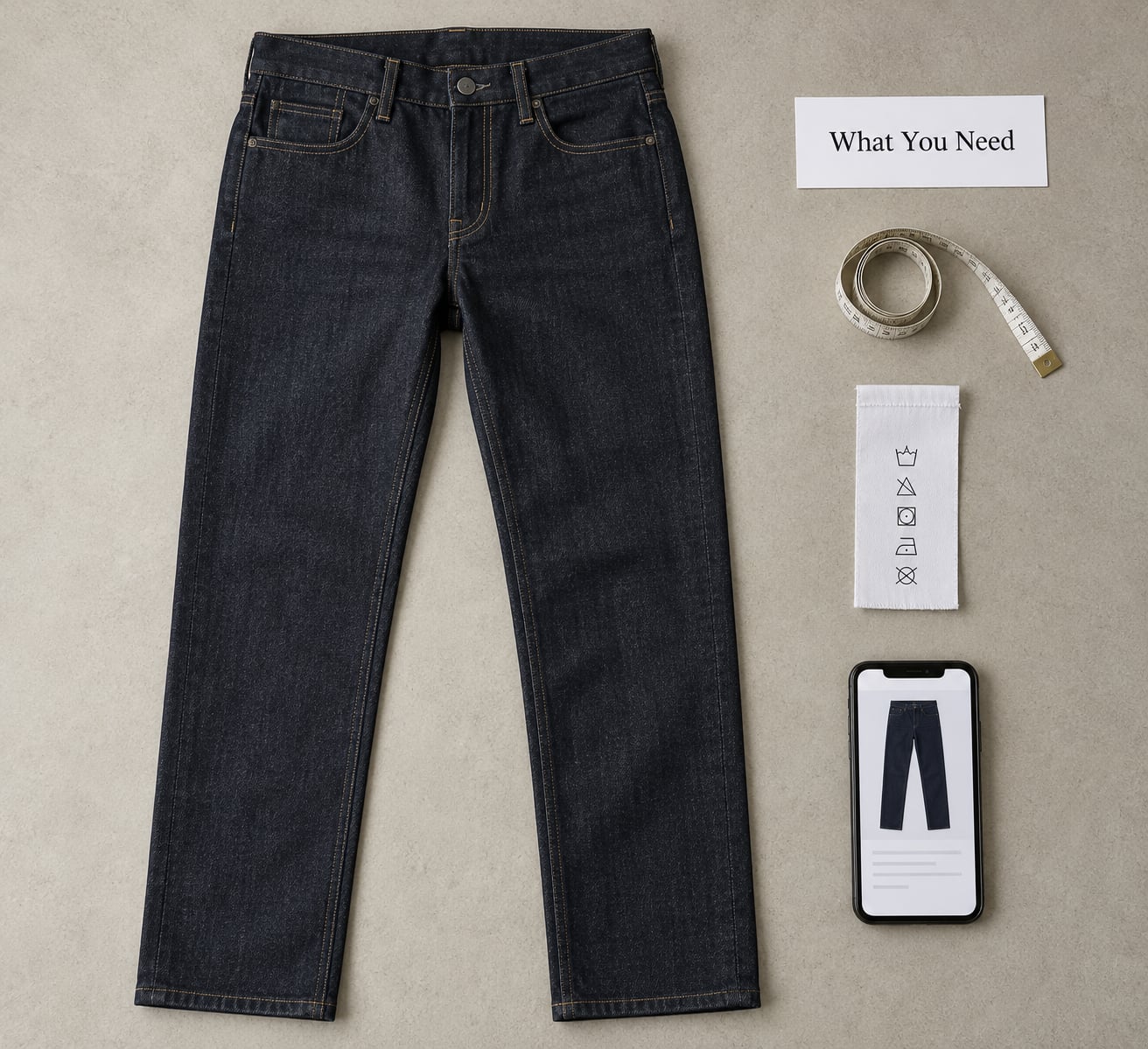
The garment itself is the only real tool. Everything else helps you document or verify what you find.
- The jeans, unwashed and unfolded. Folded pairs hide the outseam and the hem, which is exactly where you want to look.
- A soft measuring tape or a ruler. Useful for checking that the listed measurements match the garment rather than the size label.
- Your phone. Photograph the care label, the fabric composition and the inside of the seams so you can compare later or check the return terms.
- Good, even light. Store lighting flatters everything. Natural light near a window shows loose threads and skipped stitches immediately.
- The product page or store return policy. Online you cannot squeeze the fabric, so the description, the measurements and the return window do that work instead.
Have the jeans buttoned before you start looking at anything else. Half of what people call a quality problem is really a fit problem, and you cannot separate the two on a hanger.
Step-by-Step: How to Tell if Jeans Are Good Quality
1. Check the Denim Feel and Weight
Squeeze the fabric between two fingers and then rub it with your thumb. Good denim feels dense and slightly stiff, and it resists rather than drapes like a T-shirt. Roughly 12 ounces per yard is the usual benchmark for a hard-wearing pair, with heavier weights common in workwear and lighter ones in fashion fits.
But feel alone misleads. Cheap denim is often stone-washed and pre-softened specifically to feel nice in the shop, so softness is not evidence of quality. Weight is, because softening a fabric makes it thinner.
Result: the fabric should feel dense and springy, and it should not look papery or translucent where the light hits it. Read the care label for composition too. 100% cotton is the traditional benchmark; 1 to 2 percent elastane is a common and perfectly workable addition for stretch, while a high elastane content gives you a stretch jean rather than a denim one.
2. Inspect the Stitching and Seams
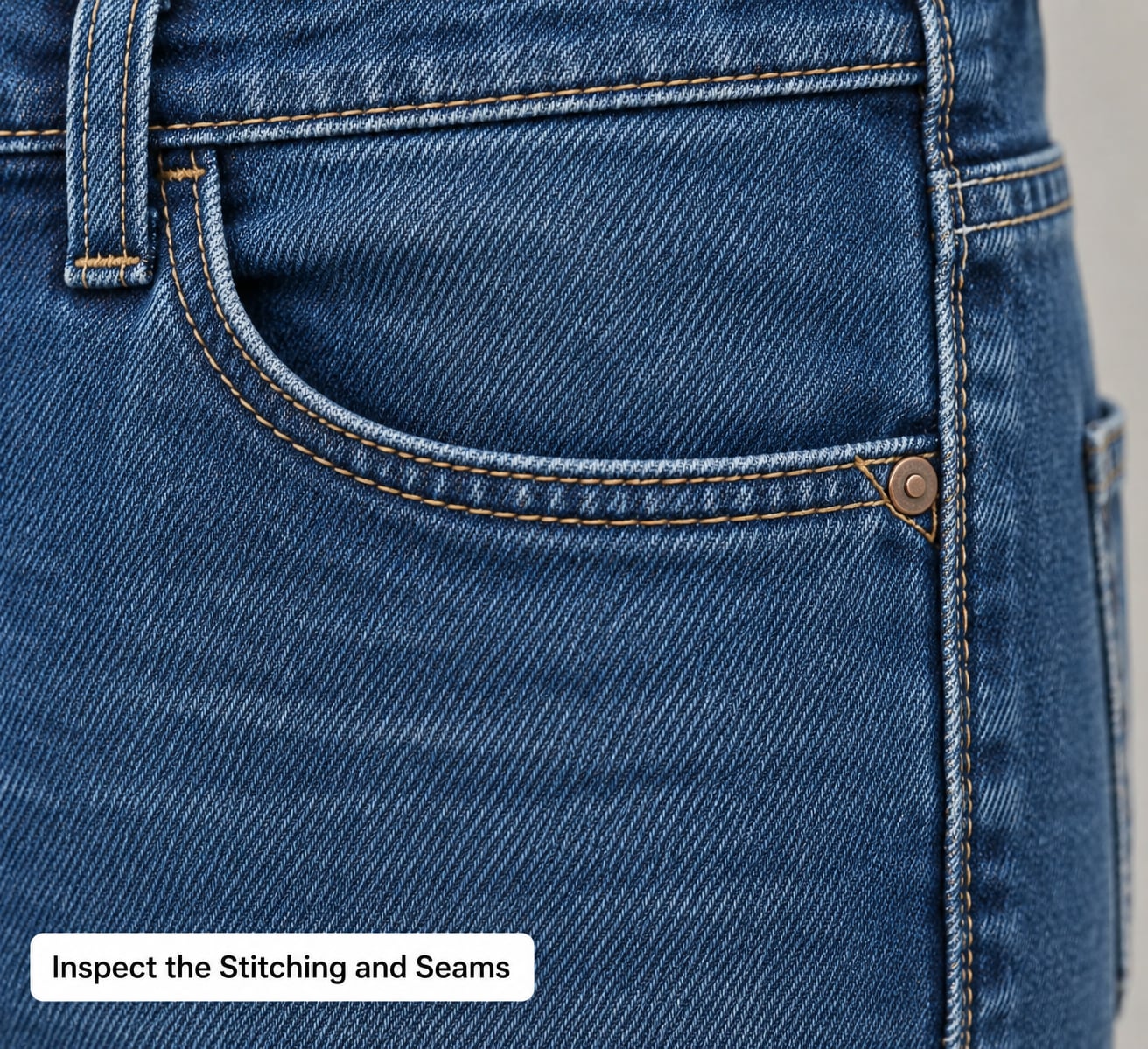
Turn the jeans inside out. The interior is where the truth lives, because the parts of a garment nobody sees are usually the parts nobody rushed.
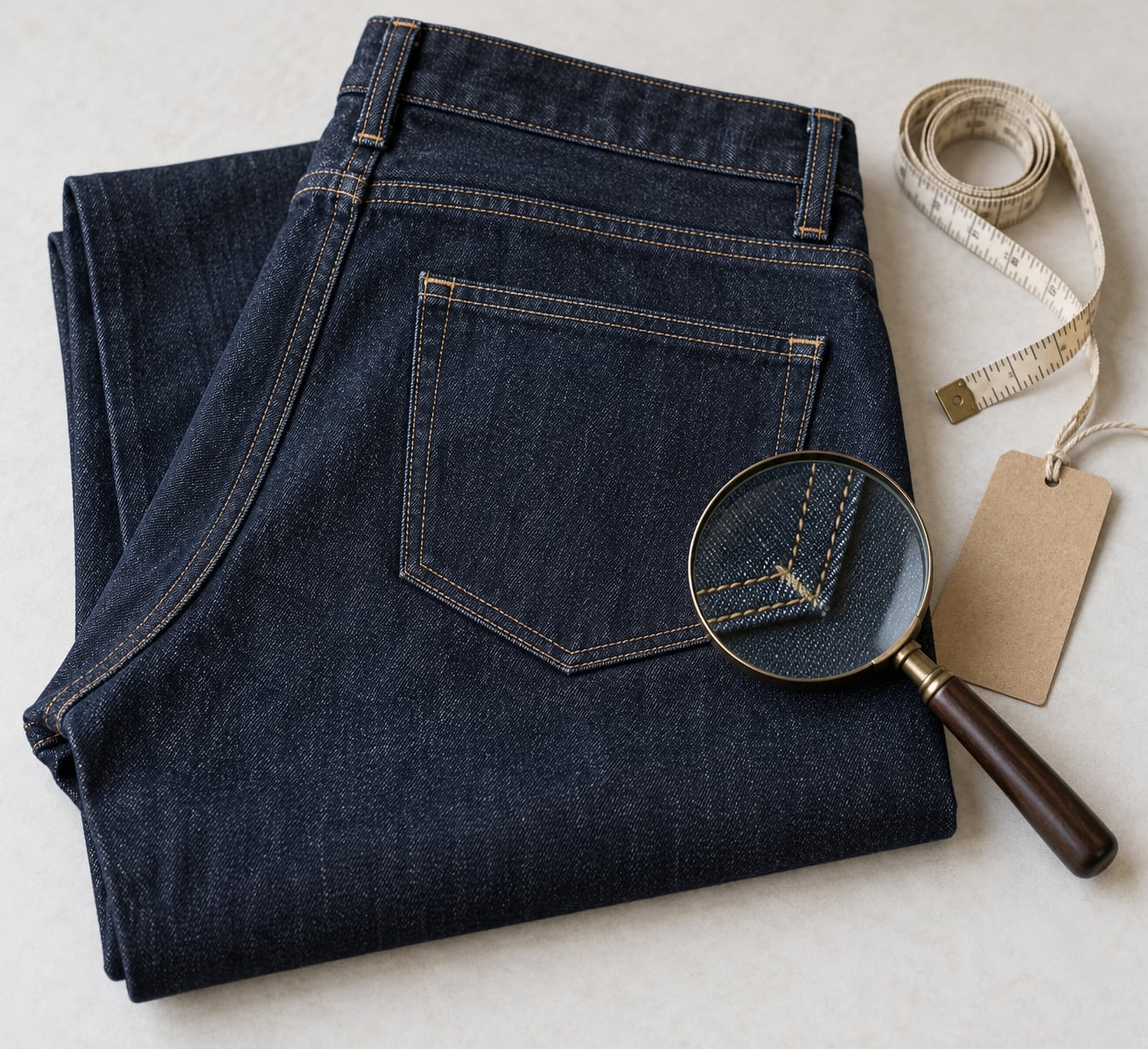
Count the stitches along a main seam against an inch of fabric. Around 9 to 12 stitches per inch is the range most well-made pairs sit in; visibly large, widely spaced gaps mean the machine was running fast or the fabric was cheap.
Look for a bar tack, the short dense reinforcement stitch, at the open ends of the front pockets, at the base of the belt loops and where the belt loop meets the waistband. Those are the stress points, and reinforcement there is what keeps the pocket corner from tearing out. Then check the inside seams: a flat-felled inseam, where the seam allowance is folded and stitched flat, is a strong sign of care, and a loose or puckered interior seam is not.
Result: even, tight stitches, no loose threads, no skipped stitches, and reinforcement at the pocket corners and belt loops. Pull gently on the pocket corner to feel whether the stitching is anchored or just decorative.
3. Examine Buttons, Zippers, and Rivets
Run a finger along the button and the rivets. Metal that has been stamped, debossed or branded is solid; hardware that is smooth and featureless is usually cast thin. A YKK zipper is the common benchmark on better pairs, and it is worth checking the pull and the slider for wobble.
Zip it up and down slowly. It should run smoothly without catching, and the teeth should meet cleanly without gaps. Then try the button: a shank button, with a stem sewn to the back rather than a flat disc glued on, will not pull loose. Check the rivets on the pocket corners, the back pocket reinforcement and the fly, and see whether any are painted on or sitting loose in the fabric.
Result: stamped hardware, a smooth zipper, a button that holds firm. Copper and brass are harder and better for stress points than aluminium, which bends and snaps.
4. Look at the Cut and Construction
Work down the garment rather than around it. Check the waistband for a reinforced strip along the top edge, the belt loops for a tuck or bar tack where they attach, and the back pockets for a double layer where the fabric folds over the seam.
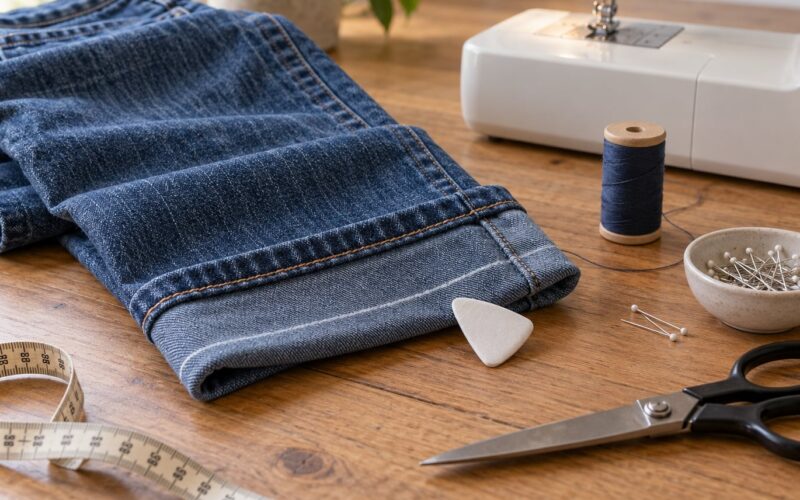
Then look at the fly. A one-piece fly, where the front panel runs continuously from the waistband down, resists a blowout better than a joined two-piece construction. Finally, check the hems and the inseams: a chain-stitched hem can be re-stitched by a tailor, while an overlocked hem is sealed and cannot. If you plan to hem a pair to your own length, that difference matters.
Result: reinforced waistband, anchored belt loops, layered pocket corners, clean hems. Any seam that puckers, gathers or has visible glue has been rushed.
5. Test the Fit for Comfort and Movement
Quality and fit are two different questions, and people constantly blur them. A beautifully made pair that does not fit you is still the wrong pair.
Sit down. Squat if the cut allows it. Walk across the floor. You want room through the seat and thigh without excess bagginess, and you want the waistband to stay put without you holding your stomach in. Check the rise too: a high rise distributes weight differently from a low one, and the wrong rise will feel wrong no matter how well the pair is made.
Result: you can move normally, the waistband does not gape or dig, and the seat does not pull. If the waistband grips hard but the seat is loose, the cut is the problem, not the construction.
6. Review Online Details Before Buying
When you cannot put your hands on the jeans, you work from what the listing tells you. Read the fabric composition and weight if it is given. Look for the actual garment measurements rather than a vague size range, then measure a pair you already own and compare, because brands size differently.
Check whether the listing shows inside-out or construction shots. Detailed photos of the interior, the hardware and the pocket bags are usually a good sign, because a manufacturer confident in the build tends to show it. Read reviews for the same specific complaints rather than overall sentiment, and look specifically for repeated mentions of pocket corners or rivets, which is the failure buyers report most often.
Then read the return policy closely. If returns are free and easy, the stakes of judging from photos drop considerably, and you can check the pair properly when it arrives. If they are not, take more time with the measurements.
Result: clear measurements, construction photos, a fibre content you understand, and workable returns.
Common Mistakes
Judging by price or brand. A higher price covers marketing, distribution and retail margin as much as construction, and brands use multiple factories. The fix is to judge the pair in front of you and treat the label as background information.
Judging by colour or wash. Fades, whiskers and pre-distressed marks come from finishing, not from poor making. A nicely faded pair can be the best-made one in the shop. The fix is to separate how the denim looks from how it is built.
Trusting softness. Heavy stone-washing makes thin fabric feel expensive in your hand. The fix is the weight and the density, not the drape.
Stopping at the outside. The outside of a pair is the part that gets looked at while it is being sold. The fix is to turn it inside out every single time.
Assuming sustainability claims equal construction quality. Organic cotton, recycled denim and low-impact dyeing tell you about how the fabric was made, not how the seams were built. Check both separately.
Not reading the return policy. A rigid return window turns a five-minute inspection into a gamble. Check the terms before you commit, not after the jeans arrive.
One last habit is worth keeping: once you find a pair you like, check the inseam and outseam for loose threads before you wear it. Anything that survives that check has already passed most of the list above.
Frequently Asked Questions
What is the two-finger test for jeans?
The two-finger test is a quick hand-feel check: pinch the denim between your index and middle finger, then rub it with your other thumb. Good denim feels dense, slightly stiff and springy, and it resists rather than folding flat. The catch is that softness alone proves nothing, because cheap denim is stone-washed to feel soft in the shop. Weight per yard is the more reliable signal.
What type of stitching is best on a pair of jeans?
There is no single best stitch, because each one trades off something. Flat-felled and double-stitched seams are the most durable. Chain-stitched hems are strong and can be re-stitched by a tailor when you want a shorter leg. Overlocked seams are common and perfectly acceptable, just less sturdy. What matters on any pair is even spacing, roughly 9 to 12 stitches per inch, and reinforcement at the pocket corners and belt loops.
How can I check jean quality when I cannot touch the fabric?
Rely on the listing instead. Look for stated fabric weight and fibre content, garment measurements rather than a vague size range, and photographs of the inside of the jeans. Construction shots are a good signal. Then read reviews for repeated, specific complaints rather than overall sentiment, and check whether free returns are available so you can inspect the pair properly once it arrives.
How do I know if a pair is real selvedge denim?
Look at the edge of the fabric where the outseam is finished, and fold or cuff the hem to expose it. Real selvedge shows a clean, closed, often coloured self-finished edge, usually on the inside of the seam. A cut edge with loose white threads or a frayed line running down the side means the fabric was cut and sewn, not woven on a shuttle loom with a self-finished edge.
Does heavier denim always mean better jeans?
No. Weight is one signal, not a verdict. Very heavy denim is stiffer, slower to break in and often warmer, which is why workwear and raw denim fans choose it. Lighter denim can be perfectly well made and far more comfortable if you sit all day. Check the stitching, the hardware and the pocket construction before you decide anything on weight alone.
Is a faded or pre-washed pair lower quality?
Usually the opposite. Fades, whiskers and pre-distressing are finishing choices applied after the garment is made, so they tell you nothing about how well it was constructed. That is why it is worth checking the inside seams and the hardware even on a pair that already looks beautifully broken in. Judge the build, then judge the wash separately.
Conclusion
Start with the fabric: dense hand feel, readable weight, no translucency. Then check the stitching, especially inside out, for tight even stitches and bar tacks at the pocket corners. After that, look at the construction itself, the waistband, belt loops, fly and hems, where rushed work shows up first.
That is how to tell if jeans are good quality without a brand name or a price tag to lean on. Once those three checks pass, decide on fit, care and comfort. A pair you can move in, sit in and wash properly will outlast a better-made pair that fights you every time you wear it.