If you are wondering how to keep black jeans from fading, the answer is unglamorous: wash them as infrequently as you can, always turn them inside out, use cold water with a detergent made for dark colors, and air dry them in shade. Those four habits do most of the work — everything else on this page is detail.
I keep a small rotation of black denim, mostly straight-leg and one pair of stretch cargo jeans, and the difference between the pair I wash carefully and the pair I toss in with everything is visible after about six months. The careful pair still looks black. The other one has grey knees and a waistband that reads charcoal.
Fading is not a defect you can undo once the dye has left the fiber. What you can do is slow the loss, and for a rotation staple like black denim that gets worn two or three times a week, slowing it down is the whole game. Here is what I have learned after years of trial, error and a few permanently grey towels.
Table of Contents
What You Need
None of this is expensive and most of it you already own. The essentials:
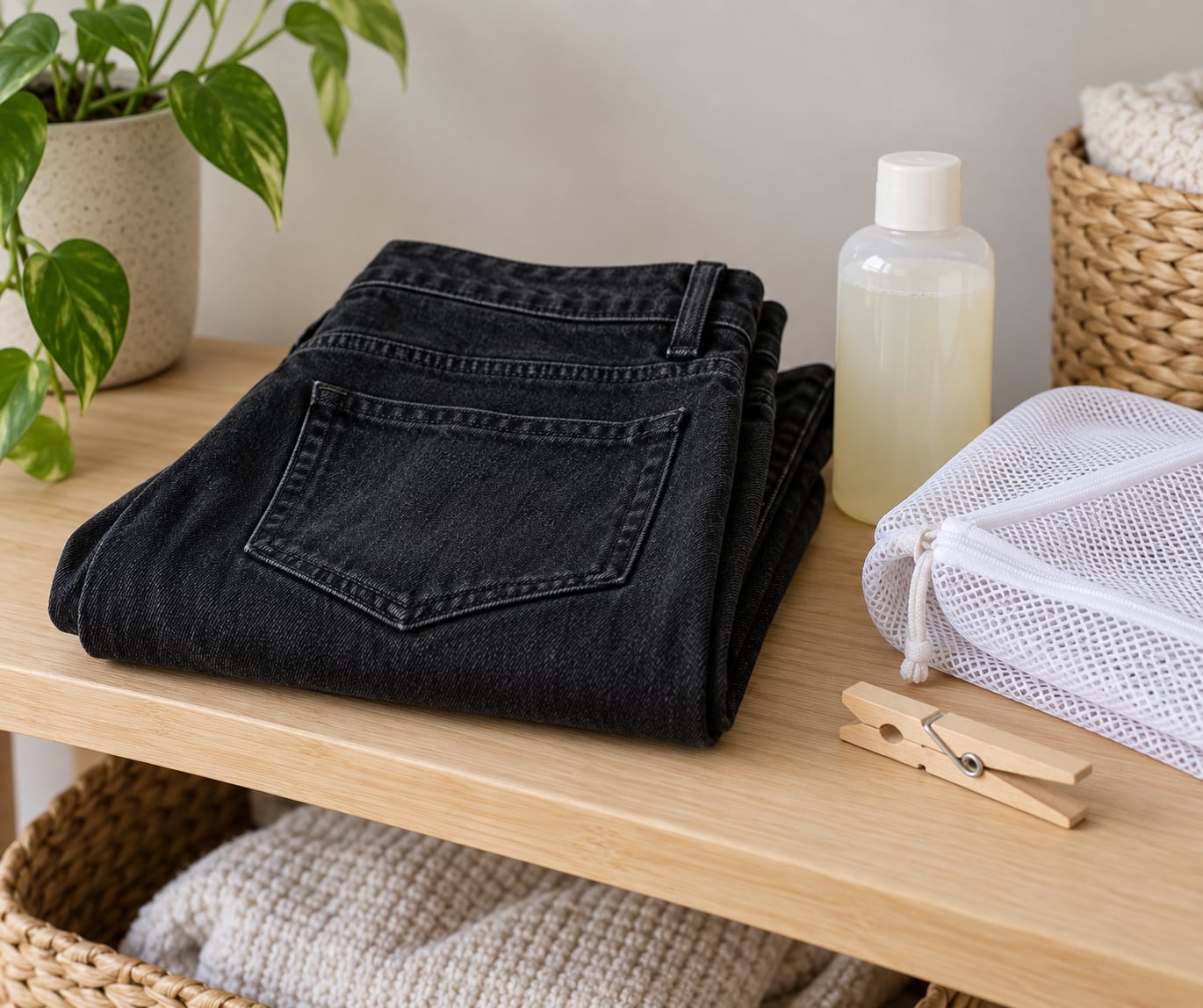
- A mild liquid detergent formulated for darks. A small capful is plenty. More detergent does not clean more denim, it just leaves a film that traps loosened dye against the fabric.
- A mesh laundry bag. Optional but cheap. It keeps the jeans from tangling and stops the drum’s ribs from grinding dye off the outer surface.
- Cold water. If your machine only offers a warm default, set the temperature manually rather than accepting it.
- A drying rack, or a clip hanger and a clothesline. This is the piece most people skip and then undo all their other effort with one tumble-dry cycle.
- A spray bottle, a soft brush, and a spare toothbrush. These are for spot cleaning, which is what lets you wash as little as possible.
Genuinely optional: white vinegar and table salt for a dye-setting soak, and a denim-safe colour restorer. Everything here improves the result slightly. None of it matters more than cold water and skipping the dryer.
Step-by-Step
1. Test the dye before the first wash
Do this the day the jeans arrive, before they ever meet your laundry. Dampen a seam on the inside of the leg with plain water, then rub the fabric firmly with a clean white cloth.
If the cloth comes back grey, that pair is still shedding dye. If it comes back clean or barely tinted, the colour is reasonably set and you can wash it with your other darks.
You will see it immediately, and it takes thirty seconds. On heavily bleeding jeans, wash that pair alone, in a basin by hand, before it ever goes near a mixed load. Grey streaks on a white towel are a bad first impression, and you cannot un-dye the towel.
Raw denim wearers on r/rawdenim generally recommend waiting months before a first wash, which works if you own several pairs. If you own one, air it out and wash it when it needs it.
2. Wash less often and turn the jeans inside out
The single biggest lever is how many times the jeans go through a machine at all. Every wash loosens a little surface dye, and dye that has left the yarn does not come back.
In practice, that means hanging the pair up to air overnight between wears, and spot cleaning anything local. A splash of coffee on the thigh does not need a full load. Mix a little detergent in a spray bottle, mist it, work it with the toothbrush, and dab the edge out with a clean cloth.
Turning the jeans inside out is the free part. The black sits on the face of the yarn, so that is the face that fades and the face that grinds against everything else in the drum. Reversed, it is shielded, while the paler interior takes the abrasion. Denim community advice converges on this point more than any other.
3. Use cold water, a gentle cycle, and the right detergent
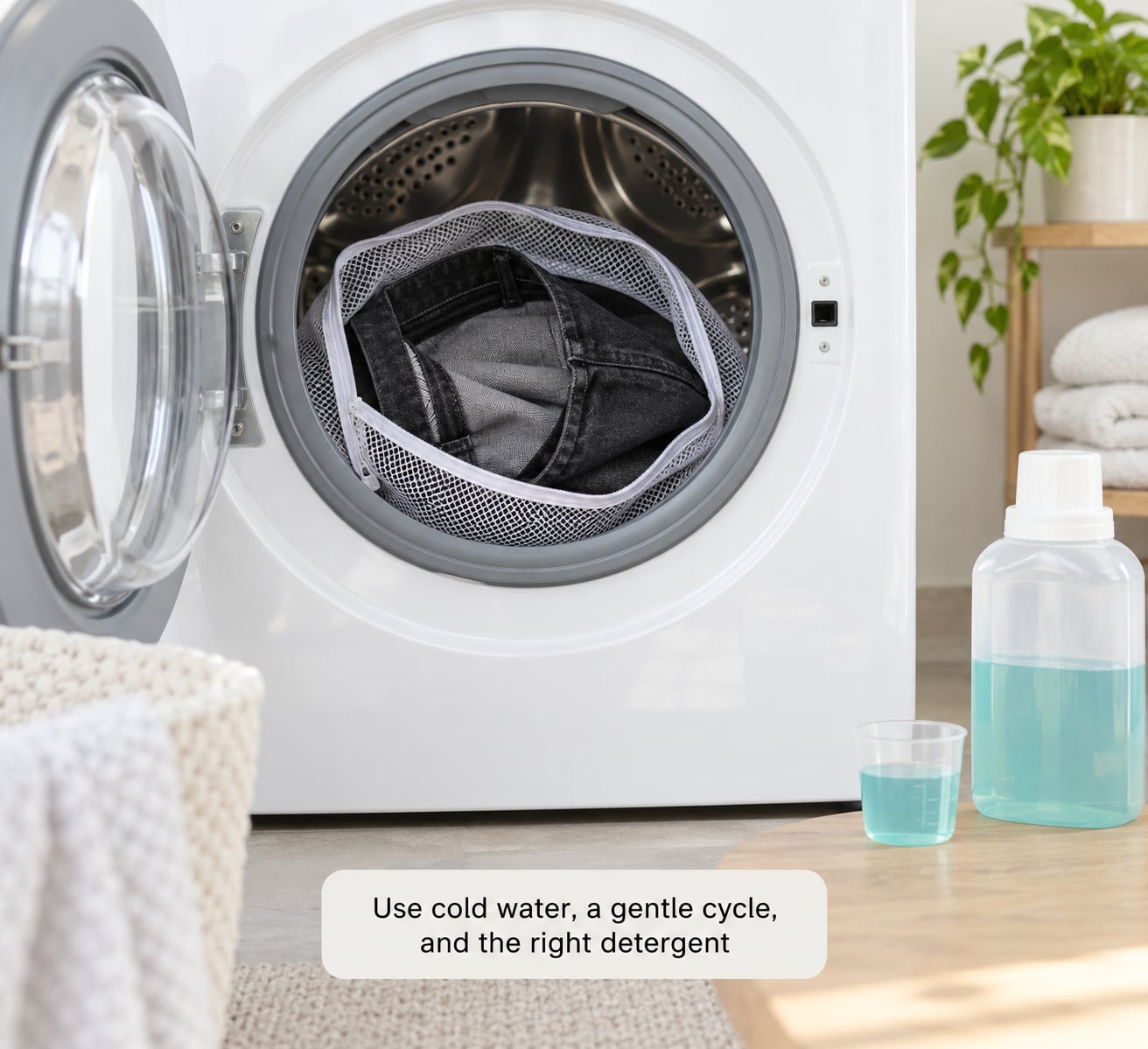
Cold tap water, or the coldest setting your machine offers, roughly 30°C or 86°F. Then the gentle or delicate cycle, unless the care label says something different — for heavily worn jeans a normal cotton cycle at cold is fine and gets them cleaner.
Here is why cold matters. Denim is dyed in hot water in the factory, and that hot bath drives the black into the yarn while the fibre is swollen open. Washing hot swells the fibre again and loosens dye that had settled into place, so every hot wash behaves like a partial dye bath running backwards.
On detergent, use one made for dark colours and measure a small capful. Skip bleach entirely. Skip fabric softener too — it deposits a coating that dulls black and holds loose dye in contact with the fabric.
Two more settings that matter: wash black jeans with like colours only, and do not overload the drum. Cramming the machine in means more rubbing between garments, and friction abrasion is what actually lifts dye off the surface.
4. Air-dry the jeans away from direct heat
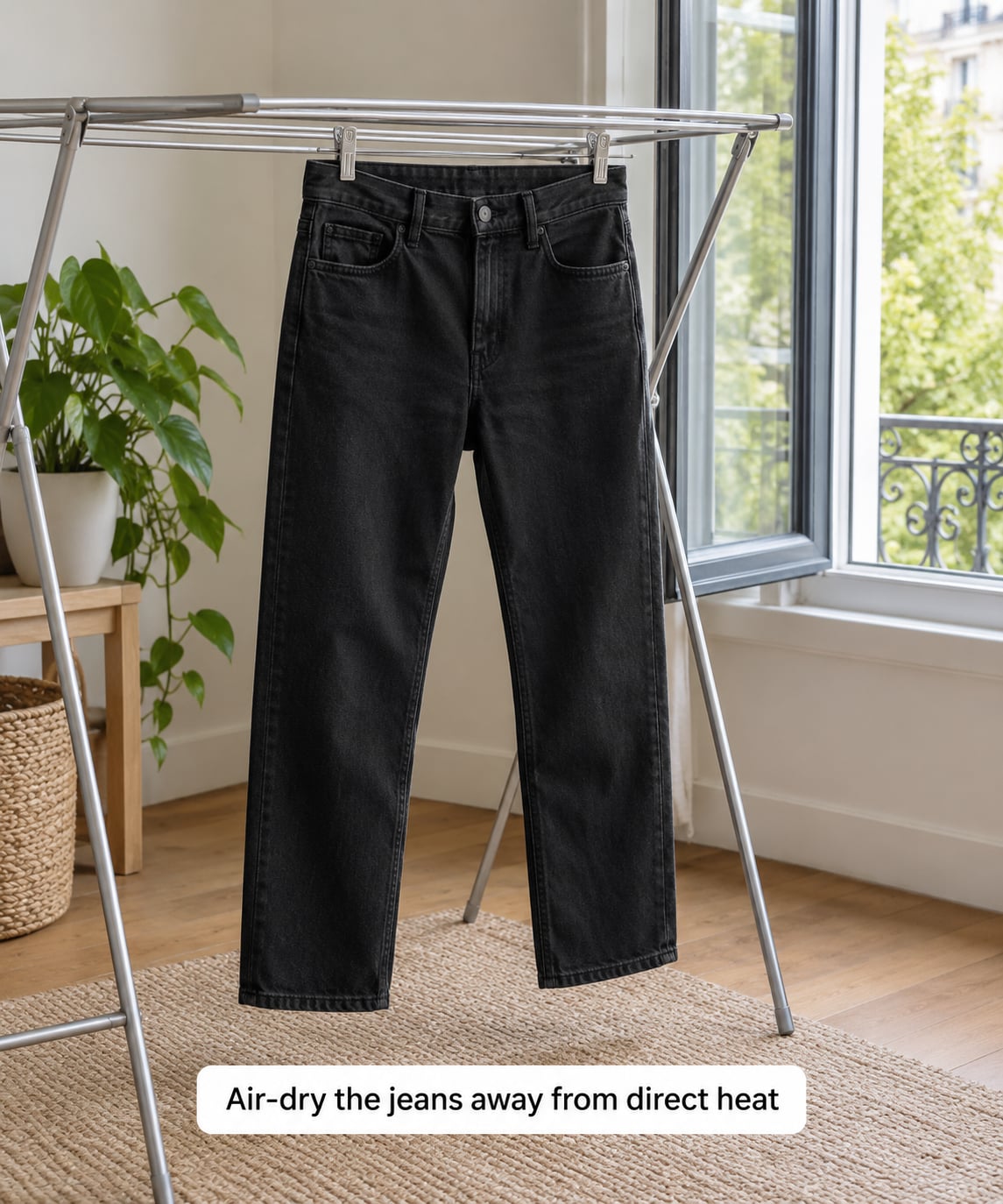
Lay the jeans flat on a rack or hang them by the waistband so the legs drop straight, then tug the waistband, pockets and knees back into shape. Wet denim stretches under its own weight, and jeans that dry creased and out of shape stay that way.
Keep them out of direct sunlight and away from radiators or a tumble dryer. UV light breaks down dye molecules directly, and it is the reason jeans hung on a sunny balcony fade faster than ones that never see the sun.
The dryer is the worst offender of all. Heat plus tumbling is friction plus UV-equivalent at the same time, which is why a single accidental low-heat cycle can undo weeks of careful washing. r/Denim users say it plainly: do not tumble dry your jeans, some fading is inevitable.
No drying rack? Hang them on a clip hanger in a shaded, ventilated room, or lay them flat on a towel on the floor. It takes longer and that is fine. If you are in a rush, use a fan to move the air rather than heat to speed it up.
5. Treat fading before it becomes permanent
There is no honest way to promise a full reversal. What is left can be stabilised, and sometimes improved, and doing it early matters much more than doing it late.
The dye-setting soak is the well-known one: turn the jeans inside out, fill a basin with cold water, add one cup of distilled white vinegar and one to two tablespoons of table salt, submerge the jeans and leave them 30 to 60 minutes, then rinse in cold water and wash as normal. You will see the vinegar does something when the water turns grey — that is dye lifting while the salt and acid help hold the rest.
People argue about whether vinegar works. StyleForum and Heddels users both recommend it in a cold soak, while others call it an old wives’ tale. The fair verdict is that it helps most on new or barely washed jeans where surface dye is still loose, and does very little on a pair that has already gone grey from months of sun.
For jeans already fading, a dye-setting rinse or a colour restorer sold for denim will slow further loss. Follow the product label, patch-test on an inside seam first, and be realistic about what it delivers: a more even, deeper black, not a like-new result.
For dye that has genuinely gone, re-dyeing is the only route, and that is a separate project involving a textile dye, hot water and a sink you do not mind staining. Skip the homemade coffee and tea soaks. Tannin soaks tint, they do not replace black dye, and on a synthetic blend you can end up with uneven brown.
Always follow the care label first. If it says hand wash only, hand wash.
Common Mistakes
Nearly every pair of ruined black jeans I have seen had at least one of these going on.
- Washing new black jeans with lights or whites. You get dye transfer onto the other clothes and lose colour from the jeans. Fix: wash them alone or with other darks until the dye test comes back clean.
- Hot water. The single easiest way to strip black. Fix: cold, every time, no exceptions even when the care label allows warm.
- Overfilling the drum. Tightly packed clothes rub against each other. Fix: leave room for the load to move freely.
- Drying in direct sun. UV is the fastest chemical fade there is. Fix: shade, indoors, always.
- Using the tumble dryer. Heat and friction together. Fix: air dry, every load, even on a low setting.
- Bleach, including chlorine in a brightening detergent. It removes black dye rather than cleaning the fabric. Fix: oxygen brighteners only, and even those sparingly on black.
- Too much detergent. Leftover suds hold loose dye against the denim. Fix: one small capful, measured.
- Fabric softener. Leaves a film that dulls the black. Fix: leave it out.
- Ironing or scrubbing the outer face. Direct pressure and brushing abrade the dyed surface. Fix: press on the reverse, or steam from a distance.
A few maintenance habits worth keeping: wash only the jeans that need it rather than a weekly blanket wash, keep a separate small basket for darks so nobody mixes them, and read the label before you buy rather than after. Check the weight too — stretch denim with elastane fibres fades noticeably faster than rigid 100 percent cotton, because the elastic fibres take up loose dye and hold it.
Frequently Asked Questions
Does vinegar really stop black jeans from fading?
Not exactly, but it is worth doing on new jeans. A cold soak of one cup distilled white vinegar with one to two tablespoons of salt for 30 to 60 minutes helps strip loose surface dye and can slow how fast the rest leaves. It will not restore black you have already lost, and it does very little on jeans that have been sun-bleached for months. Test on an inside seam first and always follow the care label.
Can baking soda or salt prevent jeans from losing their black color?
Salt helps a little inside a vinegar soak, because it encourages loose dye to leave the fabric in the water. Baking soda is the opposite of useful here. It is mildly alkaline, and alkaline solutions loosen dye rather than fixing it, so skip it on black denim. Use it on white cotton if you want, but keep it away from any dark garment you are trying to protect.
Should black jeans go in the dryer?
No, not even on a low setting. Tumble drying combines heat, which swells the fibre and loosens surface dye, with friction from tumbling, which grinds that dye off. Air drying in shade, away from radiators and sunlight, is the single change most likely to keep a pair looking black for years. If you have no rack, hang them on a clip hanger indoors and use a fan instead of heat.
Why do my new black jeans turn the water grey?
Because black denim dye sits on the surface of the yarn rather than being absorbed into the core, and it is still shedding in the first few washes. That grey water is normal and actually a good sign: it is dye leaving the jeans before it transfers to your other clothes. It settles down as the dye sets. Wash new jeans alone or with other darks until a dampened seam rubbed with a white cloth comes back clean.
How do I keep faded black jeans from fading further?
Stop the three things causing most of it first: hot water, the dryer, and direct sunlight. Then use a dye-setting rinse or a colour restorer sold for denim, following the label and patch-testing on an inside seam. Already-faded jeans will not return to solid black, but stabilising the remaining dye keeps the colour even instead of letting grey patches spread. For a genuine colour change, re-dyeing with a textile dye is the only reliable route.
How often should I wash black jeans?
As rarely as you honestly can, which for most people is every 8 to 14 wears rather than weekly. Hang them up overnight between wears, spot clean any mark with a little detergent in a spray bottle, and only wash when there is a real stain or a real smell. Denim that is worn hard every day will need more frequent washing than a rotation pair, and it will fade faster because of it.
Conclusion
Four habits do most of the work. Turn the jeans inside out, wash them as seldom as you can stand to in cold water with a small amount of detergent made for darks, skip the dryer and direct sun completely, and soak new pairs in cold water with vinegar and salt before that first wash.
Start with the one that costs nothing: put the dryer away. Then, this week, count how many times you actually wore the pair since its last wash. That is usually where the wasted washing is.