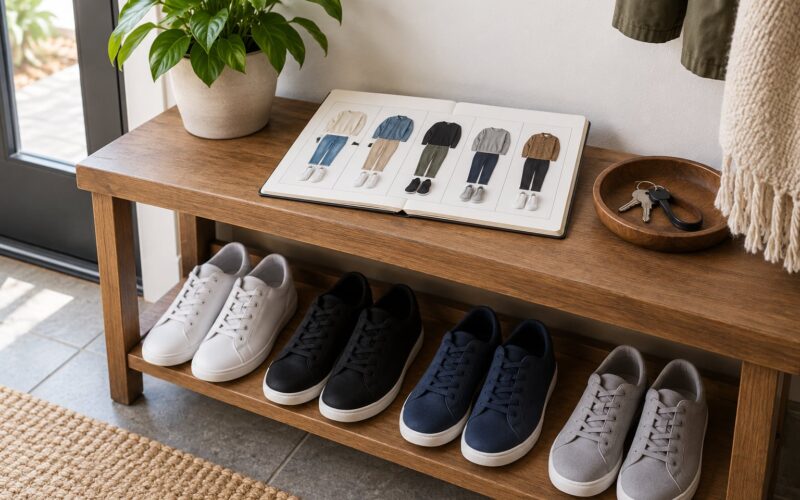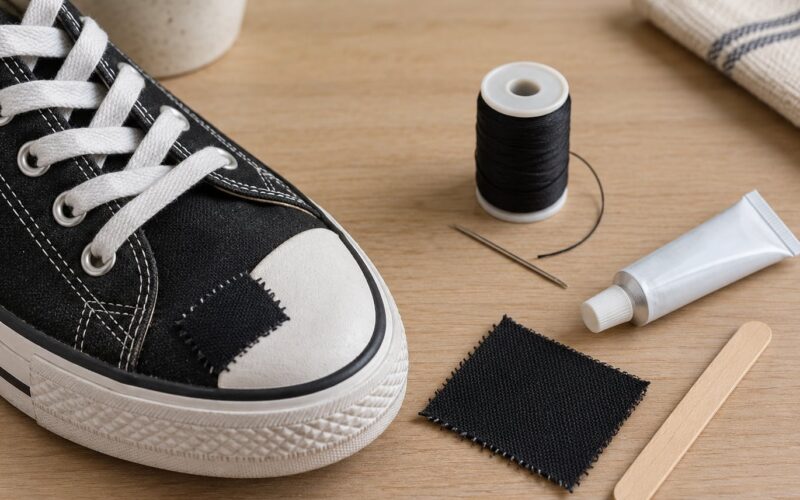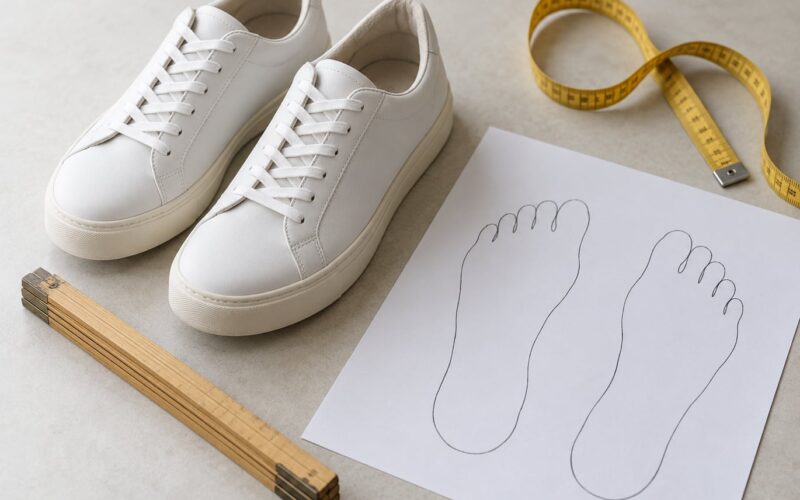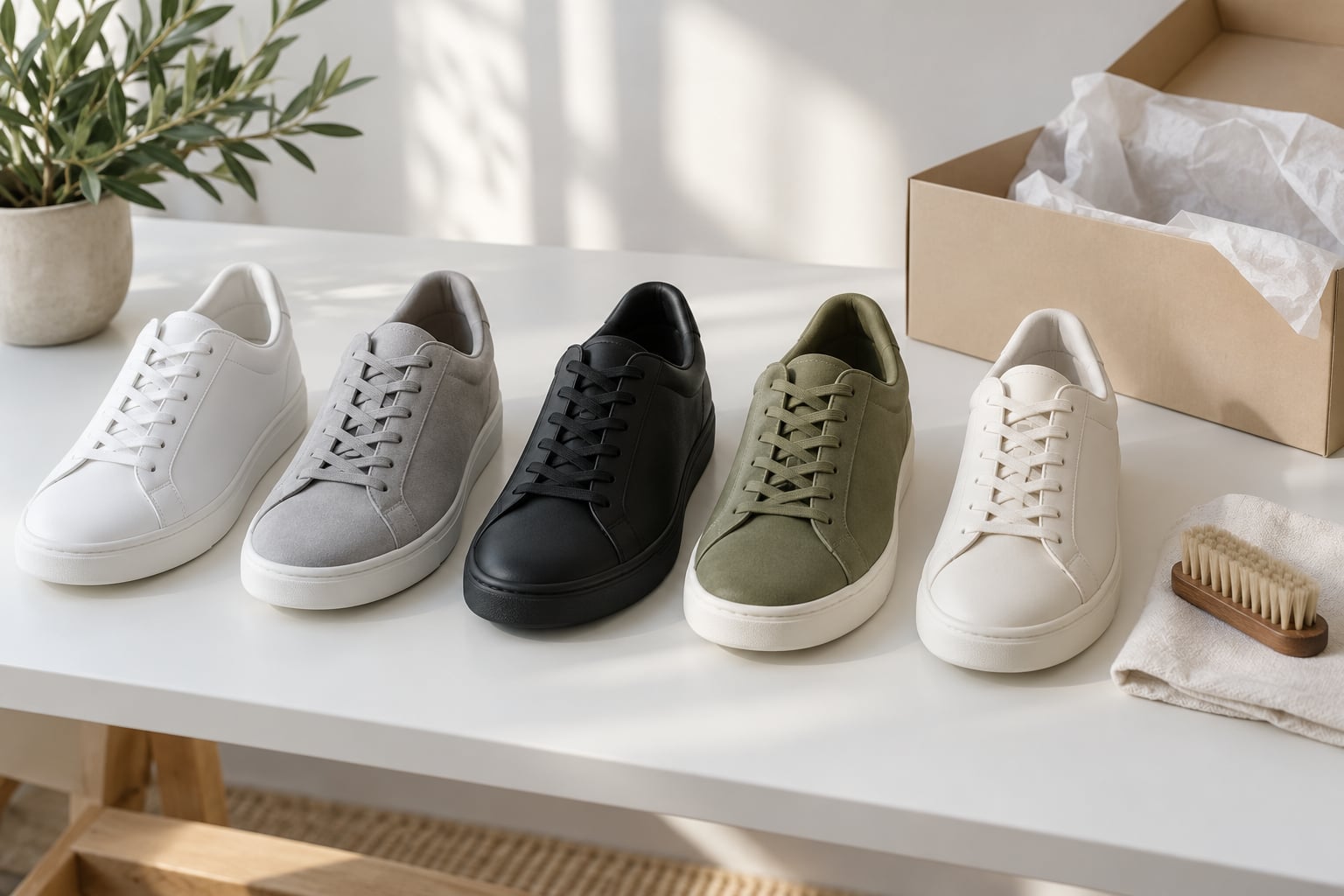
Most people need three to six pairs of sneakers for everyday life, and five is the comfortable sweet spot for anyone who wants a rotation they actually wear. That range answers how many pairs of sneakers you actually need for almost every lifestyle. Athletes and people who split clean, dirty and formal looks land closer to six. Collectors own far more, and their number is a hobby budget, not a need.
That is the short version. The useful question is where your number comes from, because the same person might need three pairs in a warm city and five in a place with real rain and snow.
Table of Contents
- How Many Pairs of Sneakers Do You Actually Need?
- What Counts as a Useful Sneaker Rotation?
- How Many Sneakers Do Different Lifestyles Require?
- How Do You Choose the Right Number for Your Wardrobe?
- When Is It Worth Adding Another Pair?
- How Can You Make Fewer Sneakers Work Harder?
- Frequently Asked Questions
- How many sneakers should I own if I wear them every day?
- Is five pairs of sneakers too many?
- How many pairs are normal for a sneaker collector?
- Do I need separate sneakers for the gym and everyday wear?
- How often should I replace my everyday sneakers?
- What is the best way to decide whether to buy another pair?
- Where to Start If You Own Too Many
How Many Pairs of Sneakers Do You Actually Need?
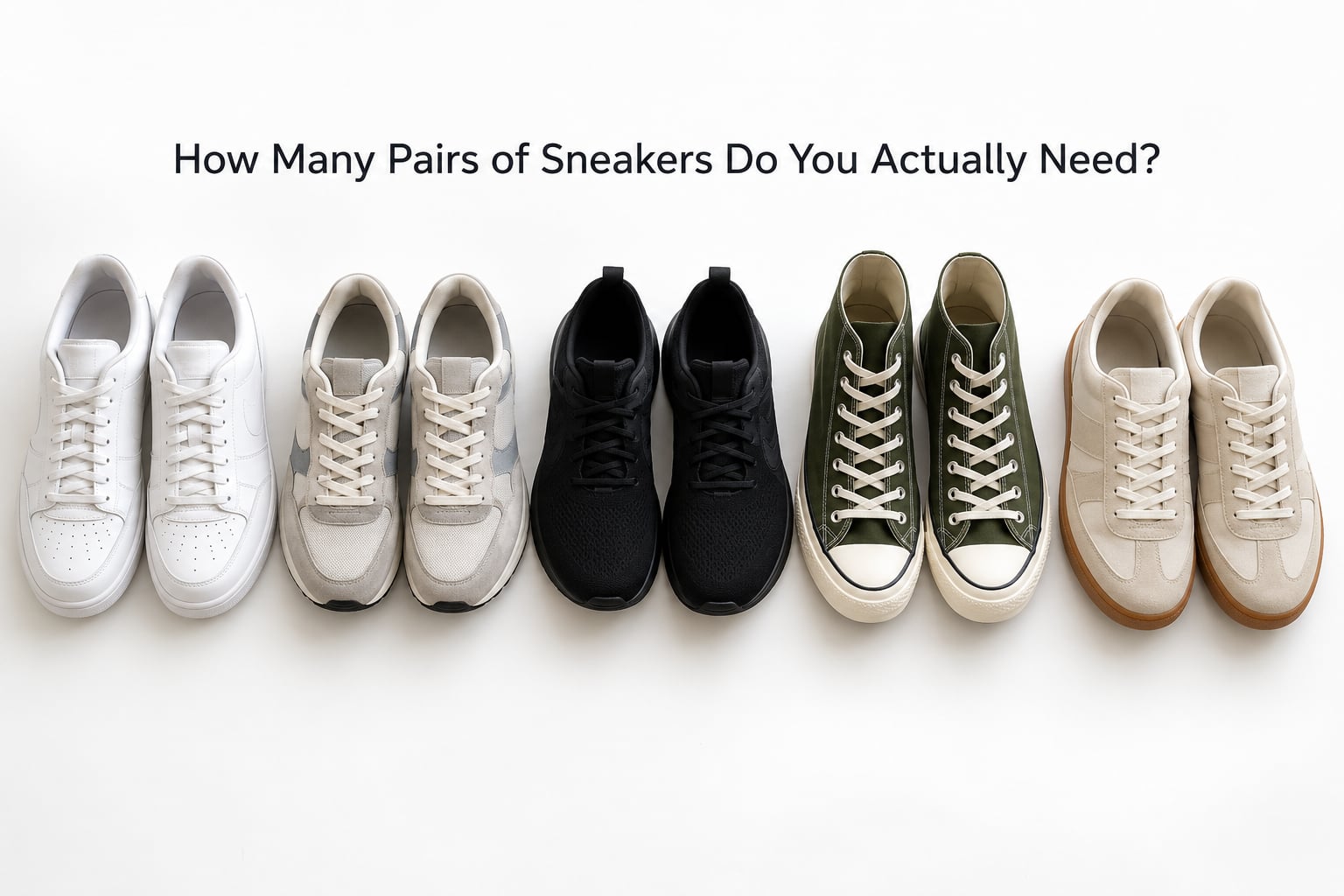
Three to six pairs covers almost all daily life. The number climbs when you need shoes for genuinely different jobs, like lifting in a flat-soled shoe or keeping white leather clean in a smart-casual outfit. It does not climb when the new pair does the same job as an old one in a different colour.
Here is the job list most rotations are actually built from:
| Role | What it covers | Pairs usually needed |
|---|---|---|
| Everyday streetwear | School, work casual, errands, everything in between | 1 to 2 |
| Clean or smart-casual | Restaurants, offices with a dress code, photos | 1 |
| Exercise | Gym sessions, walking, general training | 1 |
| Sport | Running, court, trail, lifting with a stable base | 1 to 2 |
| Wet or cold weather | Rain, snow, mud, salt on concrete | 1 |
| Sentimental or collectible | Worn for the story, not the outfit | Whatever you can justify |
Add those up and you land in the same range every time. Someone who needs an everyday pair, a clean pair and a gym pair has three. Add a wet-weather pair and a sport pair and you have five.
The math behind the number: 365 days divided by your pair count
The most repeated idea in every forum thread on this topic is a piece of arithmetic, and it is more useful than any opinion. Divide 365 by the number of pairs you own and you get the number of days per year each pair gets worn if you rotate perfectly and never miss a day.
| Pairs owned | Days per pair each year | What that actually looks like |
|---|---|---|
| 2 | about 183 | The same two shoes, alternating |
| 3 | about 122 | A real rotation, still worn weekly |
| 4 | about 91 | Comfortable, room for one damaged pair |
| 5 | about 73 | The usual sweet spot for enthusiasts |
| 6 | about 61 | Sport, wet weather and smart-casual covered |
| 10 | about 37 | Deliberate collector cap, several pairs worn monthly |
| 20 | about 18 | Worn roughly every three weeks |
| 50 | about 7 | The figure one r/SNKRS poster landed on and could not argue with |
Below about five pairs, every pair is still in regular use. Somewhere between ten and twenty, most pairs drop to monthly or less and the collection starts carrying pairs you never touch. That is not a moral failure, it is just arithmetic, and it is the honest test for whether the next pair deserves a spot.
What Counts as a Useful Sneaker Rotation?
A useful rotation means every pair has a job you can name out loud without hesitating. Everyday streetwear, clean smart-casual, gym, court or trail, wet weather, and one pair you keep because of what it means to you. Six clear roles is a finished rotation. Six pairs that all look the same is not.
Owning several pairs only pays off when they differ in a way your week can feel. A sneaker with a flat, wide sole for lifting feels nothing like a cushioned trainer. A full-grain white leather shoe handles a restaurant in a way a mesh runner cannot, and usually needs completely different care.
Duplicates are where rotations quietly fail. Two runners in the same silhouette, one navy and one grey, do the same job on the same Tuesday. The colour difference does not create versatility, it just splits the wear across two shoes that were never going to be worn on different occasions.
Sentimental pairs sit outside that rule. A shoe tied to a trip or a year of your life is not a redundancy problem, and nobody needs to justify keeping it in cost-per-wear terms. It just should not be counted as part of the working rotation when you are doing the maths.
How Many Sneakers Do Different Lifestyles Require?
Profiles overlap, but the ranges are stable enough to use as a starting point. Most people land in the four to six band and feel the benefit immediately.
| Lifestyle | A realistic pair count | What the pairs cover |
|---|---|---|
| Minimalist | 2 to 3 | One everyday, one clean, one gym. Nothing else earns a place. |
| Regular sneaker fan | 4 | Everyday, clean, gym, plus one colour that lifts an outfit. |
| Student or commuter on their feet | 4 to 5 | Two comfortable everyday pairs you can alternate, one clean, one wet-weather. |
| Athlete | 5 to 6 | Daily trainer, workout pair, sport-specific pair, plus everyday and clean. |
| Traveller | 3 to 4 | Pairs that pack flat, handle weather, and still look decent with jeans. |
| Collector | 10 and up | A rotation of five you actually wear, plus pairs held, traded or sold. |
Climate matters more than people expect. A dry, mild place gets by with three. Persistent rain, snow and road salt chew through outsole and mesh quickly, so a dedicated wet-weather pair stops damage that would otherwise shorten your everyday shoes.
One r/Sneakers user described capping their collection at ten on purpose, because the cap forced turnover and there was always something new to wear and something old to move on. That is a working system, and it only works if the ten are chosen as a rotation first.
How Do You Choose the Right Number for Your Wardrobe?
Start by counting the week, not the shoes. Look at a normal seven days and mark where sneakers actually appear: commuting, standing all day at work, gym three times, court on Saturdays, one dressier occasion. That list is your rotation. Everything else is a preference.
Then test each pair against your most-worn outfits. Take the jeans and trousers you reach for most and check the pair works with them. Shoes that fail this test are display pieces, and a display piece in a working rotation is dead weight no matter how much you like it.
Account for the boring parts too. Shoes need somewhere dry to sit, and they need time to dry out between wears. A rotation you have to cram onto a rack because the closet is full is a rotation that ends in skipped washes and worn-out midsoles.
A quick audit, one line per pair:
- Worn in the last 30 days? If not, it is not in the rotation.
- Works with at least three outfits you actually wear?
- Covers a role no other pair covers?
- Exposed to weather that will shorten its life?
- Redundant with something you already own?
Any pair that fails two or more of those is a candidate to pass on. Most people who run this exercise find three or four pairs they have not touched in months, which is usually the whole problem.
When Is It Worth Adding Another Pair?
Add a pair when it opens a new activity, fixes a comfort or durability problem you already have, works with several outfits you wear often, or replaces a pair that has already died. Those four reasons are checkable before you spend anything.
The pressure to buy comes from somewhere else. Limited releases create deadlines that have nothing to do with how you will wear the shoe, and owning several pairs of a nearly identical silhouette feels like progress because the box count went up. On the 365-divide-by-N maths, that new pair just lowered the wear rate of everything you already own.
There is also the guilt version of the problem, which is worth naming honestly. One r/FrugalMaleFashionCDN user reported owning six pairs they never wore inside a total collection of 20 to 30, and concluded that the unused pairs, not the count, were the real issue. Most oversized collections are not too big because they hold too many shoes, but because they hold too many of the same shoe.
A useful rule: write down the job the new pair fills and the outfits it works with. If you cannot do both in one sentence, wait. Release-day urgency is the worst possible time to make that argument.
How Can You Make Fewer Sneakers Work Harder?
Alternate pairs rather than wearing one until it looks finished. A sneaker seller writing in r/Anticonsumption put recovery at roughly 18 to 24 hours after a full day of wear, and said daily swapping extends usable life by around 10 to 20 percent, with replacement typically landing near 350 to 400 miles instead of sooner.
Keep one reliable daily pair you do not have to think about, and let the others carry the outfits and the weather. That way rotation stays convenient rather than turning into a small chore.
Clean according to the material, not the label. Mesh needs less product and more airflow, leather needs a proper cleaner and no soaking, and white midsoles respond to nothing except patience and a soft brush. Whatever the material, let shoes dry fully before you store them.
Store them somewhere cool, dry and out of direct sun, and give them air after a sweaty day. Cheap cedar inserts and a fan are the whole toolkit.
On buying less, one habit works better than any other: delay until the current rotation has a visible gap. Worn-out sole, cracked midsole, a colour that no longer works with anything you own. Buy when the hole appears, not when the release calendar says so.
Frequently Asked Questions
How many sneakers should I own if I wear them every day?
Three to four pairs is plenty for daily wear. One pair absorbs the everyday, one handles outfits that need a cleaner look, and one covers gym sessions or sport. Alternating the first two gives each shoe around 18 to 24 hours to recover and dry, which most wearers notice as less midsole fatigue over a few months.
Is five pairs of sneakers too many?
No. Five pairs is the most common comfortable target for a rotation, and it covers an everyday pair, a clean pair, a gym pair, a sport pair and one wet-weather option. At that count each pair still gets worn roughly 73 days a year if you rotate perfectly, so nothing is sitting idle.
How many pairs are normal for a sneaker collector?
Reported collection sizes range from a deliberate cap of ten, through the 20 to 30 typical of an enthusiast, up to serious collections of 40 to 50 or more over a decade. The honest measure is wear rate: at 20 pairs each shoe is worn about 18 days a year, so a cap only helps if the extra pairs get worn or traded.
Do I need separate sneakers for the gym and everyday wear?
For most people, yes, and it is the cheapest upgrade to a rotation. Lifting wants a flat, wide, stable base that you would not want to walk a city in, while everyday shoes get scuffed, soaked and worn out on their schedule. Separating them roughly doubles the life you get from the shoes you care about most.
How often should I replace my everyday sneakers?
Plan on replacing an everyday pair somewhere around 350 to 400 miles, which for a person walking five to eight miles a day is roughly a year to a year and a half. Signs appear before the mileage: the outsole smoothing out at the ball of the foot, the midsole feeling dead underfoot, or the upper creasing and tearing.
What is the best way to decide whether to buy another pair?
Write the job and the outfits down before you buy. If the new pair fills a role nothing else covers and works with at least three outfits you already wear, it is a rotation purchase. If it duplicates a silhouette you own or only makes sense on release day, wait until your current rotation shows a real gap.
Where to Start If You Own Too Many
Lay every pair out and ask whether you have worn it in the last thirty days. That single test clears most oversized rotations faster than any other, because the pairs that fail it were never part of the rotation in the first place.
Then write down what is genuinely missing. Usually it is one wet-weather pair or one clean pair for smarter outfits, not another everyday runner in a new colour. Buy that, not the pair that caught your eye.
Most people who do this land on four or five pairs they love, wear constantly and can name a job for. That is the whole answer to how many pairs of sneakers you actually need.