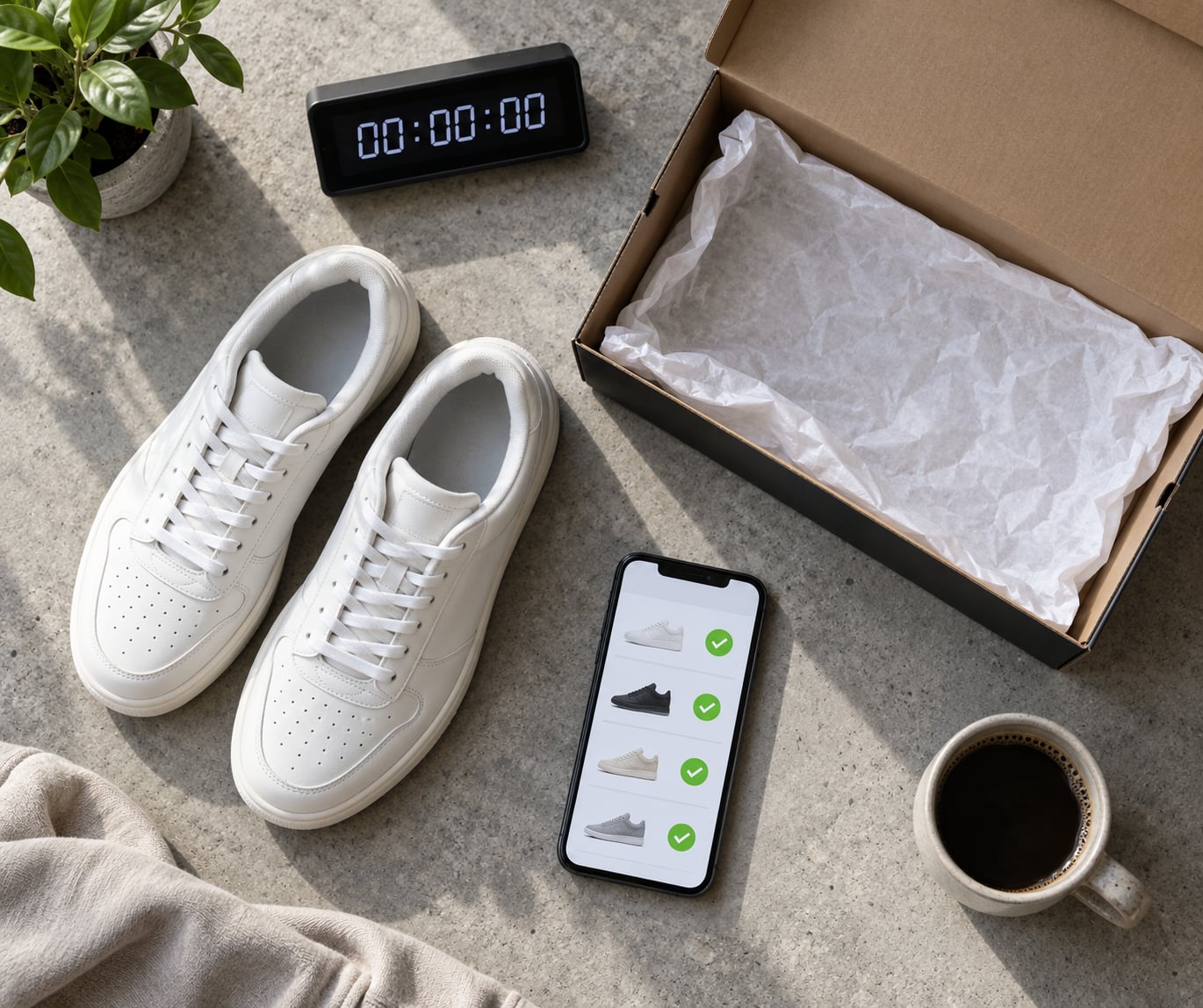
If you keep wondering why do limited sneakers sell out so fast, the answer is blunt: demand is deliberately built for weeks while supply is fixed at a small number decided long before the release date. Hype, raffles, automated buyers and resale expectations all converge on the same minute, so the pairs disappear before most people finish checkout.
That is the short version. The longer version involves a handful of forces that brands have spent decades refining, and readers who understand them can tell a genuinely scarce drop apart from one that was simply marketed louder than it deserved.
Table of Contents
- Why Do Limited Sneakers Sell Out So Fast?
- How Scarcity Creates More Demand
- How Hype Makes a Drop More Competitive
- Why Raffles and Limited Release Windows Matter
- How Bots and Automated Buyers Increase Competition
- How Resale Demand Influences the First Sale
- What Actually Happens When a Sneaker Drop Sells Out
- How to Spot Hype Versus Sustainable Demand
- How to Buy a Limited Sneaker Without Chasing Every Drop
- Frequently Asked Questions
- Conclusion
Why Do Limited Sneakers Sell Out So Fast?
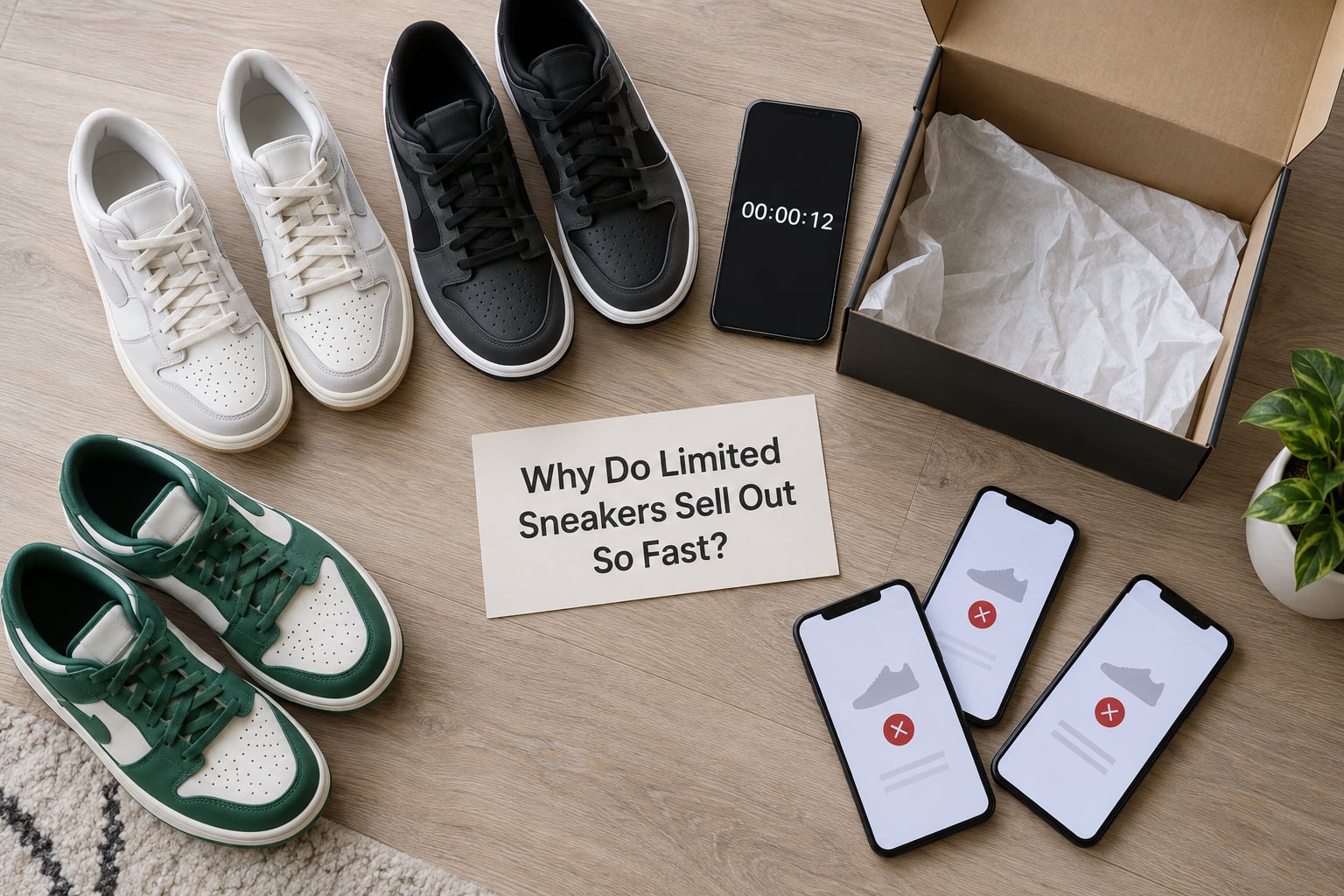
Simple math explains most of it. A brand decides to make a few hundred pairs, announces the release three weeks ahead, and spends that window convincing as many people as possible to want one specific shoe on one specific day. When the release opens, qualified interest can exceed the run by a factor of hundreds.
Picture a release capped at 500 pairs. If a quarter of a million people entered a raffle, each pair is shared by 500 people, and the sellout takes no more than the time it takes to work out that ratio. Nothing mysterious happened. The supply was always the binding constraint.
Seven forces do the work of turning that constraint into an instant sellout:
- Production runs are fixed in advance. The quantity is locked during manufacturing, weeks before anyone sees the shoe.
- Hype is accumulated before the clock starts. Teasers, leaks, unboxings and social posts build anticipation for weeks.
- Release windows are short. A ten-minute raffle or a two-second purchase window compresses the entire buying population into a tiny slice of time.
- Automated buying tools submit far faster than people can. Software outpaces human reaction on the opening second.
- Collaborations concentrate attention. A partner with their own audience turns one fanbase into several.
- Insider allocation exists. Backdoor access and early purchase links have always moved inventory before public release.
- Resale expectations justify the panic. Buyers know a profitable resale market may follow, so buying fast is a rational financial decision.
Each one alone is survivable. Together they produce the pattern readers recognise as a sellout within seconds.
How Scarcity Creates More Demand
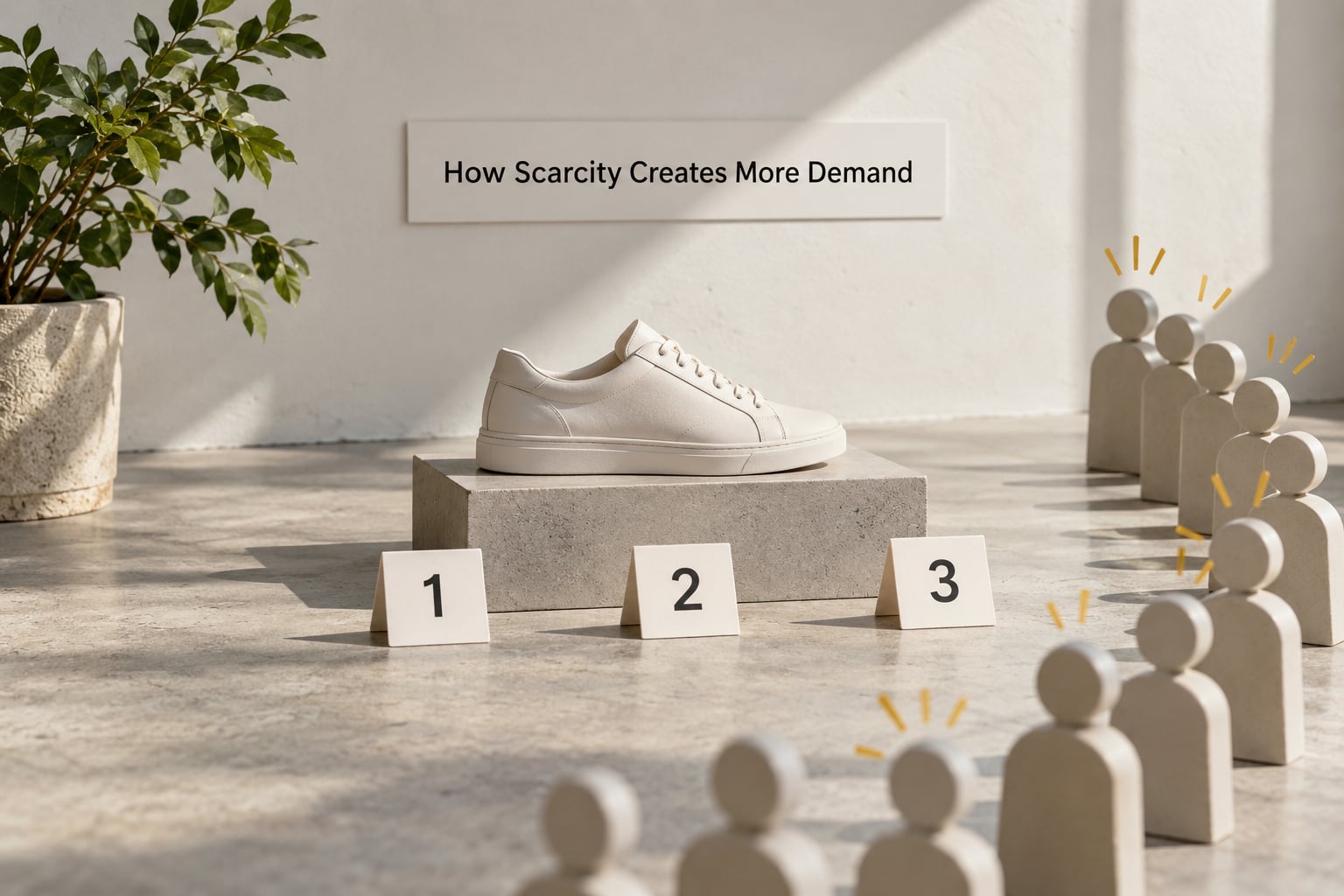
Artificial scarcity is the practice of restricting supply below the level that would clear all demand, so that buyers compete for a fixed quantity instead of choosing freely. Perceived scarcity is what the buyer feels: the sense that the window is closing and the option is disappearing right now.
The distinction matters because the two are not the same thing. Genuine scarcity happens when a manufacturer simply cannot produce more quickly, or when materials, labour or shelf space cap the run.
Artificial scarcity happens when a company could produce twice as many pairs but chooses not to, because a sold-out release generates urgency, press coverage and resale listings that a widely available shoe never would. A shoe sitting on a website for months makes no news. A shoe that vanishes in four minutes makes every sneaker account post about it.
Psychologists describe the effect with a term you will see in this discussion a lot: anticipated regret, the dread of finding out later that you passed on the one thing you actually wanted. Scarcity turns a slow, calm decision into a fast, anxious one, and anxious buyers convert far faster than relaxed ones.
There is a second effect that surprises people. When a pair is impossible to get, its perceived value rises, so people who were only mildly interested decide they care more. A free t-shirt is a free t-shirt. A t-shirt you lost three raffles for is a statement.
How Hype Makes a Drop More Competitive
Hype is the pre-release attention that turns a product launch into an event. It arrives in layers: an early teaser image, a leaked date, a collaborator reveal, a celebrity unboxing, then a wave of social posts on release morning itself.
Why hype matters more than the shoe’s actual features
A great basketball shoe and a hyped great basketball shoe are not the same product to the market. Buyers are not evaluating cushioning or material at 10:00 on release day. They are responding to signals about what other people want, which is why a collaboration with an artist who has never made a shoe can outperform a pure performance release from the same brand.
This matters practically, because hype multiplies demand without increasing supply. Every layer of attention adds buyers to the same pool of pairs, and once the pool is bigger than the run, additional attention changes nothing about the outcome.
It does change something else: who ends up holding the shoe. A buyer acting on hype may be an investor, a collector, or someone who simply wants to feel connected to the moment. Those motives absorb pairs that a genuine performance buyer would never have attempted, which is exactly the mechanism behind most frustrating sellouts.
Why Raffles and Limited Release Windows Matter
Raffles and short windows exist for two reasons: fairness in appearance, and control in practice. A raffle spreads entries across a longer period and randomly selects winners. A timed window compresses demand into seconds and lets server-side systems decide who completes checkout first.
On SNKRS, regulars describe two distinct release formats. One is a roughly ten to fifteen minute entry window where you sign up and wait to be selected. The other is a shock drop with a purchase window measured in seconds, sometimes so short that the practical experience is opening the app and finding the purchase button already greyed out.
In-store releases add their own layer. You line up early, you may be handed a ticket or wristband, and you may be offered a shoe in a size you did not ask for. If you decline, your place in the line may simply pass to the next person.
Size-level fragmentation is the part that confuses newcomers. A shoe can show every size marked out while the total inventory was small, because sizes are allocated in fixed proportions and the popular ones go first. Your size may have been a genuinely tiny slice of the run all along, which is not the same as the whole shoe being sold out.
How Bots and Automated Buyers Increase Competition
A bot is simply software that completes a purchase faster than a person can. Some target the drop itself, refreshing the product page continuously and submitting the moment inventory opens. Others automate raffle entry across many accounts. A third category exploits a checkout flow that accepts a payment method before the order is fully reviewed.
Why does this matter so much for ordinary buyers? Because the bottleneck is not demand. It is the seconds between inventory opening and the order completing. Automated attempts win that window by a margin no person can close, which means the same pairs would be gone either way, but the visible outcome changes from a raffle to a cash-out.
Brands have responded with purchase limits, billing and address verification, order cancellation after the fact, fees on refunded orders and account suspensions. The policy direction is clear even where the results are debated, and shoppers should expect enforcement to keep tightening rather than loosen.
None of this makes buying a released pair illegal for a person. It does mean the odds quoted online are usually optimistic, because they rarely account for the number of automated entries or for how many pairs never reach the public queue at all.
How Resale Demand Influences the First Sale
Resale is what turns a purchase decision from emotional to financial. When buyers believe a pair will sell above its retail price after release, buying one is an investment decision, and investors buy faster and more aggressively than fans do.
Resale platforms amplify this. Once listings appear minutes after a sellout, they act as a live demand gauge, showing buyers what others think a pair is worth. That expectation feeds straight back into retail demand, which is why a sneaker with a visible resale premium attracts more retail entries than an identical one without a history.
Three motives sit behind the same checkout, and they behave differently at the moment of purchase.
| Motivation | Likely behavior at release | Effect on demand |
|---|---|---|
| Retail purchase | Buys one pair for personal wear, decides within minutes | Smallest buyer group, most price sensitive |
| Planned personal wear | Registers for every raffle, backs up sizes, accepts a substitute | Broad participation, low resale expectations |
| Planned resale | Buys multiple sizes where allowed, watches resale listings for the exit | Absorbs inventory fast and does not care about fit |
The resale motive is the one that most inflates sellout speed, because it converts shoppers who would otherwise hesitate into buyers who must decide in seconds.
This is not unique to shoes. The same scarcity mechanics appear across collectible toys, designer bags and other goods that sell far below their resale price at retail. If a category is profitable to flip, inventory disappears quickly regardless of what the product actually is.
What Actually Happens When a Sneaker Drop Sells Out
The sequence is remarkably consistent. A teaser appears, the date and platform are confirmed, entries accumulate, the raffle or window opens, automated attempts and fast shoppers clear the inventory within minutes, and resale prices revalue the shoe within the same hour.
What varies is whether the sellout reflects oversubscription or something more ordinary. A drop where qualified entries vastly exceed the production run is genuinely oversubscribed. A drop where entries barely exceeded the run and inventory vanished anyway is worth questioning.
Community discussion offers a useful sanity check. In a well-known thread on r/Jordans, users reacted to a release that sold out in an hour with open suspicion, arguing that normal pairs should be gone in seconds and that an hour implied heavy automated buying or a production run far smaller than advertised. That reaction is the right instinct, even if the conclusion is unproven.
Two signals separate an unusual sellout from a normal one. First, whether the brand publicly states a production number, and whether that number matches the pace of the sellout. Second, whether inventory reappears later. A shoe that returns in meaningful quantity a week later undermines the original scarcity claim, and that is when buyer trust starts to erode.
How to Spot Hype Versus Sustainable Demand
Not every heavily promoted release has broad, durable interest. Marketing spend and real demand are different things, and the gap is easy to measure with a few observable signals.
- Conversation continues after release day. If discussion stops the moment the sellout ends, attention was about the event rather than the shoe.
- Independent communities discuss it, not only accounts with followings to gain. Sustained talk in hobby forums is a better signal than a wave of posts on launch morning.
- Resale prices settle instead of spiking and collapsing. A price that holds quietly over weeks suggests genuine buyers holding value, not panic flipping.
- The brand does not restock quickly. A quick restock tells you the original run was manufactured to sell out rather than to be scarce.
- Interest repeats across collaborators and colorways. Durable demand shows up as a pattern over years, not as a single loud week.
Resale price on its own is not proof of broad demand. It can just as easily reflect a handful of speculative listings against very little underlying interest, so treat it as one signal rather than a verdict.
How to Buy a Limited Sneaker Without Chasing Every Drop
Chasing every release is exhausting and expensive in time, and it is the reason regulars report burnout rather than joy. A smaller plan works better than an aggressive one.
Start with the official release information rather than social speculation. Dates, platforms and entry windows are published by the brand, and leaks are frequently wrong about timing or product details.
Pick one or two releases you genuinely want. Entering raffles for shoes you would not wear adds nothing but notification fatigue, and it dilutes the attention you bring to the releases you actually care about.
Understand size allocation before release day. Most runs distribute inventory across sizes in fixed proportions, so the popular sizes are always the thinnest slice. Having a backup size ready at checkout avoids losing a pair to an out-of-stock size you were not watching.
Have payment and account details working in advance, since authorization problems cause more lost checkouts than slow reactions do. Some buyers also keep a local store as a backup because in-store lines reward preparation over speed.
Decide a spending limit before the release, not after. Scarcity is designed to make a price feel justified, and a firm number decided calmly in advance is the single most effective defence against overspending on a pair you will resell at a loss.
And accept the odds honestly. These methods improve your chances without guaranteeing anything, because automated buying and allocation decisions remain outside your control.
Frequently Asked Questions
Is sneaker reselling legal?
In the United States, reselling sneakers you bought at retail is generally legal, including for profit, and courts have repeatedly treated the secondary sneaker market as lawful commerce. Rules still apply: platform terms can ban commercial reselling on your account, sales taxes may apply to your sales, and you cannot misrepresent a pair as deadstock or new. Buying with a stolen card or evading raffle rules is a different matter entirely and is not something resellers do as a rule.
What is the impact of sneaker bots on the company and customer?
For the brand, bots concentrate inventory among repeat customers and resellers, which distorts real demand data and can push a release into full production when genuine buyers were turned away. For the customer, they shrink already small odds and turn a random raffle into a race won by software. The response has been purchase limits, billing verification, cancellation of bulk orders, fees on refunded orders and account suspensions.
How do I get sneakers from SNKRS?
Register for raffle-style releases early, keep your payment details saved and verified, choose backup sizes, and set phone notifications for timed windows where available. Entry is not a purchase, so entering costs nothing and increases your odds. Expect to lose most entries, treat in-store releases as a genuine alternative, and never use automated tools, which violate platform rules and risk permanent account bans.
What does artificial scarcity mean in sneaker releases?
Artificial scarcity is the deliberate restriction of supply below the quantity needed to satisfy all demand, so buyers compete rather than choose. In sneakers it shows up as small production runs, timed purchase windows, raffles and purchase limits. The goal is urgency and press attention, because a release that vanishes quickly generates far more coverage than one that sits available for months.
Why did my sneaker size sell out if it was not a shock drop?
Three things are usually going on. Sizes are allocated in fixed proportions, so popular sizes are a much thinner slice of the run. Lengthy raffle-style releases concentrate winners into a short checkout period, which clears inventory quickly. And a portion of pairs may never reach the public queue because of allocation, early purchase links or automated entries. Your size being gone says little about the shoe being universally demanded.
Is artificial scarcity illegal?
Generally no. Brands control how much of their own product they manufacture and sell, and limiting production is legal in most countries. Restrictions do exist in specific contexts, such as deceptive advertising rules that prohibit false scarcity claims, and consumer protection agencies have acted against advertised limits that do not match what is actually offered. Selling a genuine limited product is business as usual.
Conclusion
Limited sneakers sell out quickly because supply is small, demand is built deliberately, and every second of the release window is contested by automated tools, insiders and resale-minded buyers. Understanding why do limited sneakers sell out so fast starts with accepting that the outcome was decided long before the clock started.
Do three things first: confirm the release method and window from the brand’s own announcement, decide whether your interest matches the marketing rather than the reverse, and set a spending limit before you enter anything. A fast sellout is not automatically a bargain or a must-have, and treating it as one is how people end up holding shoes they never wanted.