How to build a sneaker rotation that actually gets worn comes down to one rule: every pair earns a job and a place you can reach it from. Most collections fail because nobody decided what each pair is for, so the same three get worn and everything else stays boxed. Here is the system, and it starts with what you already own, not a new purchase.
I have done this twice with my own shelves. The first time I put twenty pairs in a rotation and wore four of them. The second time I picked five, gave each a job, and the wearing problem disappeared without me buying anything for months.
The advice below is the version I wish I had read first, and it is the same advice that resurfaces every 2026 when a new drop hits and the closet stays exactly as it was.
Table of Contents
What You Need
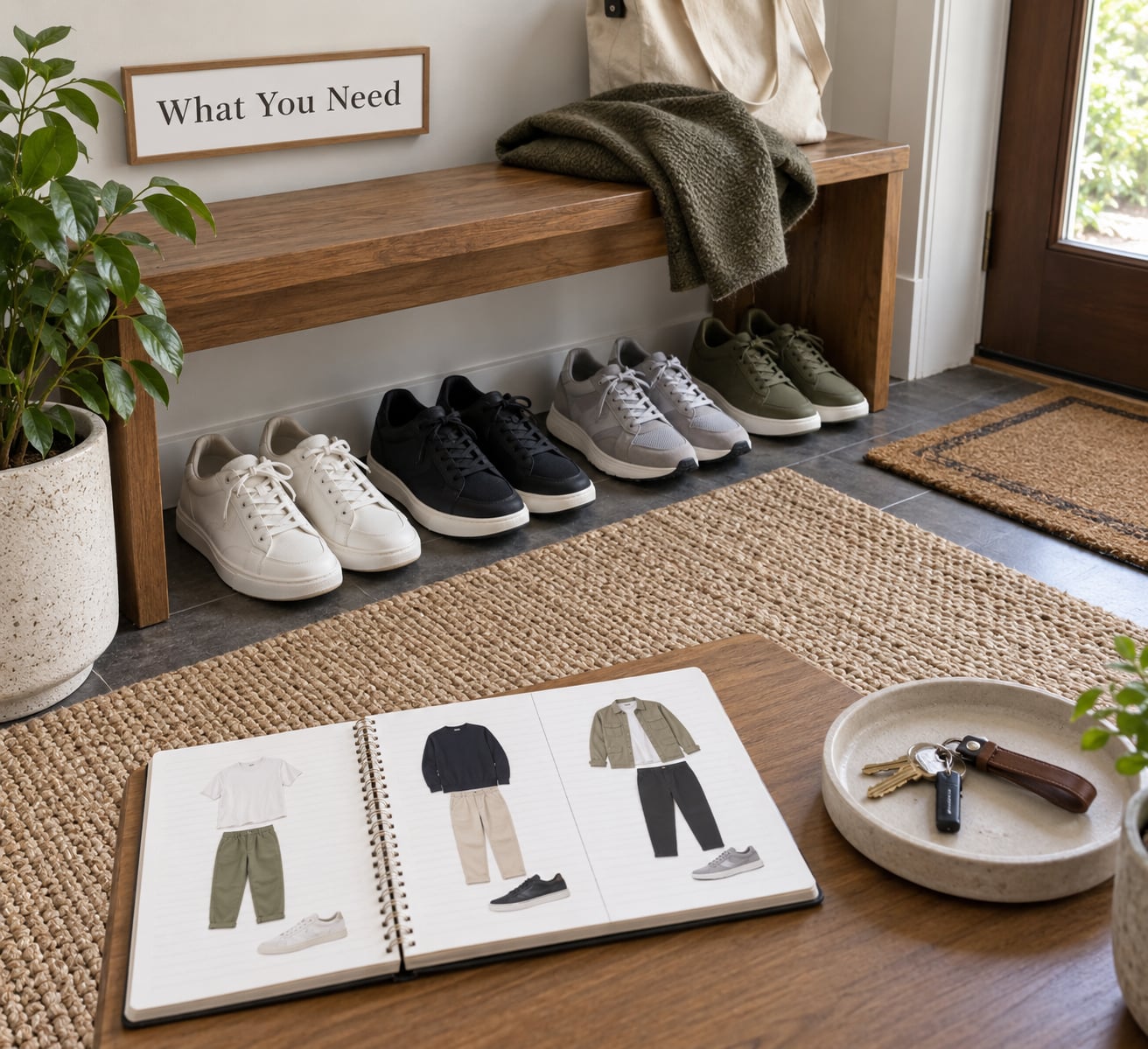
You need four things to start, and none of them is a new pair of sneakers. First, your current collection laid out somewhere you can see all of it at once, boxes included. Second, a rough sample of what you actually wear, taken from a normal week rather than a good one. Third, somewhere to write things down, even if that is a notes app. Fourth, floor or shelf space near the door where your daily pairs live.
The outfit sample matters more than people expect. A typical weekday is jeans, a tee or knit, a jacket, and whatever shoes are reachable, repeated five days running. Write that down before you decide anything, because a rotation built around outfits you actually own will always beat one built around outfits you are imagining.
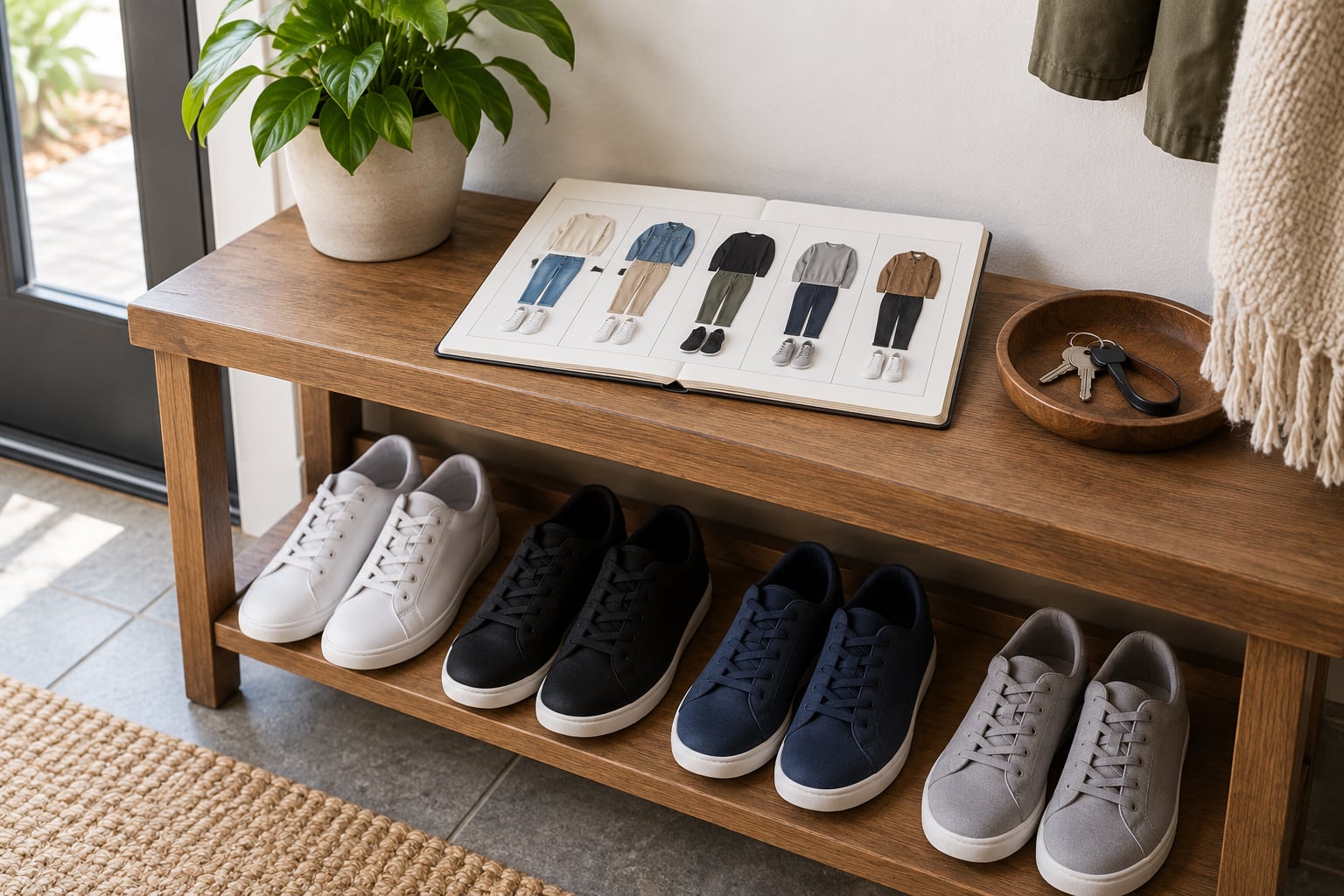
The storage part is not about showing off shoes. It is about retrieval. A pair at the back of a closet, in a box, behind two other boxes, is functionally gone. People in sneaker communities describe the same thing: they keep a small set of daily pairs physically apart from the display collection, somewhere they walk past every day.
Give yourself an hour. Most of that hour is the audit in step one.
Step-by-Step
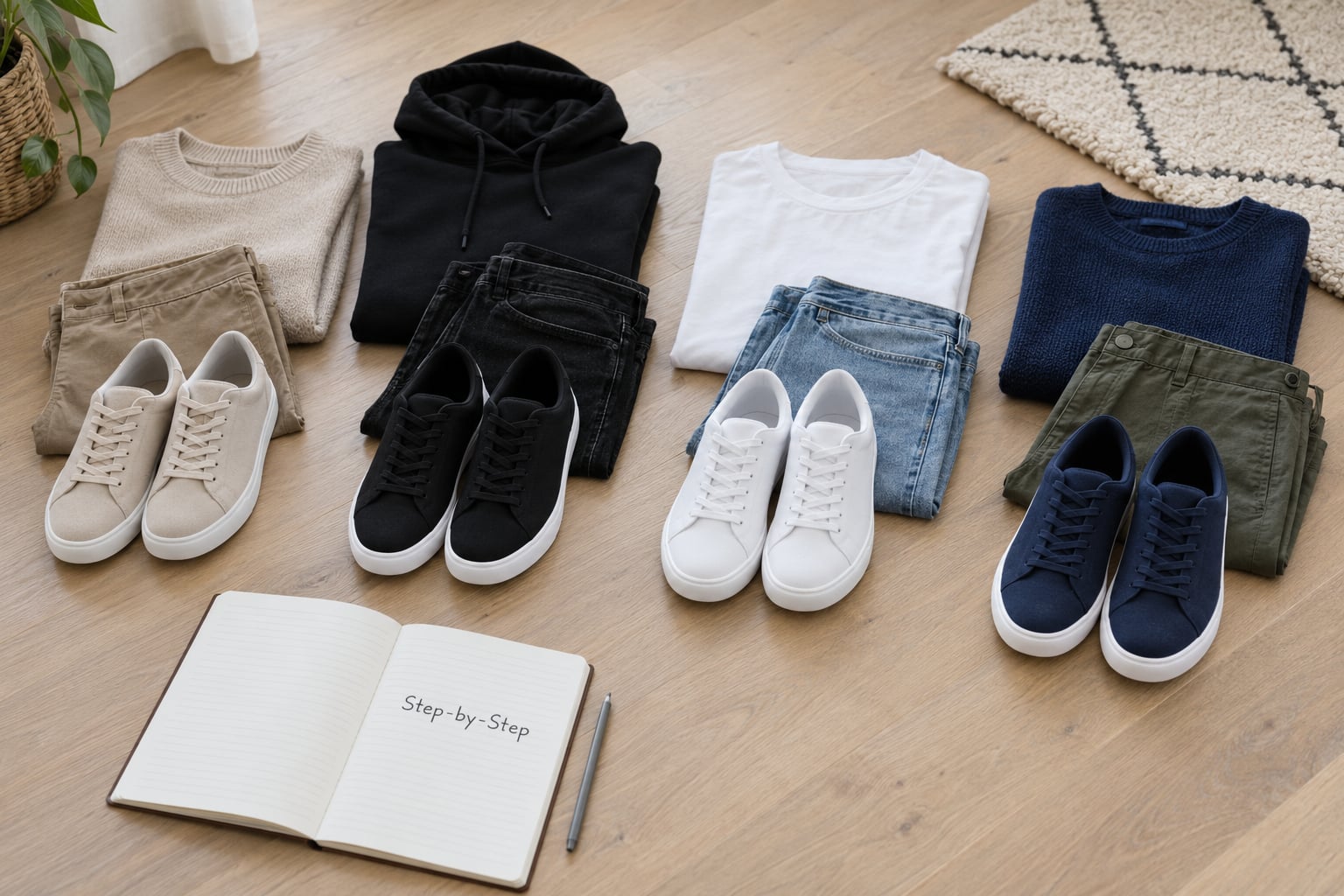
Here is the seven-step process. Work through it in order, because each step depends on the one before it.
1. Audit what you already own. Take every pair out, including the ones you feel vaguely guilty about, and line them up. Mark the date you last wore each one if you can. A pair with no date and no memory attached is a fact worth knowing now.
2. Give each pair one job. Everyday, work-specific, training, going out, weather-dependent, or collection-only. If a pair cannot be given a job, it is not in the rotation yet. This single step kills most of the guessing that happens on a Tuesday morning when you are already late.
3. Check outfit compatibility honestly. Pull the clothes you wore last week and try each candidate pair against three real outfits. If it only works with one, it is a special-occasion pair, not an everyday one.
4. Test candidates in real life. Wear each one for a full day of actual commuting, actual errands, actual standing around. Comfort you discover at hour nine does not show up in a mirror at hour zero.
5. Set simple rules and storage. No more than two consecutive days in the same pair, at least 24 hours of rest between wears, and daily pairs stored at the front. The rest rule is not superstition; foam midsoles and mesh uppers need the dry-out time to recover.
6. Plan outfits a step ahead. Lay out tomorrow’s clothes the night before, shoes included. Deciding in the morning is the single biggest reason rotations stay theoretical.
7. Review what stayed unworn. After a month, anything with zero wears goes through a decision: repair, reassign, sell, or accept as collection-only. See more on that below.
You know the framework worked when you get dressed without thinking about shoes at all, and when you notice a pair you had forgotten you owned.
How to Build a Sneaker Rotation Around Your Real Week
A rotation that maps to your week beats a rotation sized by taste. Look at where your time actually goes: commuting, a desk, a school or campus, training days, weekends, travel, and evenings with other people. Assign at least one pair to each block that happens most weeks.
Reliable daily pairs do the heavy lifting. Neutral leather sneakers in white, black, or a soft grey pair with almost anything in a casual wardrobe, and they hide a scuff better than anything else. Flexible pairs cover the rest, like a canvas plimsoll for warmer months or a weather-appropriate pair for rain.
Rotation size is where most people overshoot, so here is a plain guide:
- 2 pairs works for anyone starting out or living under a strict dress code. Alternate daily, every other day.
- 3 pairs is the smallest setup that genuinely works, with each pair worn roughly every third day.
- 5 pairs suits most people with varied weeks, landing each pair one to three times a week.
- 7 to 9 pairs covers seasonal weather and multiple roles, but each pair drops to once or twice a week.
- 10 or more belongs to collectors with a storage plan. Most of those pairs get worn under monthly.
Runners tend to keep this separate from the lifestyle set, splitting daily, long-run, and faster sessions into their own group. That logic holds for everyday sneakers too: one pair for sitting all day and one for walking eight miles are different jobs even if they look similar.
Choose Sneakers That Work With More Outfits
Repeat wear comes down to how many things a pair sits comfortably next to. Four properties decide that: colorway, silhouette, material, and formality.
Color does the heaviest lifting. White, black, grey, and beige pair with nearly everything, which is why they get worn. One saturated or two-tone pair per rotation is plenty, and it gives an outfit a focal point without making the rest of the wardrobe work harder.
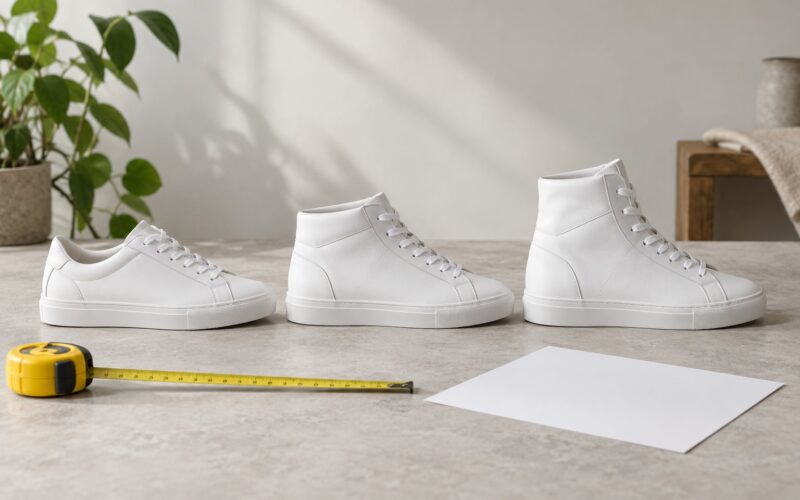
Silhouette changes the reach of a pair. A low profile sneaker works with wide and straight trousers and sits under most hems. A high top or a chunky sole changes the proportion of the leg, so it wants a different pant shape, and pairing it with the wrong one is why statement pairs stay in the box.
Material sets limits. Smooth leather takes a wipe and looks smart with tailoring. Suede and nubuck need dry weather, which quietly removes them from a quarter of the year. Breathable mesh and canvas suit summer and gym use, less so a cold commute.
Formality is the last filter. If your work week includes anything more dressed up than jeans, keep one clean leather pair that can handle a chinos-and-blazer outfit. That one pair often gets more compliments than the pair you saved for a concert.
Test and Refine Your Rotation
Give every candidate pair a trial period of two to four weeks before it earns a permanent spot. That is long enough to hit rain, a dressy day, and a weekend at home, and short enough that a bad fit does not linger for a year.
Keep a simple log while you test: which outfits the pair worked with, whether your feet were fine after a full day, and whether you reached for it when you had a choice. Three lines per pair is enough. The log matters because memory flatters pairs, especially new ones.
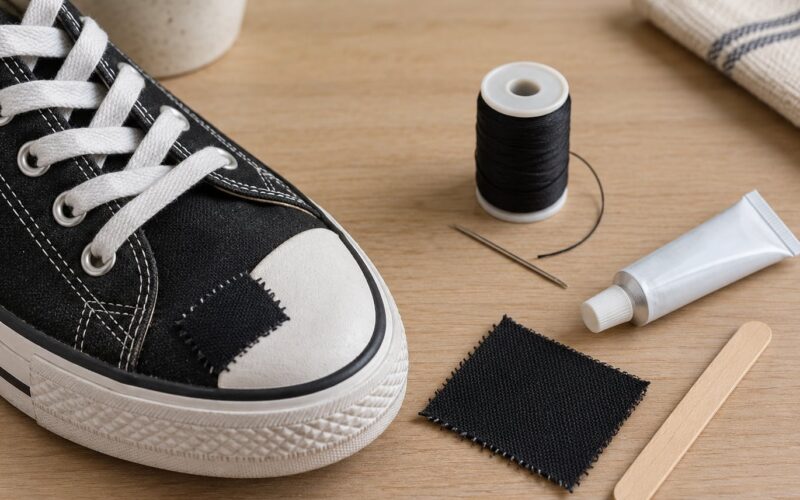
Comfort problems are not style problems. Blisters, heel slip, or a midsole that feels dead after an hour mean the pair gets a repair or a reassignment to shorter trips, not a spot in the daily rotation.
Then run a cost-per-wear check. Divide what you paid by the number of days you have actually worn the pair, and compare it against your cheapest workhorse pair. A higher number is fine for a pair you reach for weekly and a warning sign for one that has logged three wears since it arrived.
Most collectors who get this right use one simple buying gate: one pair in, one pair out. If a new pair needs a hole in the rotation, an existing pair leaves the rotation, whether it is sold, traded, or handed on. It is the cheapest discipline in the hobby and the hardest to keep.
Common Mistakes
Buying for inspiration instead of for a gap. The pair looked good with an outfit you were not going to wear. Fix: name the gap first, like rain cover or a dressy option, and only then look for something that fills it.
Adding everything at once. Ten pairs become ten candidates and zero decisions. Fix: cap the rotation at five while you are building it, and add one pair only after a month has passed.
Matching each pair to a single outfit. One look per pair means one wear per pair. Fix: aim for three outfits per pair before it joins the rotation.
Wearing statement pairs with the wrong pants. The proportion fight is real. Fix: try the pairing with a rolled or cropped hem and a different trouser shape before ruling it out.
Storing daily pairs out of reach. A shoe two steps away is worn; a shoe in a box at the back is decoration. Fix: one drop zone by the door, no exceptions.
Two more habits do most of the heavy lifting. Give every pair 24 hours between wears so the foam and mesh recover, and toss the laces in the wash when you clean the uppers. If a pair has gone six months without being worn, treat that as data rather than a judgment, and let it go if selling it feels easy.
Frequently Asked Questions
How many pairs of sneakers belong in a rotation?
Three pairs is the smallest number that works, because each pair gets worn roughly every third day. Five suits most people with varied weeks, since each pair lands one to three times a week. Two is fine if your schedule is simple or your dress code is strict. Anything past ten needs a real storage plan, because most of those pairs will not get worn weekly.
How often should I change pairs of sneakers?
Try to avoid wearing the same pair two days in a row, and leave at least 24 hours between wears. Mesh uppers and foam midsoles hold moisture after a full day and need that time to dry out fully. Alternating also spreads out tread wear, so your daily pair keeps its shape longer. With three to five pairs, a simple day-to-day rotation does this without any planning.
What should I do with sneakers I never wear?
Give them an honest audit after a month in the rotation. If a pair has zero wears, ask whether the problem is comfort, styling, or simply that it lives somewhere inconvenient. Comfort or styling problems can often be solved. Retrieval problems get a new home. If none of that works, sell them or give them away, and keep the box only if you plan to store the pair long term.
How do I make statement sneakers wearable day to day?
Pick neutral clothes and let the pair be the only loud thing. Dark denim, a plain tee, and a solid overshirt give a bold sneaker room without competing with it. Check the proportion too: chunky soles and high tops usually want a cropped or rolled hem. Wearing a statement pair once a week is what keeps it out of the display pile.
Should a sneaker rotation match a particular style?
No. A rotation works best when it matches your actual wardrobe and week, not a label. If most of your clothes are neutral, neutral sneakers will get worn far more often. If your style is loud on purpose, build around that instead. The test is whether you can pair each shoe with at least three outfits you already own, not whether it fits a particular subculture.
Conclusion
Start with one pair for each recurring part of your week, test it against outfits you already own, and only expand when you can name the gap you are filling. That is how to build a sneaker rotation that actually gets worn, and it starts tonight with an audit rather than a checkout. Consistency matters far more than how many pairs you own, and the collection that gets worn will always look better than the one that gets admired.