Buy from the primary seller or a resale platform with real buyer protection, pay with a credit card, and accept tickets only through the official in-app transfer. That is how to buy concert tickets without getting scammed in three sentences, and the checking takes about ten minutes before you hand over any money. Most ticket fraud is not sophisticated. It rides on urgency, a price that looks too good, and a payment method you cannot take back.
That last part is the whole game. A scammer does not care whether you check the seat map. They care that you paid through an app that treats the transfer like cash. The Federal Trade Commission and the Internet Crime Complaint Center both publish specific warnings about fake concert listings for exactly this reason, and victims tend to describe the same thing: money gone in minutes, no seller, no recourse.
Here is the process I would follow before I paid anyone, from finding the event all the way to testing the ticket in my own account. Last updated for October 2026.
Table of Contents
- What You Need
- Step-by-Step
- Common Mistakes
- Frequently Asked Questions
- How can I tell if a concert ticket seller is legitimate?
- Is it safe to buy concert tickets through a resale marketplace?
- Should I avoid buying concert tickets by wire transfer or gift card?
- Can concert ticket screenshots be legitimate?
- What should I do if I cannot find my concert tickets?
- How do I safely buy concert tickets for someone else?
- Conclusion
What You Need
Get these four things in place first. Doing them before you start browsing means you are not making decisions under time pressure, which is the exact state scam messages are designed to put you in.
- The official page for this exact show. The artist’s site or the venue’s site, not a link a stranger sent you. You are looking for the tour name, the city, the date and the named primary seller for that venue.
- A payment method with a dispute window. A credit card is the strongest option because of chargeback rights. PayPal set to Goods and Services is the second choice. Everything else is a step down from there.
- Your own email and phone, working. A transfer only lands in an account you control. Shared family accounts and old email addresses you no longer open are how good tickets get lost.
- An account you can inspect. If you are buying from a person rather than a platform, that person needs a visible posting history, a feedback thread, and an account old enough that it was not created last week.
One more thing worth having: ten uninterrupted minutes and a phone you can video call on. The most-cited check in the r/Concerts community is a live FaceTime or video call where the seller shares their screen and opens the ticket in their own official app. It is free, it takes five minutes, and experienced buyers treat a refusal as a disqualifier rather than an inconvenience.
Step-by-Step
Seven checks, in this order. They are ordered that way on purpose, because the cheapest check comes first: confirming the event takes a minute and kills most bad listings before you ever look at a price.
1. Confirm the Event Details First
Check the artist, date, venue, city and tour name against the artist’s or venue’s official page before you spend any time on listings. Most listing errors are not clever forgery, they are the wrong show entirely: a different tour leg, a festival date confused with a single-night show, or a support act billed as a headliner.
Read the entry conditions on that same official page while you are there. Some shows are mobile-transfer only, which rules out every seller offering a PDF. Some venues require the card used for purchase to be shown at the door, which rules out a screenshot instantly. A few require ID matching the transfer name, which affects anyone buying as a gift.
How do you know this step worked? You can say, without guessing, what city you are travelling to and what the doors policy is.
2. Check Whether the Seller Is Verified
Sort the seller into one of four tiers before you look at anything else. Primary sellers are the ones the venue names on its own page, such as Ticketmaster or AXS for that specific date. Authorized resale platforms are the ones the primary seller links to, like StubHub, SeatGeek, TickPick or Tixel. Peer-to-peer marketplaces have a real marketplace between you and the seller. A direct message on social media has nothing between you and the seller at all.
Each tier down costs you protection. The primary sale is the only one where the ticket is genuinely issued to you. Authorized platforms add a guarantee and an inspection window on top. Peer-to-peer depends entirely on the individual account. A social DM has no refund policy, no record of the transaction, and no way to make the seller answer you.
When you inspect a person rather than a platform, read the feedback rather than the star rating. Look at the dates on the reviews and the detail inside them. A profile created last week with a handful of generic five-word reviews is worse than no profile at all, because it was built to look trustworthy. Community consensus treats a brand-new account with zero posts as an automatic red flag, and a long-standing account as genuinely lower risk rather than safe.
3. Inspect the Listing for Red Flags
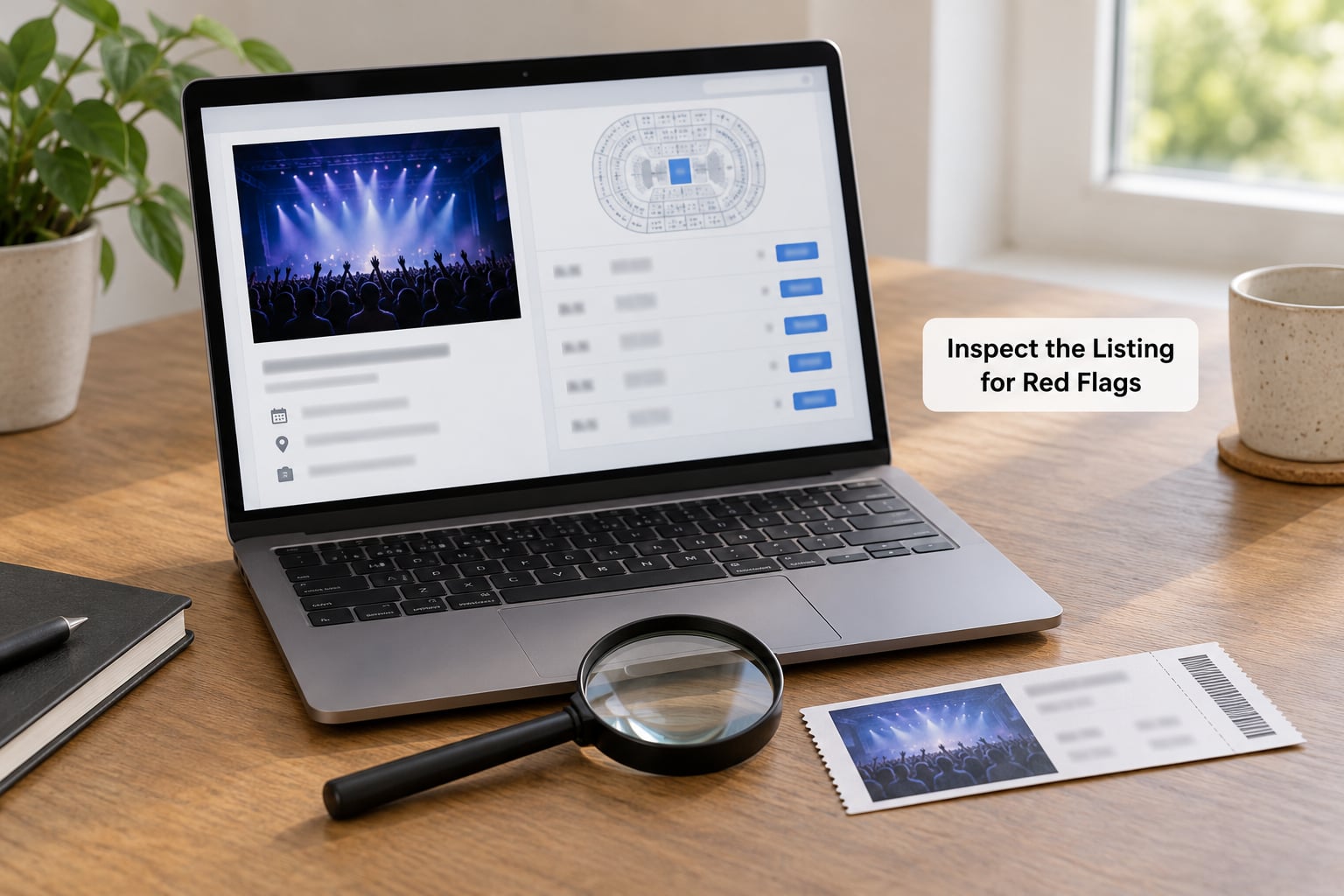
Read the listing the way you would read a stranger’s email, looking for the detail that only a real ticket holder would have. These are the warning signs that show up most often.
- A price well below face value for a show that sold out.
- Guaranteed exact seats with no section, row or seat block explained.
- A screenshot or PDF sent as an attachment instead of an in-app transfer.
- Photos lifted straight from the artist’s social page rather than from an account.
- Event description copied from another show, with the venue name wrong.
- No order number, no confirmation, and no willingness to show a receipt.
- The same seat block listed on several marketplaces at once.
- A seller who declines a video call or moves the conversation off-platform.
- Pressure to decide now because others are messaging.
- Any request for a deposit to hold the tickets.
Two of these deserve emphasis. A seller running the identical listing across multiple marketplaces is almost always sitting on a small number of duplicated tickets, and a deposit request is not a scam on its own but a strong sign the sale is not going to happen.
4. Compare the Total Price and Delivery Method
Work out what you will actually pay at checkout, including every fee, and compare it against other listings for the same section. Scammers price low on purpose, and the final total is where the low number quietly climbs back into a plausible range.
Resale prices move on a schedule, and knowing it takes pressure out of the decision. Rolling Stone, citing Seatpick and TicketData, reported that resale prices tend to be about six percent cheaper on Wednesdays than on Fridays or Mondays, and that the price index dips to roughly 0.82 around twenty days out from showtime. The same reporting undercut the fire-sale myth: for in-demand events the median day-of price can sit at 99 percent of the peak. Waiting is sometimes cheap and sometimes extremely expensive.
That matters here because a buyer who knows the market has a legitimate reason not to rush, and can tell a seller so. If money is the problem, the honest answer to how to buy concert tickets without getting scammed on a budget is patience or a different date, never a cheaper payment method. Check the delivery method too. A listing that cannot say how the ticket will arrive is not cheaper, it is just undefined.
5. Pay Only Through a Protected Method
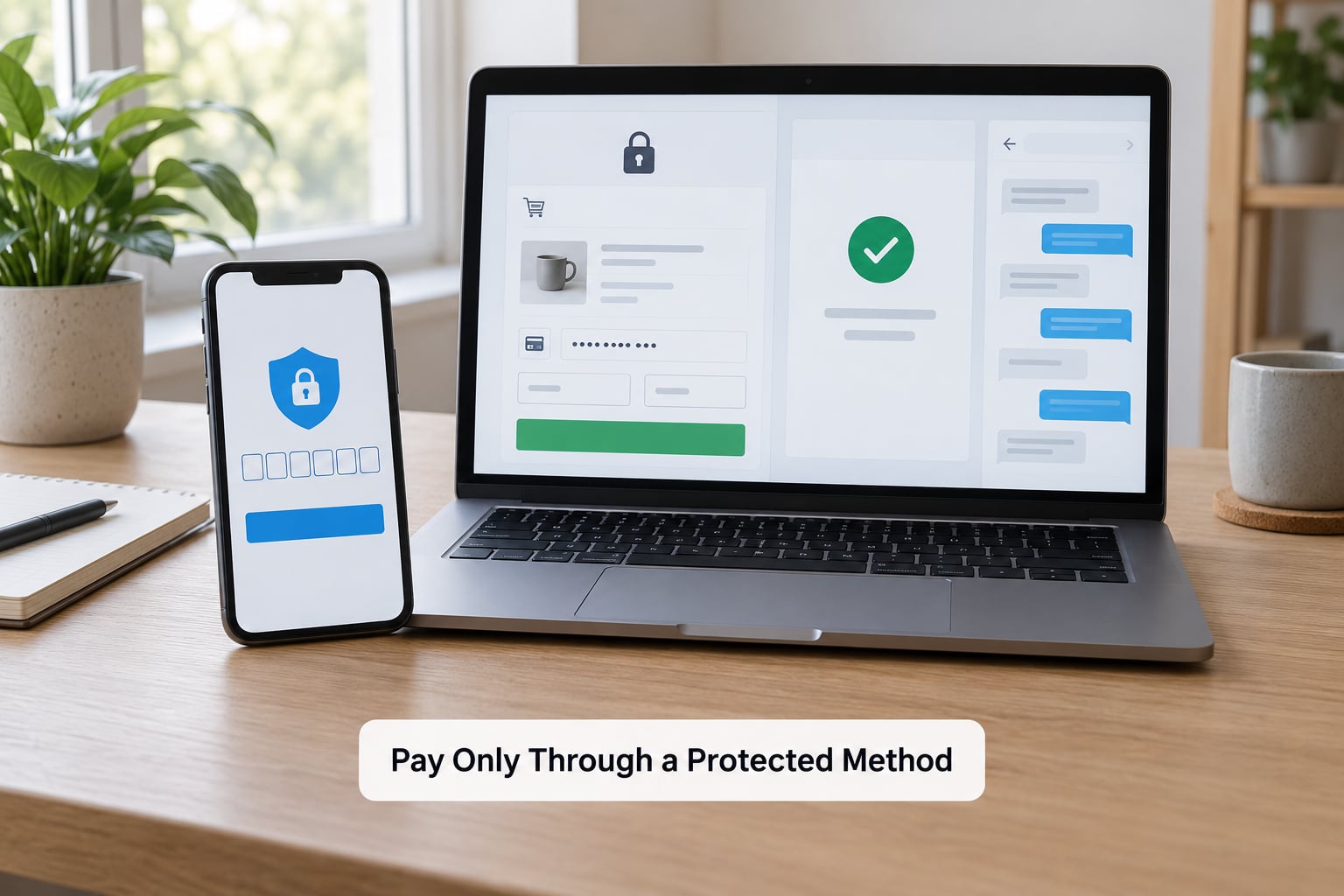
Pay with a credit card. That single choice gives you a dispute process that money transfer apps do not have, and it is the reason card beats everything else on this list.
Here is the ladder, safest at the top. A credit card is the safest option, because a chargeback lets you dispute the payment with your issuer. PayPal set to Goods and Services is second, and the setting matters: a seller who asks you to switch to Friends and Family is asking you to give up the protection before you have the ticket. Peer-to-peer marketplace checkout is third, usually safe because the marketplace holds the payment and offers a dispute window. Bank transfer and wire are fourth, slow and very hard to reverse. Venmo, Zelle and Cash App sit near the bottom, and experienced buyers describe these apps as acting like cash. Gift cards and cryptocurrency are last, unrecoverable in practice, and the two payment types scammers ask for most often.
Stay inside the platform where you found the ticket. Moving to a personal app or a direct bank transfer removes the transaction history that would let you reverse anything. Turn on two-factor authentication before a high-value purchase, not after. And never send the full amount before the transfer is complete. Splitting the payment, part now and the balance once the ticket arrives in your account, still carries risk but caps your exposure.
6. Confirm Delivery and Transfer
An official transfer reassigns the ticket to a named account inside the ticketing app. That is the only version of delivery that matters, and it is why forwarded emails and PDFs are worthless as evidence.
The mechanism is dynamic barcodes. A screenshot captures a single static code at one moment, while the live ticket in your app rotates. The gate scans the rotating version, so a screenshot either fails outright or, worse, scans once and is already used, which is the duplicate-ticket trap. A PDF emailed to you cannot be refreshed and cannot prove you hold the current version.
So do not close the deal until the ticket is sitting in your own account. Open the app, find the order, and check the name, the date and the seat block yourself. A seller who claims to have sent something is not the same as a seller who has sent it.
7. Test the Tickets Before the Event
A few weeks out, run a real test rather than trusting the email confirmation. Find the order number on the original receipt. If the ticket came by transfer, remove it from your account and re-add it, exactly as a new buyer would, and confirm it reappears. Check that it updated in your phone wallet if you use one, and note any activation date the app shows.
This catches the duplicate case before you travel rather than at the gate in the rain. If anything looks wrong, contact the platform the same day, while there is still time for them to act on it. The closer the show gets, the less anyone can do.
Common Mistakes
Almost every ticket scam report I have read comes down to one of these, and each has a simple fix.
Buying before you check. The listing looked good, the show was close, and you paid before verifying the event or the seller. Fix: run steps one and two before you look at price, every time, including when you are convinced you have found a rare deal.
Clicking sponsored search results. Paid ads sit above organic results and are not ranked on trustworthiness. Fix: type the platform name directly into your browser instead of arriving from a search ad.
Sending money off-platform to save fees. The platform fee feels like the sting, so you move the payment to an app that cannot reverse it. Fix: the fee buys the dispute window. Paying the fee is cheaper than losing the ticket.
Accepting a screenshot or forwarded email as delivery. You get something that looks like a ticket and assume it is one. Fix: require the in-app transfer, then confirm possession in your own account.
Ignoring seller verification. The account looks established at a glance. Fix: read the reviews and check the account age, not the rating.
Buying a block of seats from a stranger. Group orders multiply your exposure, since splitting payment across several people multiplies the number of things that can go wrong. Fix: buy group seats on a platform with a guarantee, and pay once, to one order, with a card.
One last habit worth building: after a completed purchase, keep the confirmation email, the order number and the seller conversation. Not because you will enjoy it, but because a dispute is only as strong as the record behind it.
Frequently Asked Questions
How can I tell if a concert ticket seller is legitimate?
Start with the venue or artist’s official page and see which seller it names for that date. If the seller matches, you are in the safest tier. If not, check whether the account has real posting history and detailed feedback with dates, whether it will do a live video call showing the ticket in the official app, and whether it accepts payment through a platform with a dispute window. A brand-new account with no reviews is the clearest warning sign.
Is it safe to buy concert tickets through a resale marketplace?
Authorized resale platforms are risk-reduced, not risk-free. They hold payment until delivery, verify that a ticket exists before listing it, and generally offer a money-back guarantee and an inspection window after the event. The residual risk is that a ticket gets duplicated between the original purchase and your delivery, which is a platform problem rather than a seller problem. Always complete the purchase inside the platform and use a credit card.
Should I avoid buying concert tickets by wire transfer or gift card?
Yes, avoid both completely. A wire transfer is difficult to trace and usually impossible to reverse once sent. Gift cards are worse, because they are effectively anonymous cash that anyone who obtains the code can redeem, and scam instructions routinely tell a buyer to read the code out over chat. If a seller accepts nothing but those two methods, that is not a preference, it is the entire scam. Pay by card.
Can concert ticket screenshots be legitimate?
They can be genuine in the sense of being a real ticket, but they cannot be safely delivered. Dynamic barcodes rotate on a timer, so a screenshot captures one expired frame rather than the live code. A forwarded PDF has the same problem and cannot be refreshed. Worse, a screenshot may come from a ticket that has already been scanned by another buyer, which is how legitimate tickets end up duplicating. Always request an official in-app transfer.
What should I do if I cannot find my concert tickets?
Work from the order first. Find the confirmation email or order number and check the ticketing app’s transfer section, your phone wallet, and your spam folder for the transfer notification. If you used a resale platform, open the purchase in your account on that platform, since it holds the ticket record even when delivery failed. Contact the platform immediately with the order number, and report the payment as disputed with your card issuer rather than waiting for a reply.
How do I safely buy concert tickets for someone else?
Transfer the ticket to the person attending, in their name, through the official transfer feature, rather than buying it under your own account and forwarding the file. That way their ID matches the ticket name, they hold it in their own account, and the dynamic barcode refreshes for them. If the show requires the purchasing cardholder to be present, check that rule on the venue’s page first, since a simple transfer will not solve it.
Conclusion
Start at the official event page, find the primary seller named for that date, and only move to resale when the primary sale is gone. Then run the listing, seller and payment checks before you pay, keep the transfer inside the official app, and test the ticket in your own account before the day. That is how to buy concert tickets without getting scammed: slower than the seller’s deadline, and it works every time.