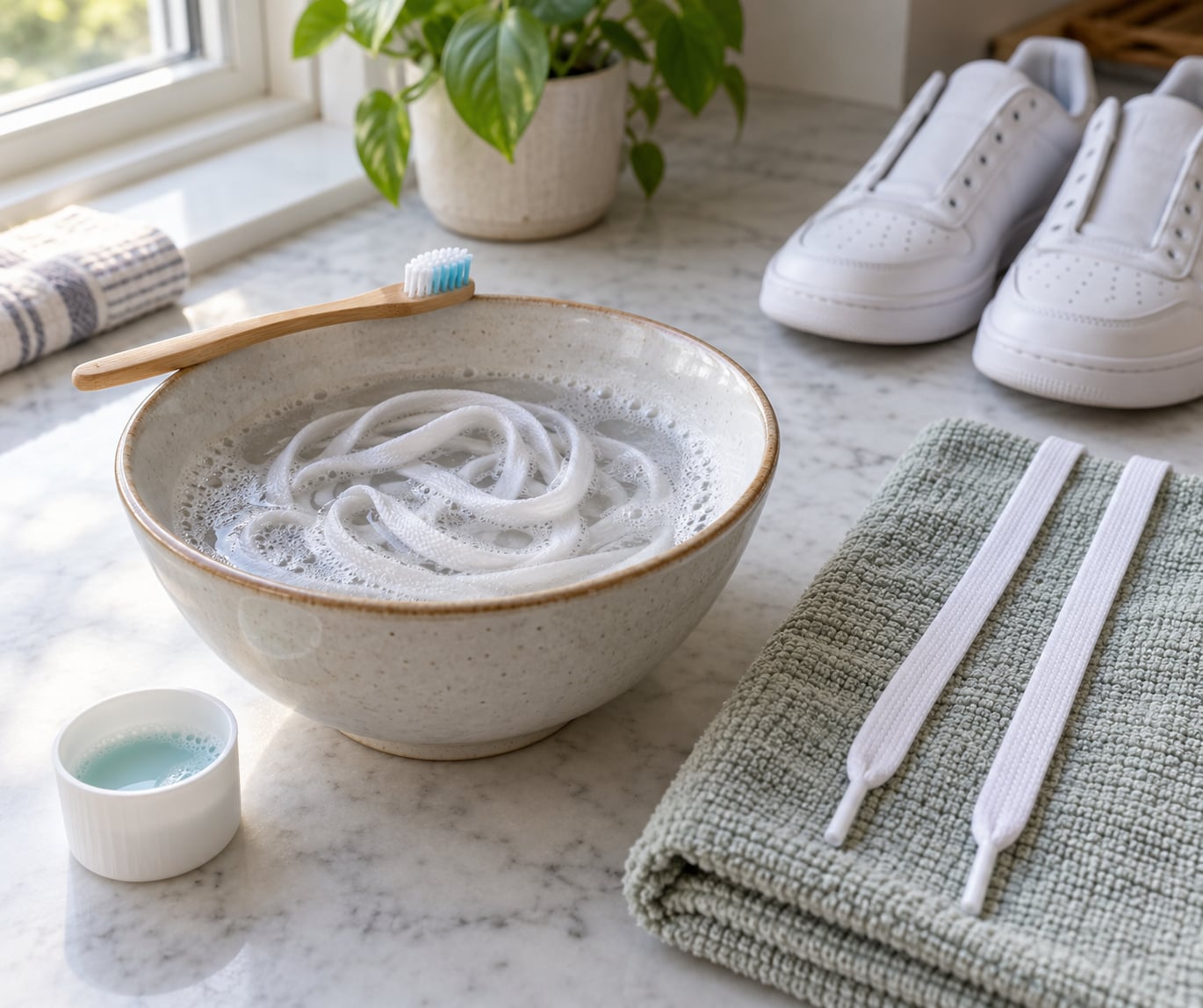
How to clean sneaker laces takes about 30 minutes of hands-on time, most of it waiting. Take the laces out, brush off the loose dirt, soak them 15 to 30 minutes in warm water with a small amount of mild detergent, scrub the weave with a soft-bristled toothbrush, rinse under cool running water, then let them air-dry flat. No bleach, no dryer, no wringing.
That is the method almost every shoe-care guide converges on, and it works because laces hold oil and sweat rather than deep structural grime. The difference between a good result and a ruined lace is almost never effort. It is water temperature, how hard you scrub, and whether you let them dry without heat.
What changes the answer is what your laces are made of. Cotton can take a soaking and a bristle brush. Waxed cotton, leather, elastic and reflective laces cannot, and treating them like cotton is how people end up with cracked aglets and flaking dye. The tables below sort that out before you turn the tap on.
What You Need
The core kit is four things and it will not set you back much: a soft-bristled toothbrush, mild laundry detergent, a bowl or basin bigger than the laces, and somewhere flat to dry them. A toothbrush you were going to throw out is the right tool. The soft bristles agitate the weave without abrading it.
Everything else is optional, and which option is worth having depends entirely on the lace material and the stain.
- Mild laundry detergent or colour-safe detergent — safe on cotton, nylon, polyester and rope laces. This is the default choice.
- Dish soap — one drop in the basin handles grease and oil better than detergent. Safe on cotton and synthetic laces. Skip it on leather.
- Baking soda — a teaspoon mixed with a little water into a paste, for yellowing and ground-in marks. Gentle enough for cotton and nylon.
- White vinegar — diluted one part to four parts water, as a soak for odour and yellowing. Never on leather or waxed laces, which it dries out.
- Hydrogen peroxide — diluted roughly one part to four parts water, for stubborn yellowing on white laces. Test a hidden section first; it can bleach coloured printing and it weakens nylon if left too long.
- Oxygen brightener — the gentler cousin of bleach, and my pick if you clean white laces regularly.
- Microfiber cloth — for leather laces and for wiping dye off a white midsole.
- Stain remover pen and mesh laundry bag — for ink marks and for machine washing, if you own either.
Here is how the common agents compare, because the choice matters more than the effort.
| Agent | Best for | Time needed | Cautions |
|---|---|---|---|
| Mild laundry detergent | Everyday dirt and sweat on cotton, nylon, polyester, rope | 15-30 min soak | Use cool or lukewarm water; excess detergent needs a long rinse |
| Dish soap | Grease, oil, scuffed black laces | 5-10 min soak | One drop is plenty. Rinse twice or the film dulls the colour |
| Baking soda paste | Yellowing, greyed-out white laces, faint scuffs | 10-15 min on the lace | Needs scrubbing to lift; not strong on ink |
| White vinegar | Odour, sweat smell, light yellowing | 10-15 min soak | Ruin leather and wax coatings. Never mix with hydrogen peroxide |
| Hydrogen peroxide | Hard yellowing on white cotton and polyester | 15-20 min, then rinse immediately | Spot-test first. Fades coloured dye and printed logos |
| Oxygen brightener | Regular white-lace maintenance | 20-30 min soak per the label | Slower than bleach but far kinder to fibres and aglets |
| Bleach | Almost nothing worth the risk | Not recommended | Weakens cotton, yellows over time, cracks aglets. Skip it |
How to Clean Sneaker Laces by Material
Match your laces to a row before you start. The material decides the water temperature, the soak length and which cleaners are off limits.
| Material | Safe to soak | Best method | Never use |
|---|---|---|---|
| Cotton (flat, round, rope) | Yes, 15-30 min | Warm water, mild detergent, toothbrush scrub | Dryer heat, boiling water, bleach |
| Nylon | Yes, 10-15 min | Lukewarm water, gentle detergent, light scrubbing | Hot water, bleach, abrasive magic eraser, hydrogen peroxide left on |
| Polyester | Yes, 15-20 min | Lukewarm water, dish soap for oils | Heat above warm, bleach on dark colours |
| Waxed cotton | No, or seconds only | Damp cloth wipe, cold water spot clean, air-dry | Soaking, vinegar, hot water — the wax lifts and the lace stiffens permanently |
| Leather | No | Wipe with a damp microfiber cloth and mild soap, then a leather cleaner | Soaking, vinegar, hydrogen peroxide, machine washing |
| Elastic / no-tie | Briefly, cold water only | Hand wipe with a damp cloth and a drop of dish soap | Hot water, bleach, tugging the elastic, dryer heat |
| Reflective / 3M-style | Short, lukewarm only | Gentle hand wash, no scrubbing on the print | Anything abrasive, bleach, rubbing the reflective strip |
If you cannot tell what you have, look at the tip and the weave. Metal-tipped, tightly woven and slightly shiny usually means synthetic. Rope laces are almost always cotton. Waxed laces feel waxy and matte, and they will stiffen if you soak them. When in doubt, lukewarm water with mild detergent and light scrubbing is the least damaging option across every material.
One extra note on coloured laces: dark red, navy and purple dyes can bleed onto a white midsole or your socks. Test by dampening one section with plain water and pressing it onto a spare white cloth. If colour comes away, keep the whole process cold and skip vinegar or peroxide, which push dye out faster.
Step-by-Step: How to Clean Sneaker Laces
Step 1: Check the Laces and Choose a Safe Method
Pull the laces out of the shoe and untie them fully. Leaving them knotted means the middle never gets water to it, which is exactly where the grey build-up lives. While they are out, hold the lace up and look for dye on your fingers, a fuzzy surface, or stitching starting to come loose at the aglets.
Then decide how you are cleaning. Hand washing in a basin is the safest option and it handles every lace type. A washing machine is fine for cotton, nylon and polyester laces inside a mesh laundry bag on a cold delicate cycle, but people have reported laces tangling around the agitator or disappearing entirely mid-cycle, so a basin is the low-risk choice.
If the shoe itself has a care label, read it before anything else. Waxed and leather laces mean a damp cloth, nothing more.
Step 2: Prep the Laces and Treat Stubborn Marks
Take the laces outside or over a bin and brush off the dry dust with the toothbrush first. Dry debris lifts easily at this stage and turns to mud the moment you add water if you skip it.
Then fill a basin with lukewarm water and a capful of mild detergent, or one drop of dish soap for grease. Drop the laces in and leave them 15 to 30 minutes. Cotton and rope can sit the full 30. Nylon, elastic and reflective laces get 10 to 15 minutes at most, because longer soaks can make synthetic fibres slick and slippery or dull the print.
While they soak, deal with the stubborn marks. Work the stain from the outside in rather than scrubbing the centre, so you are not spreading it.
- Mud — the easiest one. Soak, then lift it with the brush. No pretreatment needed if the mud was dry.
- Grass — dish soap on the spot, leave 10 minutes, then scrub. Grass dye is stubborn but detergent plus a brush usually gets it.
- Grease and oil — dish soap first, then a second scrub after the soak. Baking soda dry on the spot for 10 minutes lifts what soap misses.
- Ink — blot from the outside with a cloth dampened with rubbing alcohol on a hidden section first, then finish in the wash. Ink rarely comes fully out of polyester.
- Blood — cold water only, and treat it before it sets. Never use warm water on blood; it sets the protein into the fibre.
- Scuffs and bobbles — not a stain. A magic eraser works on cotton but will abrade nylon, so on synthetics use a razor blade held flat to shave the surface lightly instead.
Step 3: Wash the Laces
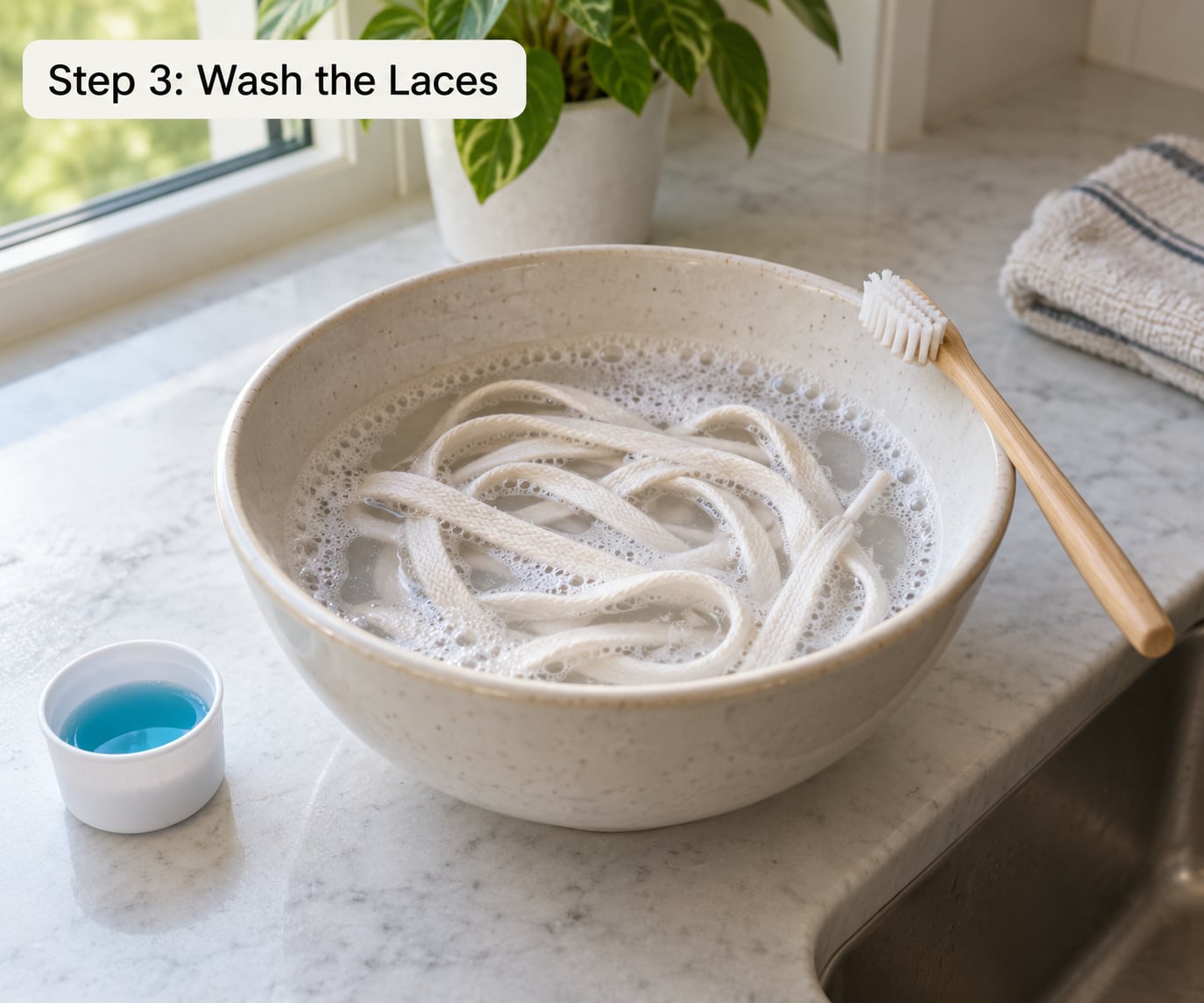
Take the laces out of the basin and hold them under cool running water until the water runs clear and the soapiness is gone. Then work the brush along the weave with the grain, not against it. You want the bristles to move between the fibres, not to chew them, so the pressure is about the same as brushing your own teeth.
How do you know it is working? Two signs: the colour in the basin water changes before it settles, and the grime transfers to the bristles as a grey-brown film. Wipe the brush on a cloth and keep going if the laces still look dull. Most people stop a minute early, which is why their laces look clean-wet rather than clean.
For the machine route: laces go in the mesh bag on their own or with a few towels that can take the agitation. Cold water, a small amount of liquid detergent, delicate cycle. No fabric softener, which leaves a film and pulls dye into the fibres.
One more pass worth doing. Laces that have been laced up for months hold dirt in the crossings, so untangle each length and run your fingers down it before the final rinse.
Step 4: Rinse and Dry the Laces
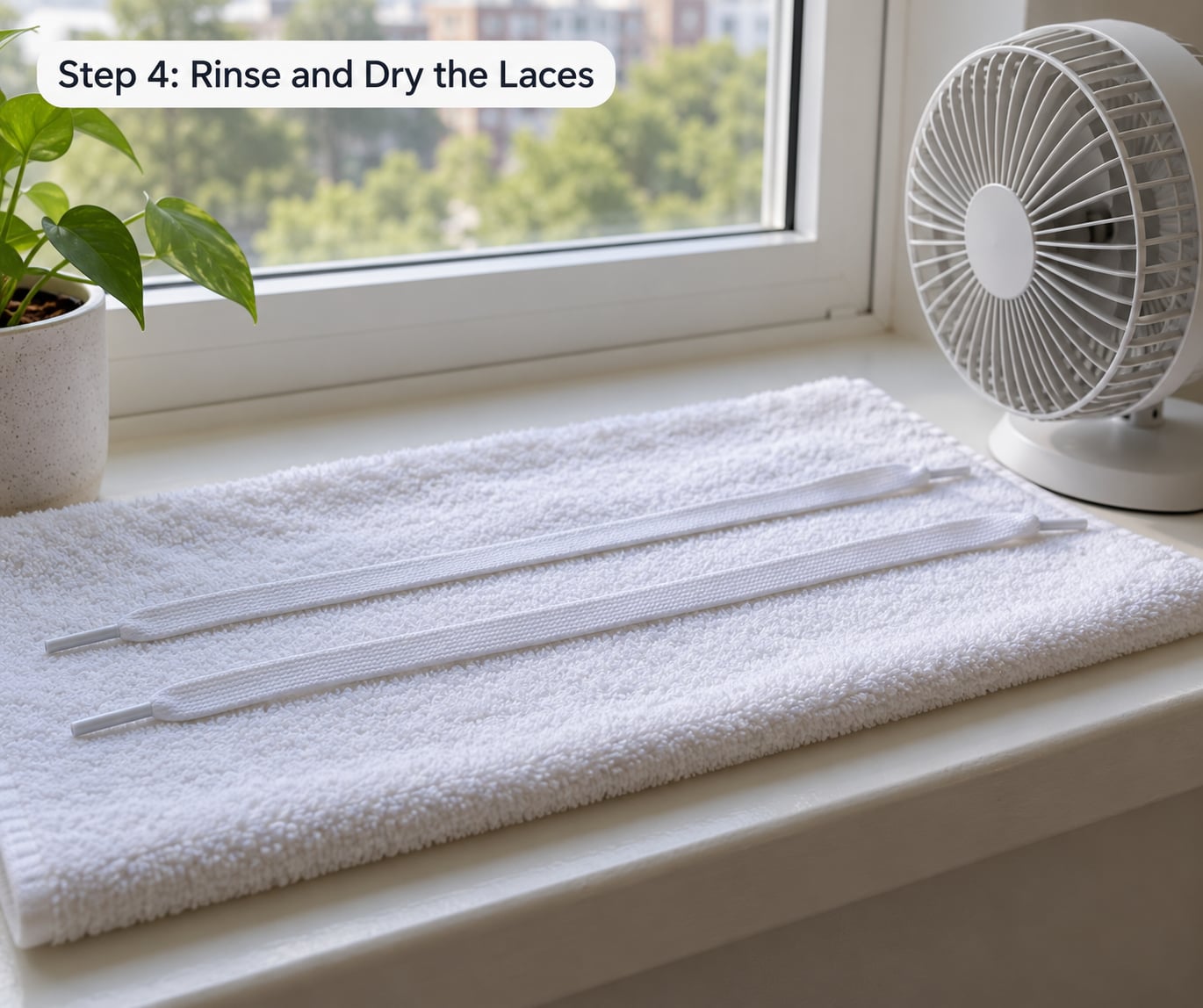
Rinse twice under cool running water. Do not wring, squeeze hard or twist the lace to get the water out. That is what pulls the fibres apart, frays the surface and warps the shape so the lace stops threading cleanly through the eyelets.
Instead, lay them flat, straighten them, and weight the ends under something small and dry so the aglets do not curl as the fibres shrink slightly while drying. Roll them between your palms for a few seconds first to settle the shape back into the length it had before.
Air drying, away from heat and direct sun, is the rule. Direct sunlight fades dark colours and continues the yellowing on white laces, and a radiator or tumble dryer is worse: heat melts and cracks the plastic aglets and shrinks the lace enough that it may no longer reach the top eyelets.
Flat cotton laces usually dry in 1 to 3 hours indoors. Synthetic, waxed and thicker rope laces can take overnight. If you need them faster, a fan on a normal setting, a towel roll with the laces tucked inside, or a hair dryer on cool held 30 cm away will do it without cooking the tips.
Common Mistakes
Almost every ruined pair of laces traces back to one of these.
- Using bleach. Bleach is the single most repeated mistake and it backfires. It weakens cotton fibres so they fray sooner, yellows over time as the damaged surface oxidises, and cracks plastic aglets. If you want white laces whiter, use oxygen brightener or a diluted hydrogen peroxide soak instead.
- Boiling the laces. Heat shrinks synthetic fibres and sets dye into them permanently. Warm tap water is plenty.
- Putting laces in the clothes dryer. The fastest way to melt an aglet. Air-dry flat.
- Soaking leather or waxed laces. Leather stiffens and cracks; wax lifts off and never returns. Both want a damp cloth and hand treatment only.
- Scrubbing printed or reflective sections hard. Printing flakes and reflective strips go permanently matte. Wipe those areas, do not brush them.
- Using a magic eraser on nylon or polyester. It is an abrasive eraser. You will get a clean spot surrounded by a fuzzy one.
- Leaving laces in direct sun to dry faster. Faster, yes, and it fades the colour and pushes yellowing along. Out of sunlight is the goal.
- Dishwashing them. The cycle is far too hot, the detergent is too harsh, and your laces are gone.
Tips for Keeping Sneaker Laces Clean
The cheapest cleaning is the one you avoid. Most lace problems come from wearing the same pair daily and never giving it a reset.
Run two pairs of shoes on rotation. Laces that sit unworn for a day dry out completely, and sweat and bacteria do not get a chance to build a layer. If you wear one pair every day, swap the laces onto a second pair weekly rather than swapping whole shoes, which is much easier to remember.
Keep a spare set in your bag and change them every few weeks, especially in summer. Fresh laces do more for the look of a shoe than cleaning the ones you have, and a spare set costs less than a good cleaning kit.
Wipe laces with a barely damp cloth at the end of a heavy day. That takes twenty seconds and it stops sweat from turning into the grey film you would otherwise scrub off later.
Do not over-wash. A gentle hand wash every few weeks is plenty, and frequent bleaching or hot soaks do more damage than any dirt they remove. If laces have gone fuzzy, flattened or lost their stiffness, cleaning will not bring that back. That is the point where replacement laces are the better answer, and matching the length by counting your eyelet pairs plus 10 cm usually gets you the right fit.
Store unworn laces loosely in a breathable box, not sealed in plastic, so any dampness can escape.
Frequently Asked Questions
Can I put sneaker laces in the washing machine?
Yes, for cotton, nylon and polyester laces only. Put them in a mesh laundry bag, add a small amount of liquid detergent, and run a cold delicate cycle with no fabric softener. Skip the machine for waxed, leather, reflective or elastic laces, since heat and agitation damage all four. The real risk is mechanical: laces have been reported tangling around the agitator and going missing mid-cycle, so hand washing in a basin is the safer option if a lost lace would annoy you.
Can I use bleach to clean sneaker laces?
I would not, even on white cotton laces. Bleach breaks down the fibres so they fray faster, and the yellowing that people try to fix often comes back worse once the fibre is damaged. An oxygen brightener is the better tool, and a diluted hydrogen peroxide soak works on stubborn marks. If you do use bleach, dilute it heavily, test a hidden section first, rinse twice, and never combine it with vinegar or hydrogen peroxide.
How do I clean yellowed or discolored shoelaces?
Start with a soak in warm water and mild detergent for 15 to 30 minutes, then scrub the yellow patches with a toothbrush. If that is not enough, make a paste from a teaspoon of baking soda and a little water, work it into the lace, leave it 10 to 15 minutes, then rinse. For persistent yellowing on white laces, an oxygen brightener or a one-in-four hydrogen peroxide soak for 15 minutes will lift what detergent cannot. Air-dry out of direct sunlight.
How long should I air-dry shoelaces?
Flat cotton laces dry in 1 to 3 hours indoors at normal room temperature. Thicker rope, waxed and synthetic laces can take 6 to 12 hours, so plan overnight for those. Keep them out of direct sun, away from radiators and never in a tumble dryer. If you need them sooner, a fan on a normal setting or a hair dryer on cool, held about 30 cm away, speeds things up without warping the aglets or shrinking the lace.
Can I clean leather shoelaces the same way as cotton laces?
No. Soaking is what ruins leather laces, not the detergent. Water gets into the material, it dries out stiff, and repeated soaking leads to cracking along the length. Wipe them instead with a damp microfiber cloth and a drop of mild soap, then follow with a leather cleaner or conditioner once they are dry. Skip vinegar, hydrogen peroxide and the washing machine entirely, and never pull hard on a lace that has become stiff at the eyelet.
How do I keep white sneaker laces from getting dirty?
Rotate pairs rather than wearing the same shoes daily, and change the laces themselves every couple of weeks if the white has started to go grey. Keep a spare pair to swap in, since fresh laces change the look of a shoe more than anything else. Wipe sweat off at the end of a heavy day with a barely damp cloth, and spot-clean immediately when something spills. Dark-coloured laces on a white midsole will dye it over time, so choose light laces if that matters to you.
Conclusion
Start with the material. Check whether the laces are cotton or synthetic, waxed, leather or elastic, and that one look decides your whole method. Then test your cleaner on a hidden section, soak 15 to 30 minutes in warm water with mild detergent, scrub gently with a soft toothbrush, rinse under cool water, and let them dry flat out of the sun.
Skip bleach, skip the dryer, and skip soaking anything that is waxed or leather. Get those three right and the laces come back looking new enough that nobody realises you cleaned them at all.