Dyeing canvas sneakers at home is mostly a preparation job: clean white cotton canvas, mask the rubber sole and toe cap, then dip or brush on a hot water-based fabric dye and let the shoe absorb it for 20 to 30 minutes before a cold rinse. The whole process takes about an hour of active work plus drying time, and the tricky part is protecting the parts of the shoe that are not canvas.
Two rules decide whether you get a good result. You can only go darker than the color you start with, so a white or cream shoe is the ideal canvas, and any rubber or plastic part will stain permanently unless you seal it first.
Table of Contents
- What You Need
- Step-by-Step: How to Dye Canvas Sneakers
- Common Mistakes
- Frequently Asked Questions
- What kind of dye works best on canvas sneakers?
- Can I dye white canvas shoes without using a primer?
- How long should canvas sneakers soak in fabric dye?
- Will dyeing canvas sneakers damage the soles or glue?
- How do I stop the new color from bleeding or fading?
- Can I machine-wash canvas sneakers after dyeing them?
- Conclusion
What You Need
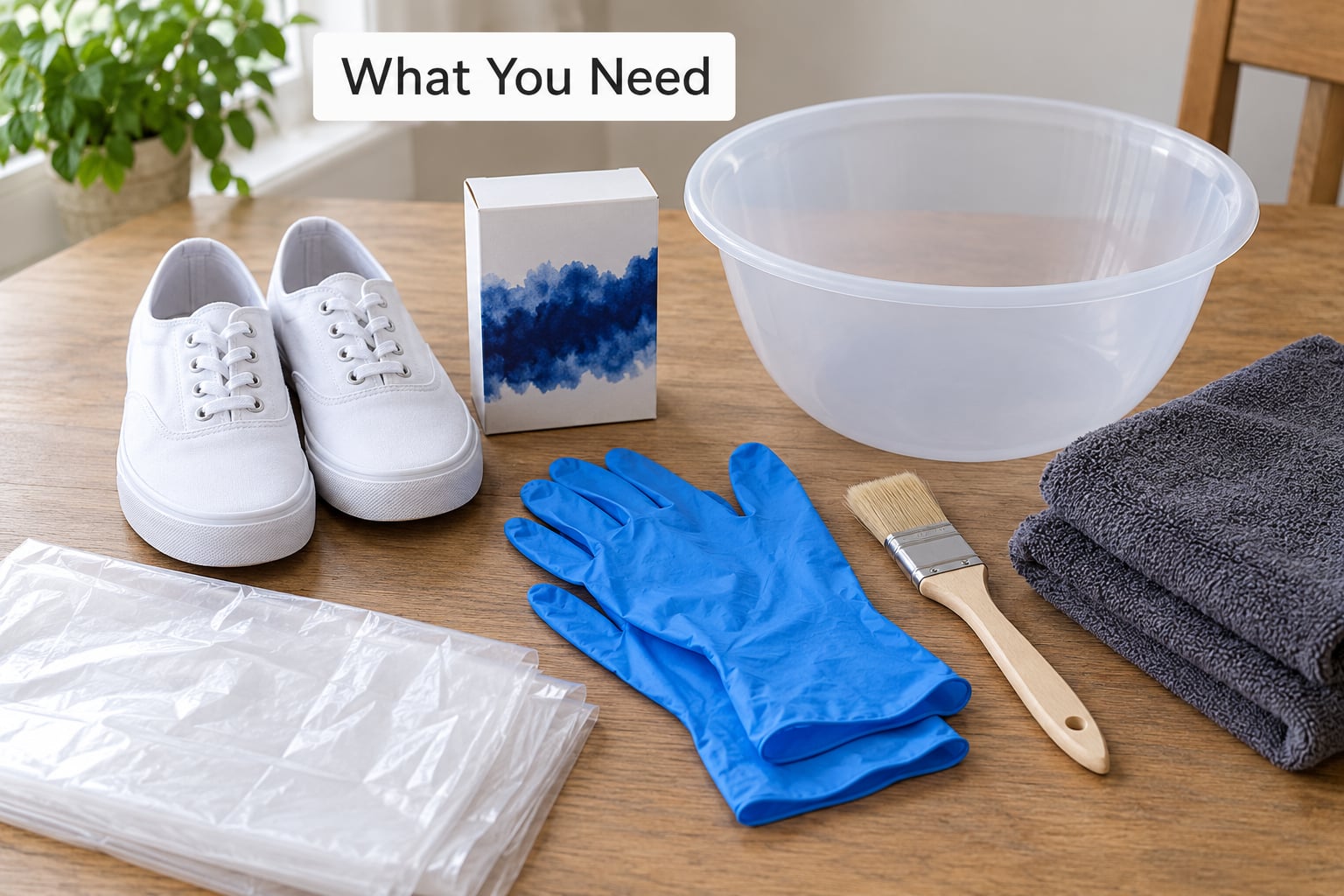
Most beginners underestimate the masking supplies and over-buy the dye. A single pair of shoes needs far less liquid than the bottles people buy, because you are soaking fabric, not filling a bathtub.
Dye and fixatives
- Fiber-reactive or direct-to-cotton dye. Any dye labeled for cotton or natural fiber takes to canvas well. A dye made only for synthetic fabric will bead up and do nothing.
- Dye fixative (color setter). Optional but recommended. It is the step that decides whether your socks stay clean.
- Color remover, only if your shoes are already a dark or non-white color you want to strip first.
Prep and masking
- Rubber cement or high-stick painter’s tape for the sole edge and toe cap
- Petroleum jelly for small plastic parts that tape will not stick to
- Laundry detergent and a soft brush or toothbrush for cleaning
- Scissors and pliers for laces, plus tweezers for pulling stitches
Dyeing gear
- A large non-aluminum pot or plastic tub, big enough for the shoes to lie flat
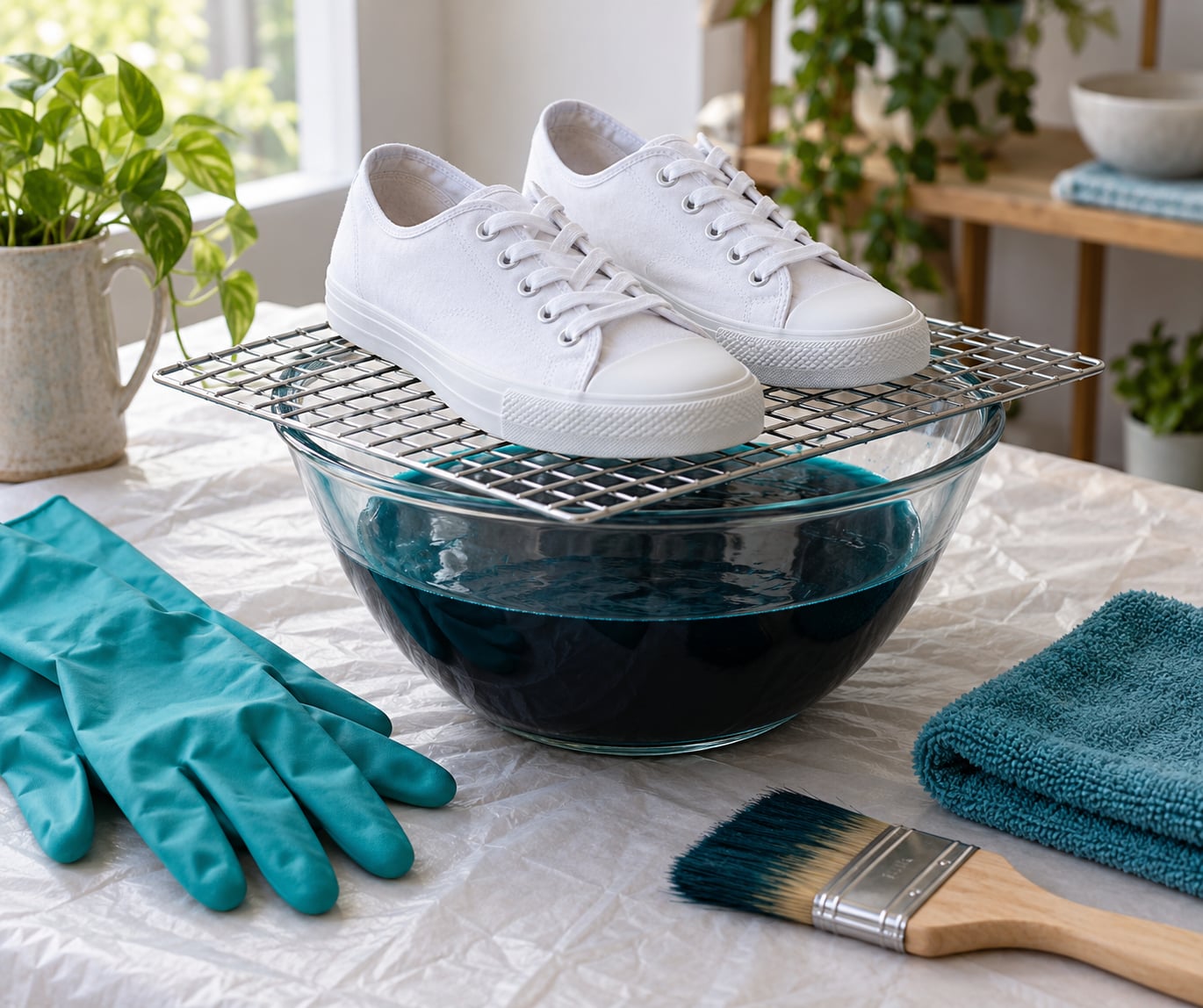
- Long rubber gloves and a wire rack or plastic grid to hold the shoes above the bath
- Paper towels, old towels and plastic sheeting to protect your work surface
- Soft-bristled paint brushes, one per color, if you plan to brush rather than dunk
The pot matters. Aluminum reacts with dye and dulls the color, sometimes turning it grey or brassy, and it stains the pot permanently. Use stainless steel, enamel or plastic and never cook food in it afterward.
Step-by-Step: How to Dye Canvas Sneakers
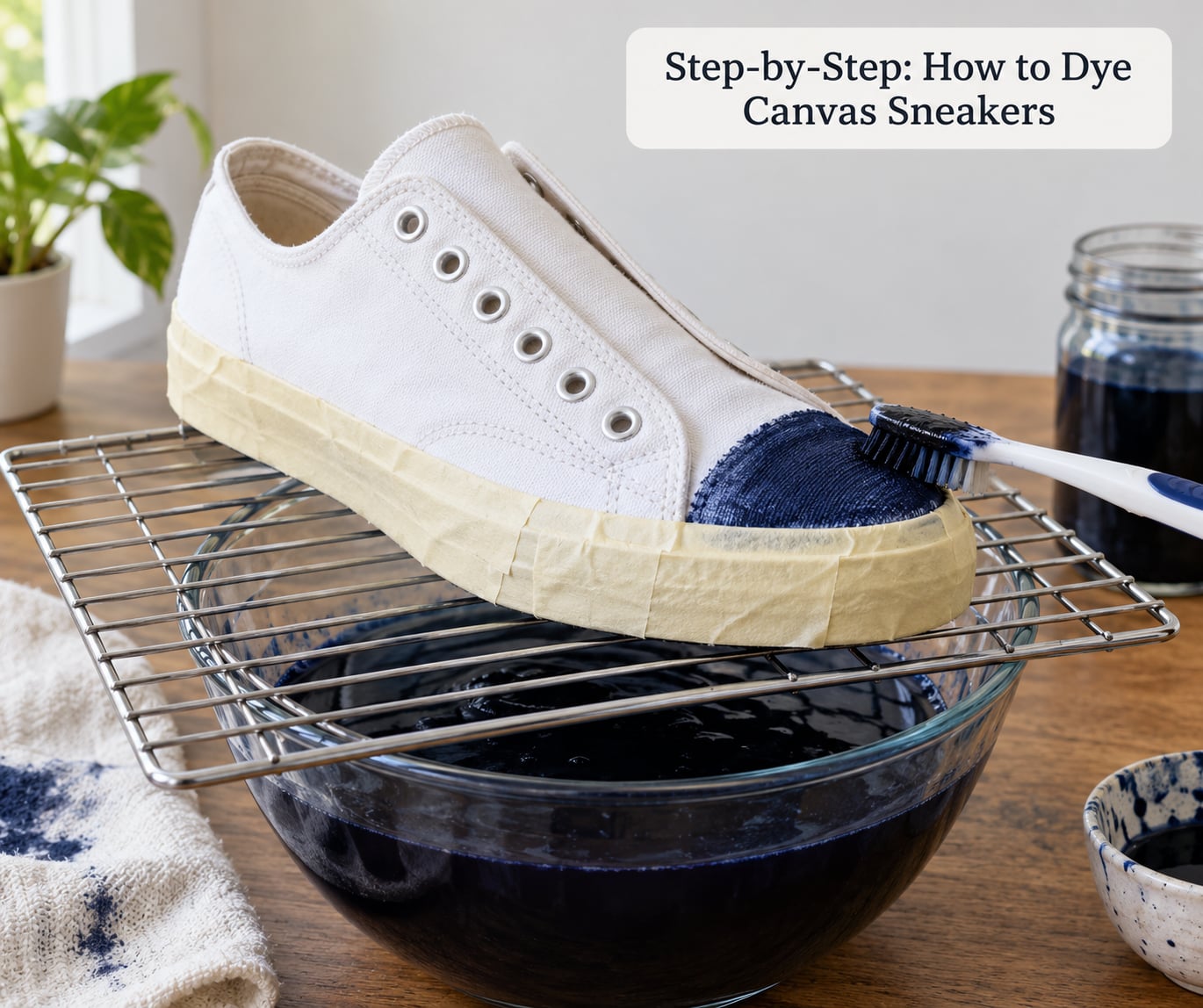
Step 1: Test and prepare the canvas
Start with a shoe that is as close to white as you can get. Yellowed canvas cannot be dyed back to true white, because dye deepens what is already there.
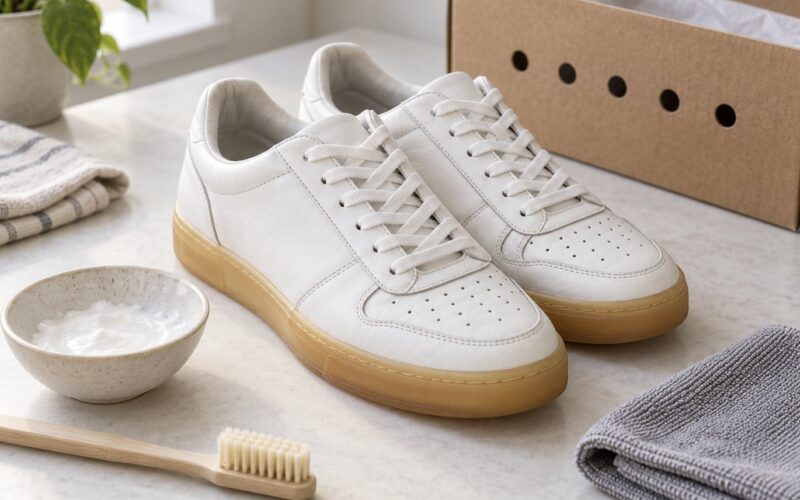
Clean first. Scrub the canvas with warm water, laundry detergent and a toothbrush, then rinse and let it dry completely. Dye bonds to clean fiber, and any grime or wax just locks the stain in permanently.
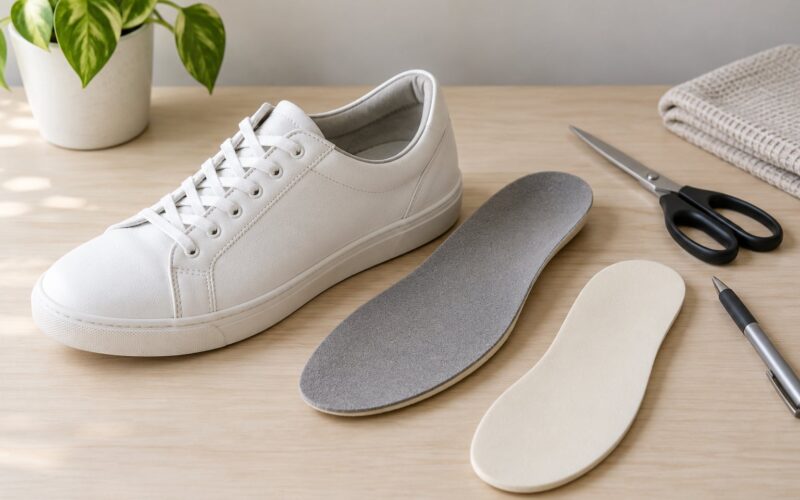
Then take the shoe apart as far as it goes. Pull the laces out, remove the insole, and cut the label stitches if you want the inside of the tongue to match. Laces can be dyed separately in a squeeze bottle if you are going that far.
Do the small test before the full bath. Dab a little dye onto the inside of the tongue, wait 10 minutes and wipe it. If it wipes off clean, that fiber will not hold color. If the whole dab sinks in and dries dark, you are good to continue.
Last, protect everything that is not canvas. Tape the rubber foxing tape where the canvas meets the sole, run tape around the toe cap, and use petroleum jelly on eyelets, metal hardware and any plastic bits. Then run the dab-and-wipe test on the rubber itself: a drop of dye on the outsole either sits on the surface and wipes away, or sinks in. If it sinks in, masking is not optional, and a heavy coat of petroleum jelly plus tape is your only defense.
Step 2: Mix the dye bath
Heat water to roughly 60°C (140°F). Hot water opens the cotton fibers so the dye penetrates instead of sitting on the surface, but boiling water can set dye unevenly on heavy canvas.
Stir the dye into the hot water until fully dissolved, then add salt. Salt pushes the dye deeper into the fiber, which is what makes the color survive washing.
| Component | Amount per pair of shoes | What it does |
|---|---|---|
| Water | 2 to 3 liters | Enough to submerge the shoes flat |
| Liquid dye | 30 to 60 ml | The color itself |
| Table salt | 50 to 100 g | Helps the dye bond to the fiber |
| Soda ash (optional) | 15 to 30 g | Raises pH so cotton takes more color |
Test the bath on a scrap of white cotton before it touches the shoes. Dip a corner of an old sheet in for a minute, rinse and dry it, and check the shade against what you pictured. If it is too light, add more dye and wait five minutes before testing again.
Step 3: Apply the color evenly
Wring the shoes out so they are damp but not dripping, then lower them into the bath lace-side down. Submerging fully for 2 to 3 minutes, then lifting and letting them sit, gives an even result with far less bleeding than a long soak.
For the saturated look most people want, leave the shoes immersed for 20 to 30 minutes at a steady temperature, turning them every 10 minutes so the dye reaches the toe and heel evenly. Long soaking does not mean deeper color on heavy canvas; it mostly means more dye in the bath that you have to rinse out later.
Brushing gives you control instead. Dampen the shoe, dip the brush in the concentrated dye and work it in with even strokes, then keep re-wetting as the brush dries out. Most people on sneaker forums land here after a full immersion attempt goes wrong, because you can literally watch the color build and stop at the shade you want.
Whatever the method, work the dye into the creases and seams where shoes are held folded, since those are exactly the areas that end up lighter than the rest. Stuff the toe with a plastic bag or paper so the shape holds, and never brush dye onto the masked rubber.
If you want more than one color, work light to dark. Dip the toe or heel in the pale color first, let it dry, then mask that line with tape before applying the darker shade. Overlapping two colors dip-style usually produces a muddy third color in the overlap, so keep the bands separate.
Step 4: Set, rinse and dry
Rinse in cold water until it runs clear, changing the water three or four times. Warm water sets any remaining loose dye, so keep every rinse cool.
Now set the color. Either soak the shoes in dye fixative following the product directions, or dry them first and then heat the color with a hair dryer for about 5 minutes. Skipping this step is why so many dyed pairs bleed onto socks a month later.
Air dry them, away from direct sun, with the laces loose. Heat from a tumble dryer can soften the glue that holds the sole to the upper and shrink the canvas, so if you need speed, use a fan and a hair dryer on cool rather than a machine.
| Technique | Difficulty | Time | Mess | Best for |
|---|---|---|---|---|
| Solid dip | Easy | 30 min soak | Low | One even color, beginners |
| Brush-on | Medium | 45 to 60 min | Medium | Exact shade, toe-only or color blocking |
| Tie-dye | Medium | 60 min | Medium | Patterns and split toes |
| Ombre | Harder | 90 min plus drying | High | Graduated color, needs patience |
Common Mistakes
Almost every bad canvas dye job traces back to one of five things, and all of them are fixable except two. Here is what goes wrong, why it goes wrong, and what to do about it.
| Symptom | Cause | Fix |
|---|---|---|
| Rubber sole stained | Dye pooled on the outsole, or the soak ran past the masking tapeWipe immediately with a damp cloth while wet; once dry, the stain is permanent | |
| Streaky or uneven color | Shoe was creased while drying, or brush strokes dried at the edgesRinse, re-wet, brush the pale areas again while slightly damp, dry flat and reshaped | |
| Orange or brassy tint | Dye applied over faded dark canvas, or an aluminum potStrip the old color first with a color remover, then start from white | |
| Color transfers to socks | No fixative used, or the shoes were not rinsed long enoughSoak in dye fixative and re-rinse; test with a white cloth dampened with water | |
| Canvas feels stiff | Fabric paint was used instead of dyeCannot be reversed; wash several times with detergent to soften it slightly | |
| Shoes shrank or sole loosened | Tumble dried or soaked in boiling waterNot reversible; air dry damp shoes reshaped over a form |
The mistakes that cannot be undone
- Using an aluminum pot. It reacts with the dye and dulls the color permanently.
- Dyeing dark or already-colored shoes without a remover. Red over black gives brown, blue over black gives grey, and no amount of soaking pulls it back.
- Dyeing a polyester or acrylic blend. Synthetic fibers will not take fiber-reactive dye at all; the color sits on the surface and rubs off.
- Skipping the tape. Rubber that has absorbed dye will not come back to white.
- Boiling water on heavy canvas. It can set the dye unevenly in patches you cannot re-dye.
Afterwards, treat dyed sneakers like dark wool. Hand wash cold with a little detergent, never bleach, and skip the dryer. If the color is set properly, a cold rinse test with a white cloth will come back clean and you can wear them with confidence.
Frequently Asked Questions
What kind of dye works best on canvas sneakers?
Fiber-reactive or direct-to-cotton dye works best, because cotton canvas is a natural, absorbent fiber and these dyes bond to it inside the fiber rather than sitting on top. Rit-style powders and liquids sold for cotton are the easiest to find. Pure shoe dye also works and comes in more saturated shades, but it is thinner and easier to apply with a brush. Avoid anything labeled only for synthetics; polyester blends will not hold the color.
Can I dye white canvas shoes without using a primer?
Yes. A primer is not required for cotton canvas, and most dye brands do not recommend one for footwear. What matters is that the shoe starts clean and genuinely white, because dye darkens whatever is already there. Yellowed or greyed canvas will only end up a deeper version of that color. If your shoes are off-white rather than bright white, a color remover first gives you a much cleaner starting point.
How long should canvas sneakers soak in fabric dye?
For an even solid color, dip the damp shoes in for 2 to 3 minutes, then let them absorb the dye out of the bath for 20 to 30 minutes, turning them every 10 minutes. A full 20 to 30 minute immersion also works for a deeper, more saturated result. Much longer soaking rarely adds color on heavy canvas and mostly leaves excess dye in the bath that you then have to rinse out.
Will dyeing canvas sneakers damage the soles or glue?
The dye bath itself will not loosen good glue, and hot water is what helps the color penetrate. The damage comes from two other things: heat and time in the dryer, which can soften the adhesive holding the sole to the upper, and dye soaking into the rubber foxing and toe cap, which cannot be removed. Mask those parts with tape and petroleum jelly, and air dry the shoes instead of machine drying them.
How do I stop the new color from bleeding or fading?
Rinse in cold water until it runs completely clear, changing the water several times, then set the color with a dye fixative soaked in following the product directions. Alternative method: let the shoes dry, then hit the color with a hair dryer for about 5 minutes. After that, hand wash cold, skip bleach and the tumble dryer, and test with a damp white cloth before wearing them with light socks.
Can I machine-wash canvas sneakers after dyeing them?
You can, but it shortens the life of the color. A gentle cold cycle with a small amount of detergent is fine every so often, but heat and friction are what fade dyed canvas fastest. Hand washing cold and air drying is the safer habit, and spot cleaning with a damp cloth plus detergent handles most everyday scuffs without any risk at all. Never put dyed sneakers in the dryer.
Conclusion
The safest first move is a dab test, not a full bath. Put a drop of dye on the rubber and on the canvas, wait ten minutes, and see what wipes off. That one minute tells you whether you need heavy masking, whether your fabric will take color at all, and whether this pair is worth the risk.
From there, work small. Mix a small bath, protect every non-canvas part, and rinse until the water runs clear before you set the color. A controlled first attempt is what turns a plain pair into something you actually want to wear.