To get rid of sneaker smell, pull the insoles out, dry the pair completely, then deodorize the inside overnight with baking soda. Most bad shoe odor comes from moisture and dead skin sitting in the lining and the foam insole, not from the upper itself.
That order matters. Most people reach for a spray first and the smell is back two days later, because a fragrance covers the top notes without touching what is actually breeding in there. Dry the shoes, clean where the buildup lives, then deodorize, and a pair you wear every day can smell fresh for weeks.
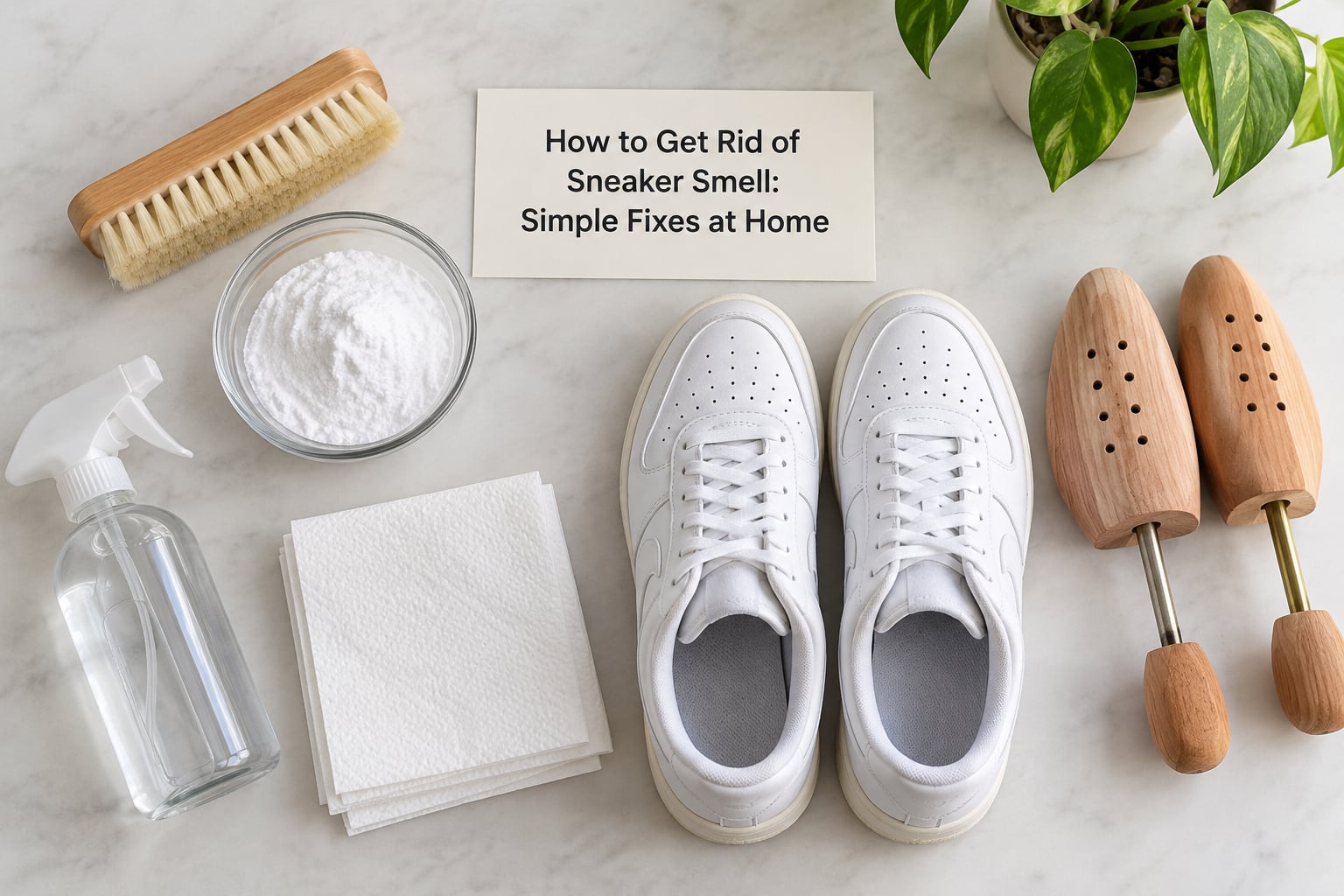
What You Need
None of this is exotic, and you probably own most of it already.
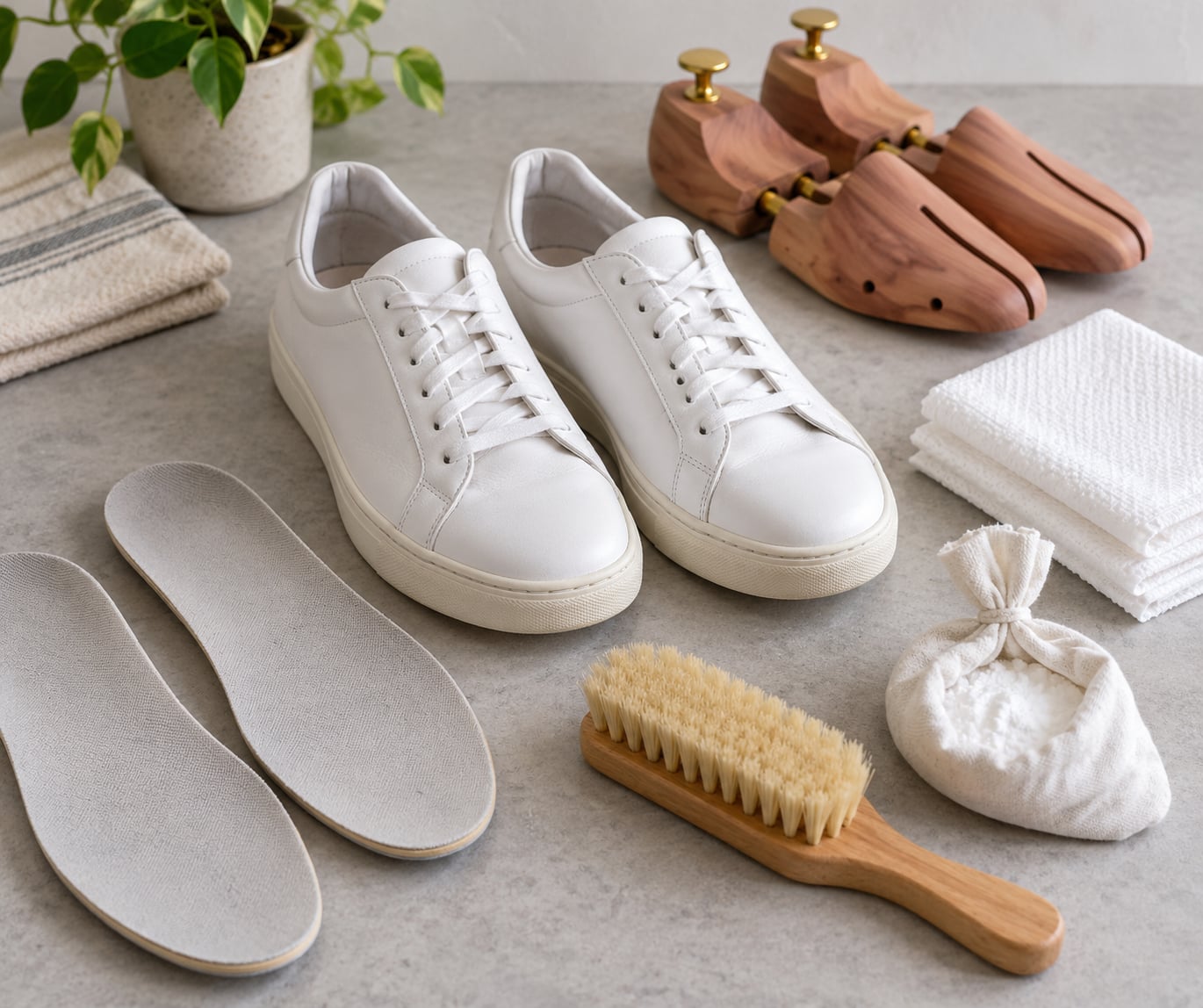
- A soft brush. An old toothbrush, a soft-bristled shoe brush or even a clean paintbrush loosens dried grime from seams and perforations without chewing up the material.
- A mild cleaning solution. A few drops of dish soap in warm water, or a dilute laundry detergent. This is enough for the job.
- Baking soda. It absorbs moisture and neutralizes the compounds bacteria leave behind. Half a cup in a sock is the cheapest deodorizer you will ever use.
- Paper towels or newspaper. Crumpled up inside the shoe, they wick moisture out of the lining while it dries.
- Breathable shoe trees or inserts. Cedar trees are the classic pick because the wood holds shape and wicks dampness. Plain kraft paper trees work too if you have no budget for them.
A white cloth and a spray bottle round out the kit. Skip anything labelled heavy-duty disinfectant for the inside of the shoe. You want to remove odor, not replace it with a chemical one.
Step-by-Step: How to Get Rid of Sneaker Smell
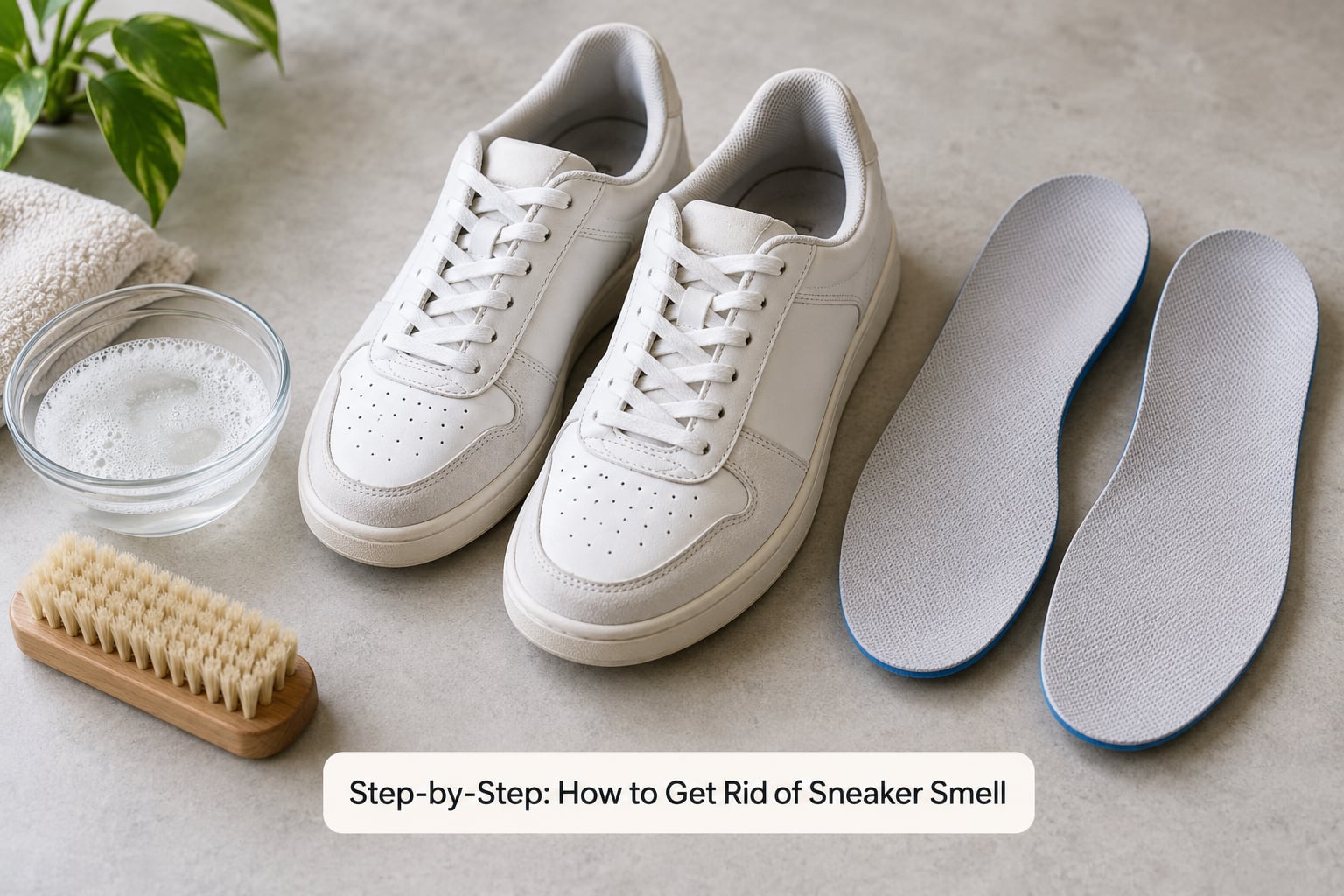
1. Remove Insoles and Identify the Odor Source
Take the insoles out first. More odor lives in that foam than anywhere else in the shoe, and you cannot treat what is hidden under the footbed. Set them aside separately.
Now smell the empty shoe. If the strongest hit comes from the insole, you have your answer and you can skip straight to step four. If the whole upper smells too, there is sweat and skin film in the lining. If only the toe box stinks, the culprit is usually damp socks and a foot that never dries out.
Sniff your socks, too. More than a few people on sneaker forums trace their odor problem back to the socks and the feet rather than the shoes.
2. Brush Away Dirt and Grime
Dried skin flakes and dust give odor-causing bacteria something to feed on, so loosening that layer matters more than it sounds. Work the soft brush over the insole bed, the seams, the tongue and the perforations with short, gentle strokes.
Spend a moment on the edge where the upper meets the sole. That seam collects the most grime and rarely gets cleaned. Skip the harsh scrubbing on suede or nubuck, where bristles pull the nap and leave light patches that do not blend back in.
3. Clean the Sneaker Upper and Lining
Wipe mesh, knit, canvas and fabric uppers with a cloth dampened with your mild solution. Wring the cloth out properly. A damp cloth cleans the surface; a soaking one seeps into the midsole and starts breaking down glue and foam.
Leather and suede need a different approach. Dampen a soft cloth, wipe gently, and follow with a dry cloth. Test an inconspicuous spot first, since water can leave a mark on finished leather. Never saturate either one, and skip the bucket.
Treat the lining itself as the main target. Wipe the inside walls and the footbed with soapy water, then a second pass with plain water to remove the film. On stubborn buildup, a cotton pad with a little rubbing alcohol works well on fabric uppers. Use it sparingly on leather.
4. Deodorize the Insoles and Interior
Baking soda is the workhorse. Fill an old cotton sock halfway with baking soda, tie it off loosely and set it inside the shoe, or dust the powder directly onto the dry footbed and lining. Leave it overnight, then tip the shoe out and brush away the residue. The powder is mildly abrasive, so brush rather than shake if you care about the surrounding material.
Do not forget the insoles themselves. A light sprinkle of baking soda, or a paste of baking soda and a little water worked in with an old toothbrush, then a wipe with a damp cloth and a full dry, will handle a lot of the worst insole odor.
Activated charcoal inserts work along the same principle but adsorb rather than absorb, which makes them a good swap for someone who finds baking soda too dusty. Silica gel packets do the drying job well. Skip essential oils on fabric you have not tested, because some leave a permanent mark, and undiluted tea tree oil on the lining can irritate skin.
5. Let the Sneakers Dry Completely
Drying is the step people rush, and it is the step that decides whether the odor returns. Airflow beats every other method. Crumple paper towels or newspaper into the shoes, change them once they feel damp, and leave the pair open to the air on a fan or a shoe rack.
Room temperature and moving air are what you want. Skip the radiator, the tumble dryer and the bonnet dryer, since direct heat stiffens leather, warps glue on a cemented sole and shrinks foam. Direct sun fades dyed uppers and yellows suede, so shade beats sunlight even though UV does kill some surface bacteria.
You will know the shoes are ready when the lining feels dry and cool to your hand, not when the outside looks fine. A shoe can look bone dry on the surface and still hold damp foam inside for days. Throwing a freezer bag over the pair overnight is a genuine trick in sneaker communities, and it knocks bacteria down, but it makes leather stiff and can stress glued soles. Treat it as an occasional move, not a weekly routine.
6. Maintain the Fresh Result
Rotate pairs. Two alternating sneakers give each one roughly 24 hours to dry out, which is the simplest fix there is and the one people skip.
Wear moisture-wicking socks and change them daily. If your feet sweat heavily, an antiperspirant applied at night to clean, dry feet works better than one applied in the morning, because glands are least active while you sleep. A foot powder or cornstarch in the sock absorbs what antiperspirant does not.
Take shoes off the moment you get home and leave them open. Store them in a ventilated closet or on an open rack, never in a sealed box or a damp gym bag, and take paper towels or a cheap desiccant packet with you when you travel.
Common Mistakes
Soaking the whole pair. A quick dip in a sink or basin pushes water into the midsole foam and glue line, which is how shoes lose their shape and start to delaminate. Use a damp cloth and keep the interior work on the insoles and lining.
Reaching for harsh chemicals. Bleach, heavy disinfectants and over-applied sprays are the most commonly reported mistake in sneaker forums. They can damage glue and dyed panels, and they trade foot odor for a chemical odor that other people find just as unpleasant.
Drying on a radiator or in full sun. Heat stiffens leather and yellows suede. Cool moving air does the same job without the damage.
Storing damp shoes in a closed box. Trapped moisture in a dark, warm space is exactly the condition bacteria need. Only store sneakers once they are dry to the touch inside.
Leaving baking soda in for days. Forum readers warn about this one repeatedly. Baking soda left far too long dries out and irritates the lining and the wearer’s feet. Overnight is the limit.
Ignoring the insoles. Spraying the upper while the insole sits underneath means the smell comes back within hours, because the source was never treated. Remove them and treat them on their own.
One more: if the odor persists and comes with peeling skin, cracked heels, a burning sensation between the toes or a smell that survives a full clean, that is a sign worth a doctor. Fungal infections like athlete’s foot live on skin and inside shoes, and no amount of baking soda will clear them.
Frequently Asked Questions
Does baking soda remove foot odor?
Yes, for shoe odor, and it works in two ways. Baking soda, or sodium bicarbonate, absorbs moisture from the inside of the shoe and neutralizes the acidic compounds odor-causing bacteria leave behind. Put half a cup in a cotton sock, leave it overnight, then brush out the powder. It is less effective on foot odor itself, which usually needs foot hygiene and an antiperspirant on the feet.
How long does it take for shoe smell to go away?
It depends on how much moisture is trapped. A vinegar wipe on the lining and a few hours of airflow take the edge off in under an hour. Baking soda left overnight handles most of a normal worn pair by morning. Shoes pulled from a closet after months may need two or three overnight treatments, plus a wash of the insoles, before the odor is fully gone.
Can I use vinegar to clean shoes?
Yes, diluted. Mix white vinegar and water one to one in a spray bottle and mist the lining and insoles, not the upper. Vinegar kills odor-causing bacteria and is the fix most often credited with solving a long-running sneaker odor problem in sneaker forums. Let the shoes air dry completely, since the smell of vinegar lingers until the moisture is gone. Never soak leather or suede in it.
What can I put in my shoe to make it smell good?
The reliable options are baking soda in a sock, activated charcoal inserts, cedar shoe trees or silica gel packets, all of which absorb moisture and odor rather than masking it. For scent, a dryer sheet tucked in the toe box overnight is a cheap trick that works on fabric uppers. Store-bought deodorizer sprays work well too, but read the label and test on leather first.
How to remove smell from shoes in 5 minutes?
Pull the insoles out, wipe the lining and footbed with a cloth dampened with one-to-one vinegar and water, blot the insides with a paper towel, dust a little baking soda into the dry lining, and set the shoes in front of a fan with the insoles propped nearby. That will not kill every bit of odor, but it removes most of it for a few hours if you need the pair tonight.
Do tea bags remove shoe smell?
They help a little, and they are a popular thrift-community fix. A used tea bag tucked into a sneaker overnight leaves a mild tea fragrance and the tannins can slow mildew. It is not a deodorizer in the way baking soda or charcoal is, so treat it as a finishing touch after the pair is already clean and dry, not as the main fix.
Conclusion
Start with the insoles. Pull them out, brush the footbed, wipe the lining with a cloth dampened with mild soapy water, treat both with baking soda overnight, and let the pair dry fully in moving air before wearing it again. That sequence handles the moisture, the buildup and the bacteria instead of covering them up.
Then keep it that way. Rotate pairs, wear moisture-wicking socks, leave sneakers out of the bag when you get home, and store them somewhere with air moving through it. A rotation habit of two pairs does more for sneaker odor than any spray on the shelf.