The fastest way to know is to press the heel and the forefoot with the same finger pressure and compare them against a newer pair, then look for deep creases in the midsole foam. Worn-out running shoe cushioning usually shows up as a shoe that folds in half easily, rocks on a flat surface, or feels flat on carpet when it should feel springy. The whole check takes about three minutes and needs nothing more than a table and a ruler.
The reason this matters: cushioning fails from the inside out. The foam between your foot and the ground takes a permanent set long before the tread wears down or the upper tears. By the time a shoe looks wrecked, the cushioning has usually been gone for months.
Below is the routine I walk people through when they ask whether a pair is finished. It is a heuristic, not a lab measurement, and no article can replace a physical check on the shoes in front of you.
What You Need
Almost nothing. Grab these four things and you can run the full check:
- The running shoes themselves, ideally both, plus a newer pair if you own one for comparison.
- A ruler or digital caliper to measure midsole height at the heel and forefoot.
- A hard flat surface such as a table, tile floor or garage slab.
- A soft surface such as carpet, grass or a folded towel on a table.
Optional but useful: the manufacturer’s mileage guidance in the shoe’s product page, and a bathroom scale if you want the load context for how fast your midsole was wearing down.
Step-by-Step: How to Spot Worn-Out Running Shoe Cushioning
Step 1: Compare Heel Cushioning Compression
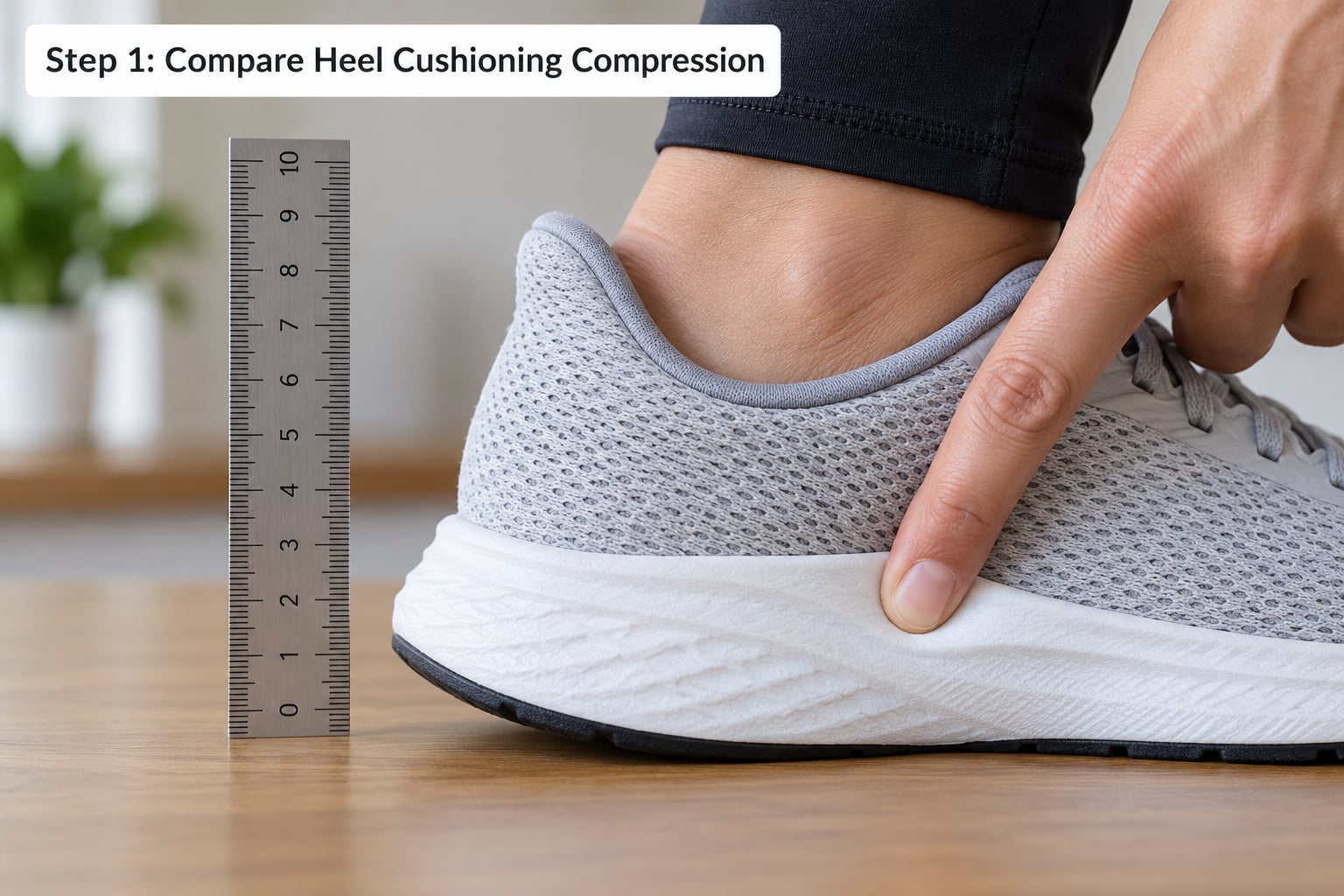
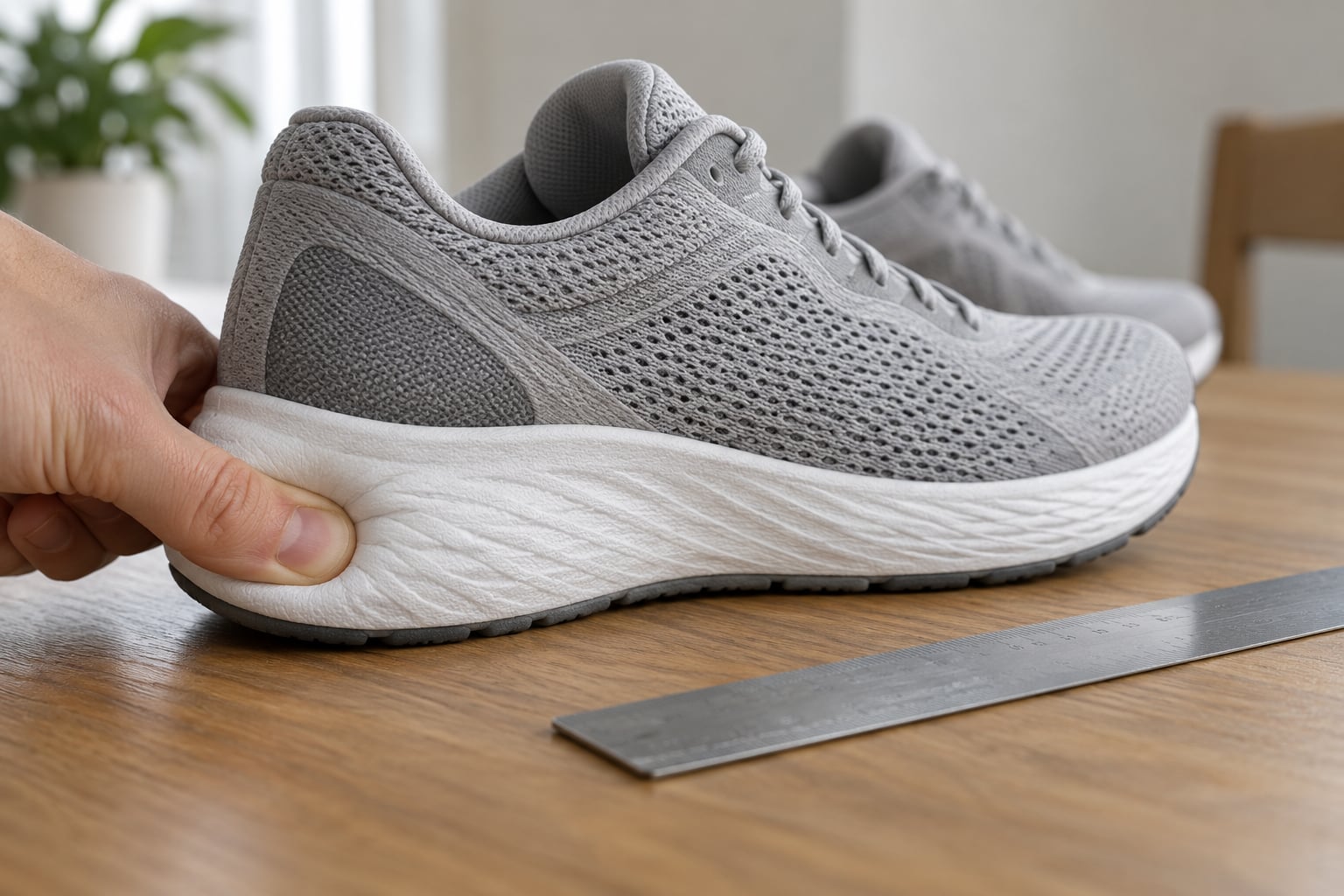
Take the shoe out, set it on a hard surface, and press your thumb into the heel foam with steady pressure. Do the same in the forefoot, right under where the ball of your foot lands. Then do it again to a newer shoe.
A healthy midsole pushes back quickly and leaves a temporary dent that mostly fills back in. A tired one feels spongy at first, then soft, then stops recovering altogether. That last one is called compression set: the foam has been squashed so many times it holds the new shape permanently, which is exactly what dead cushioning feels like under a thumb.
Warning signal: persistent softness, a dent that does not spring back within a second or two, or a heel that feels noticeably mushier than the forefoot when it started out firmer. Heel foam takes the biggest load, so it usually goes first.
While you have the caliper out, measure midsole height from the ground to the top of the foam at the heel and again at the forefoot. A drop of 4mm or more against the new pair, on the same spot, is a solid numeric confirmation.
Step 2: Look for Wrinkles, Flat Spots, and Creases From Worn-Out Cushioning
Turn the shoe in your hands and read the foam. Shallow creasing across the forefoot where the shoe bends is normal and every pair develops it early. Deep wrinkles that stay folded, a flattened band across the middle of the midsole, or a section of foam that looks scraped and thinner than the rest are not normal.
Also check the midsole-to-outsole seam. A gap opening along the glue line, a wavy edge where the rubber pulls away from the foam, or visible midsole foam exposed on the bottom all point to the foam losing structure rather than simply wearing out.
Compare the two shoes against each other too. A pair where one shoe has a visibly flatter heel and more creasing than its partner has uneven wear, and uneven wear means the shoe is pushing you around on every stride.
Warning signal: creases that no longer flatten back when you smooth them with your palm, a midsole edge that looks chewed, or a foam wall that flexes when it should be firm.
Step 3: Check the Heel-to-Toe Transition
Set the shoe down on the hard flat surface and look at it from the side, then from directly behind. A shoe with structure left in it sits flat and level. A tired one rocks: the heel lifts when you press the forefoot, or the forefoot lifts when you press the heel.
Do the fold test while you are there. Hold the shoe in one hand and try to fold it in half so the toe touches the heel. If you can do it with one hand without much resistance, the torsional support in the forefoot has gone. If the shoe barely bends at all, structure is intact.
Then walk a few steps on a hard floor in the shoes. Healthy cushioning absorbs the sting of pavement and gives a little at landing. Worn cushioning transmits the ground straight through, and the forefoot stops feeling responsive, almost like running on a board instead of foam.
Warning signal: a shoe that rocks, folds one-handed, or makes your shins and knees work harder on flat ground.
Step 4: Test the Shoe on a Soft Surface
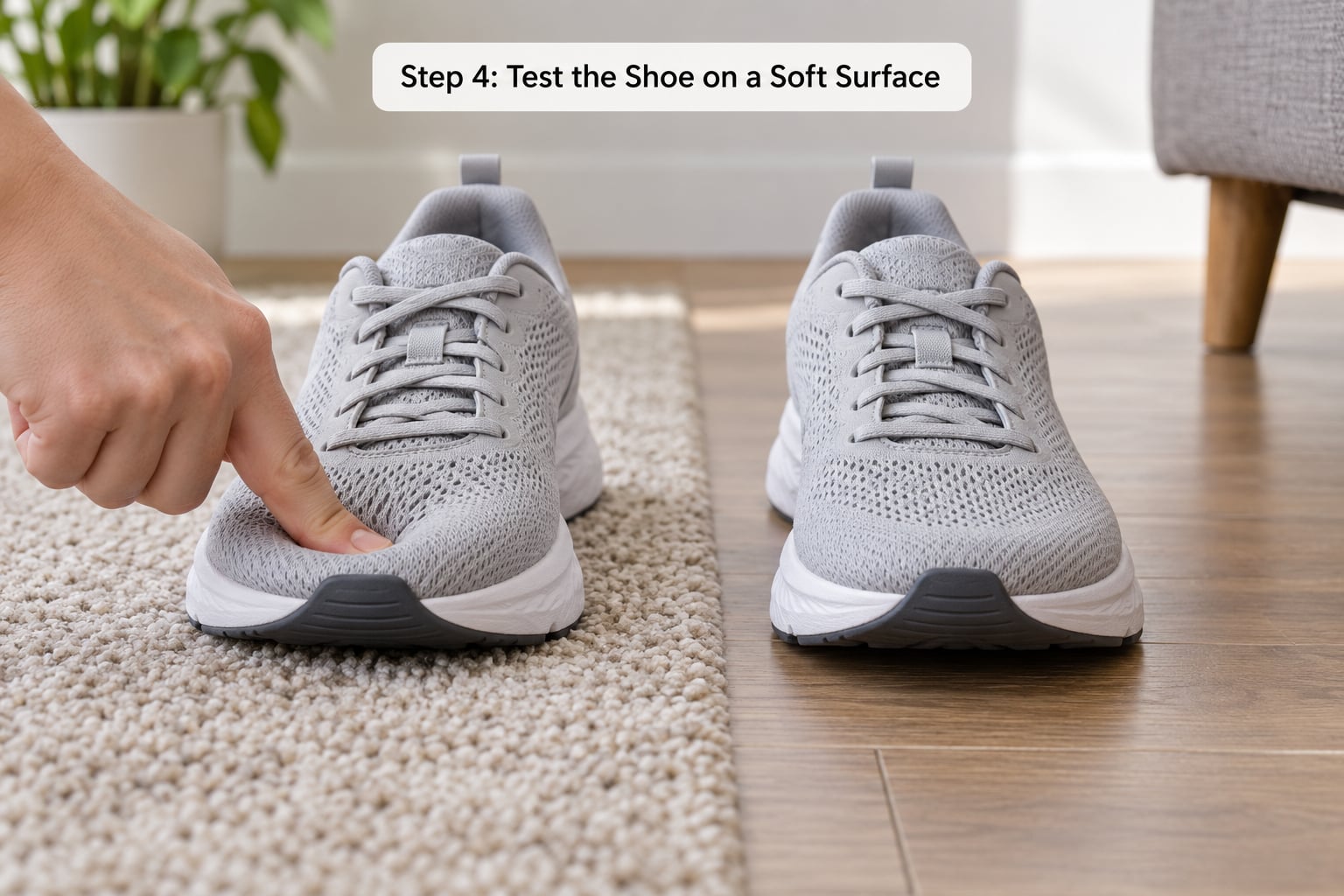
Press the same spot on the same surface twice. First on the hard table, then on carpet or a folded towel. On a soft surface, a healthy shoe’s foam pushes back against your thumb, and the shoe’s grip changes noticeably because the surface gives under it.
Now try a drop test. Hold the shoe by the heel, toe down, from about knee height onto the hard surface, and repeat with the newer pair. A midsole with resilience rebounds to a quick, clear bounce. A compressed one lands with a dull thud and stays flat on the bottom for a moment before righting itself.
The point of the soft-surface test is that it isolates the foam from your body weight. A foam that feels fine under you can still be collapsing, because you are asking it to handle two jobs at once. Take your own weight out of the picture and the differences get obvious fast.
Warning signal: the shoe feels almost identical on carpet and on tile, or noticeably flatter on carpet than a newer pair, which means the shock absorption is no longer responding to the surface.
Step 5: Review Mileage, Weight, and Use
The physical checks decide it, but context explains why it happened and how fast the next pair will go. Most brands and running stores put replacement somewhere around 300 to 500 miles, with heavier runners and higher weekly mileage at the short end. Treat that as a starting range, not a law.
If you never tracked your miles, work backwards. Estimate your weekly distance, count the weeks since you bought the pair, and multiply. If you have no idea of your weekly distance either, look at your calendar, your watch history, or your route app, and count the number of shoes you own as a rough proxy for how often you were running.
Surface matters as much as distance. Trail and gravel chew outsoles and sidewalls fast, treadmill running wears the heel in a predictable line, and wet winter road miles can break down a midsole sooner than dry ones. Running every run in one pair without rotating means that pair never gets a chance to fully recover between outings, and foam recovers slower than people expect.
Foam type sets the ceiling on lifespan. Traditional EVA foam and its injection-molded cousins compress relatively predictably and tend to feel flat before they look terrible. Supercritical nitrogen foams and PEBA-based super shoes hold their rebound longer, but the plate and the foam in a plated racer can fail on completely different timelines. None of that changes the check you just ran on the shoe in your hand.
Warning signal: mileage near the top of the range, one pair doing all your running across multiple surfaces, and any of the physical signs above showing up at the same time.
Common Mistakes
Judging cushioning by tread alone. The outsole is designed to outlast the midsole, so a shoe can have full tread and dead foam. Check the foam, not just the rubber.
Testing only one area. Pressing the heel tells you about the heel. The forefoot can be finished while the heel still feels fine, and the reverse happens too. Test both, plus the seam between them.
Ignoring body weight and running surface. A heavier runner on pavement compresses the same midsole in fewer miles. If your pair is going faster than the 300 to 500 mile range, that is the answer.
Mistaking temporary softness for permanent fatigue. Foam is viscoelastic: it feels softer right after a run and firmest after a day or two of rest. A pair that feels dead on a rest day has a real problem. A pair that feels a bit soft the morning after a long run does not.
Keeping running in shoes after pain starts. New aches in your shins, knees, heels or arch that show up on runs and vanish when you switch shoes are a signal, not noise. Stop running in the pair, and if the pain continues, speak to a doctor or physical therapist rather than diagnosing it yourself.
One more habit worth adding: keep a newer pair around as a reference. Side-by-side comparison gives you a benchmark that mileage numbers never will.
Frequently Asked Questions
Does a worn-out outsole always mean the cushioning is worn out?
No, and this is the most common misread. The outsole rubber is engineered to outlast the midsole foam, so a shoe can have a bald tread and still have years of cushioning left. A shoe can also have plenty of tread and completely dead foam, because the foam loses its rebound from the inside where you cannot see it. Test the foam directly by pressing the heel and forefoot, and check for creases in the midsole rather than judging by the bottom of the shoe.
How can I test running shoe cushioning without going for a run?
Three checks do it. Press the heel and forefoot with the same thumb pressure and compare the rebound against a newer shoe. Fold the shoe in half with one hand to test torsional support in the forefoot. Then hold the shoe toe-down from knee height onto a hard floor and listen to the landing. A healthy midsole gives a quick, bright bounce and a dull thud that stays flattened is a sign the foam has taken a set.
How often should most running shoes be replaced?
Most brands and running stores point to roughly 300 to 500 miles, and that range is a useful starting point rather than a deadline. Heavier runners, higher weekly mileage, running every session in one pair, and hard pavement all shorten it, while a two-pair rotation stretches it. Foam type also matters, since supercritical and PEBA foams hold their rebound longer than traditional EVA. Physical checks should override the number whenever they disagree with it.
Can worn running shoe cushioning be restored or revived?
No. Compression set is a permanent change in the foam’s structure, not a temporary softness, so no amount of airing the shoes out, massaging the midsole or soaking them brings the rebound back. What you can do is slow the next pair down: rotate two pairs, let each one rest a full day or two between runs, air shoes out after wet runs, keep heat and direct sun off them, and hand wash rather than machine washing. Rest helps foam recover between runs, but it cannot undo a set.
Should I stop running if my shoes feel flat or unstable?
Stop running in that pair and get a clean pair for the next run. Flat, unstable, or bottoming-out cushioning changes how much impact reaches your legs, and runners most often report shin splints, knee ache, heel pain or unusually heavy post-run fatigue when it fails. The shoes do not have to be thrown out immediately, but do not keep training in them. If pain continues after a few days in fresh shoes, see a doctor or physical therapist, since persistent pain needs a professional assessment.
Conclusion
Start tonight: press the heel and the forefoot with the same thumb pressure, compare the feel against a newer pair, then set the shoe on a flat surface and see whether it rocks or folds in half. Those two checks settle most cases in under a minute.
Once you have your answer, treat mileage and your own symptoms as supporting context rather than the verdict. When two or more signs show up at the same time, or when new aches appear on runs that clear up in a fresh pair, retire the shoes and stop running in them. And if pain persists after a few days in new footwear, talk to a doctor or physical therapist, because that is outside what any shoe check can answer.